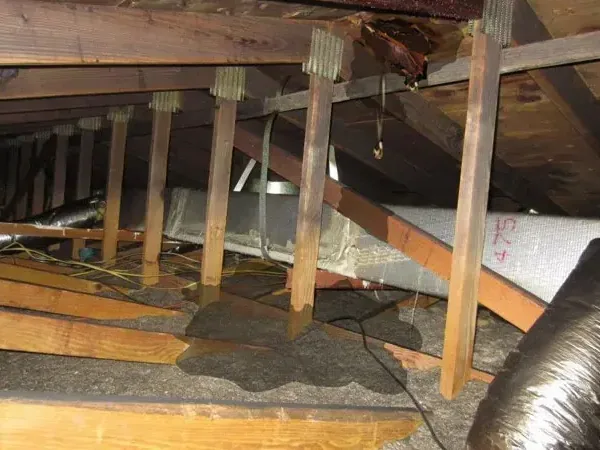
On December 10, 2023, an EF-1 tornado with peak winds of 110 mph hit Garner around midday, toppling trees, knocking down power lines and damaging roofs. A roof that has lost shingles or taken a falling limb lets in every rain that follows, and the water usually shows up first as a stain on a ceiling.
Key takeaways
- A wind damaged roof lets in each rain that follows, so a cover over the opening matters before the next storm.
- Water from a roof opening soaks the attic insulation first and the ceiling drywall below it next.
- Both the December 10, 2023 EF-1 tornado and the March 29, 2014 EF0 tornado damaged roofs in Garner.
- A ceiling stain marks only the spot where water broke through, and the wet area above it is often wider.
- Drying runs from the attic down, and the dry goal is read on the framing, not guessed from the paint.
What the Garner tornadoes did to roofs
Two tornadoes are on record in Garner, and both worked on roofs. The EF-1 on December 10, 2023 also toppled trees and knocked down power lines.
On the evening of March 29, 2014, the National Weather Service confirmed an EF0 tornado with maximum winds of 80 mph in Garner. One house lost part of its roof, windows broke and trees came down, with no injuries.
Roofs hit by wind do not always fail on the day of the storm. A lifted shingle or a loosened vent can let water in weeks later, during the next hard rain.
- Shingles torn from one slope of a roof.
- Tree limbs that crack decking or puncture a section of roof.
- Flashing and vent collars knocked loose.
- Gutter damage that sends rain behind the fascia and into the soffit.
- A bare patch on a slope that looks different from the street.
How rain travels from a roof opening to a ceiling
Water does not drop straight down. It follows the roof deck, the rafters and the attic floor, and it often shows up far from the real opening.
A small opening can do a lot of work. A few missing shingles over a bedroom can soak enough insulation to stain a ceiling after one heavy storm.
In the attic
Insulation soaks up water like a sponge, then holds it against the ceiling drywall below. The top of interior walls can wick water down into the wall cavity as well.
In the ceiling below
A brown ring forms first. If the water keeps coming, the drywall softens, sags and can drop, and recessed lights and fans become paths for water to reach the room.
- A stain that darkens after each rain.
- Drywall that bows or feels soft to a light touch.
- Water at a light fixture or a bathroom fan.
Through walls and fixtures
Water that reaches the top of an interior wall can run down inside it. It may show up as a stain, a bubble in the paint or damp baseboard far from the roof opening.
- A stain on a wall below an exterior corner of the roof.
- A light switch or outlet cover that feels damp.
- Baseboard that swells at the floor edge.
Covering the roof and protecting the room
The first job after a storm is to stop more rain from getting in. A roofer can tarp the opening, and the cleanup does not need to wait for the permanent repair.
While that is arranged, the room below needs attention. A roof leak cleanup call runs alongside the roofing work, since wet insulation and drywall keep getting worse while the roof is open.
Leaving the ceiling alone is a gamble. Wet drywall softens, insulation clumps together and damp wood has time to take on more water.
- Do not climb on a roof that wind has damaged.
- Keep people out from under a bulging or dripping ceiling.
- Move furniture, rugs and electronics out of the wet path.
- Set out buckets or tubs under active drips.
- Photograph the roof damage, the attic and the stained ceiling.
- Ask the roofer to note where the water entered, so the drying team knows where to look first.
How the drying team works from the attic down
Roof leak work starts at the top. Wet insulation comes out of the attic, since it holds moisture against the ceiling and the framing.
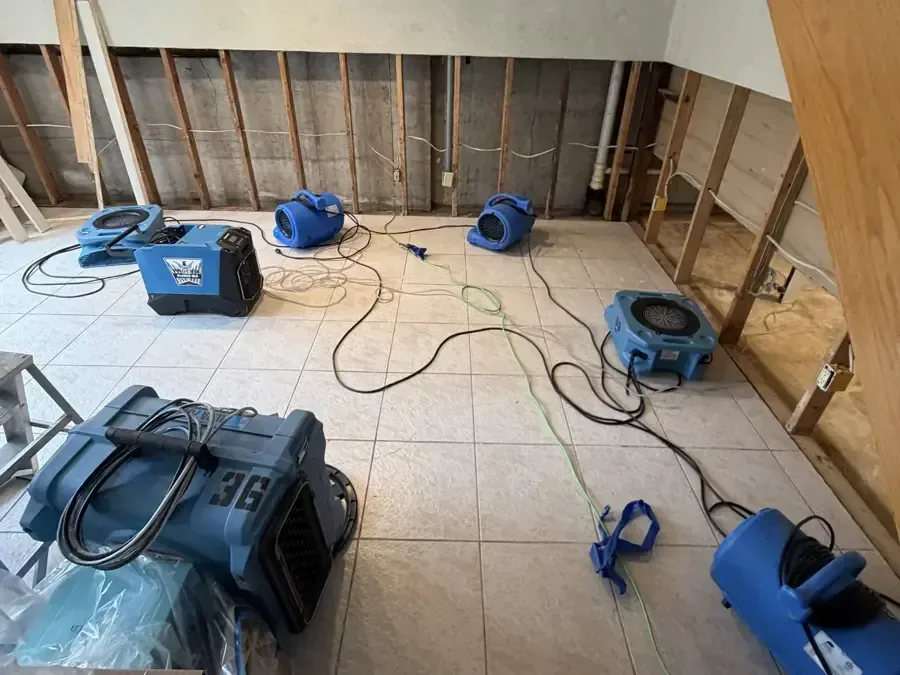
Attics dry slowly because air barely moves in them. Fans and a dehumidifier are placed so air moves through the work area, and readings show whether the wood is giving up its moisture.
- Wet insulation is bagged and removed from the attic floor.
- Roof decking and rafters are read for moisture and left to dry.
- Ceiling drywall that has sagged or softened is cut out and removed.
- Wall tops and cavities near the leak are opened where readings stay high.
- Equipment is set so air flows through the attic and across the room below.
Drying and the dry goal
After removal, fans and dehumidifiers move dry air through the attic and the room below. Readings repeat at each visit until the framing meets the dry goal.
The work belongs to ceiling leak cleanup once the stained drywall comes into play. A ceiling can look dry long before the wood above it is.
Rushing the rebuild is the quickest way to trap moisture. Closing a wall over damp framing invites stains and mold, which is why a dry reading comes before new drywall.
- Readings repeat on every visit and are written down.
- Equipment moves to wherever the numbers are still high.
- The ceiling is closed and the room rebuilt only after the dry goal is met.
Roof water or a pipe leak above the ceiling
A stain does not say where it came from. A roof leak shows up during or after rain, while a pipe leak keeps going when the weather is dry.
Both leaks get the same drying treatment, but only the right repair stops them. The main roof leak water damage service covers roof sources, and a plumber handles pipes.
- A roof leak often stops when the rain stops.
- A supply or drain leak keeps wetting the ceiling in dry weather.
- A stain near a bathroom or laundry room points to pipes first.
Checks after the next storm
After any wind event, a short walk around the yard can catch problems early. Missing shingles in the grass are a clue, and a flashlight in the attic after the next rain shows whether anything dripped.
- Look for shingles, flashing or vent covers on the ground.
- Check the attic floor and the underside of the roof after a hard rain.
- Look at ceilings for a new stain or a ring that has grown.
- Keep photos of the roof and the attic from before and after repairs.
Questions
How soon should a tornado damaged roof be covered?
As soon as it is safe, because every rain that follows goes through the opening. A roofer can tarp the damage while permanent repair is scheduled.
Why did the ceiling stain show up days after the storm?
Water can soak through insulation and travel along framing for a while before it breaks through the drywall, so a stain often appears after the rain is over.
Does a ceiling stain mean the whole ceiling must come down?
Not always. Readings show how far the water went, and the team removes only the drywall that is soft, sagging or too wet to dry.
Can attic insulation be dried in place?
Wet insulation holds water against the ceiling and is usually bagged and removed. Dry sections that were never touched can stay.
What if the leak is a pipe and not the roof?
A pipe leak keeps wetting the ceiling in dry weather. A plumber stops the source, and the same drying steps apply.