Storm and Flood Water Cleanup in Holly Springs, NC
Water that crossed a yard or a street carries soil and runoff, so it is handled as Category 3. The mitigation team pumps it out, removes what it touched and dries the structure.
(888) 578-4720Storm water came inside? Call now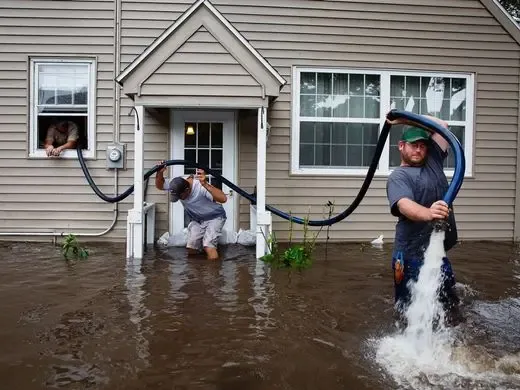
First steps for storm and flood water cleanup
- 1
Stay out of moving water
Do not walk or drive through flood water; even shallow moving water can knock you down.
- 2
Cut the power safely
Turn off power at the panel only if the panel area is dry; otherwise wait for the utility.
- 3
Keep children out
Storm water is contaminated, so keep children and pets out of wet rooms.
- 4
Document before cleanup
Photograph the high-water mark on the walls, wet contents and the outside before anything is moved.
Trade standards on this job
- Outside water is Category 3 from the moment it enters.
- Porous materials the water touched are removed, not dried.
- Surfaces get an EPA-registered antimicrobial before drying.
What does storm and flood water cleanup cost in Holly Springs, NC?
Storm and flood water cleanup here typically runs $3,000 to $20,000, depending on how deep the water got, how many rooms it reached, how much drywall, flooring and insulation must come out and how long drying runs.
Garage or one room
$3,000 to $6,000- Pumping and extraction
- Flood cuts
- Antimicrobial treatment
Several rooms
$6,000 to $12,000- Flooring and pad out
- Wall cavities opened
- Containment
Whole first floor
$12,000 to $20,000+- Full Category 3 removal
- Desiccant drying
- Extended monitoring
Ranges are typical, not a quote: the water category, the square footage, the materials and how fast drying started move the number most. Try the water damage cost calculator for a closer planning range.
How storm and flood water cleanup is handled, start to finish
Measure first, remove the water, dry, then prove it dry with readings. The order does not change.
(888) 578-4720Start the flood cleanup- 1
Pump and extract
Deep water is pumped, then the floors are extracted.
- 2
Remove what it touched
Drywall, pad, insulation and soaked contents come out.
- 3
Clean and treat
Hard surfaces are cleaned and an EPA-registered antimicrobial applied.
- 4
Dry and verify
Air movers and dehumidifiers run until readings match a dry reference.
Late summer and fall bring tropical storms and the remnants of hurricanes across central North Carolina, and summer thunderstorms can drop inches of rain in an hour. Hurricane Fran in 1996 flooded and damaged much of Wake County. Most storm water reaches a home through a low garage, a door at grade, a window well or the crawl space.
Why storm water is Category 3
Water that ran across lawns, driveways and streets picks up soil, fertilizer, oil and sewage overflow on the way. The IICRC S500 treats it as Category 3 the moment it enters. That changes the job: the crew wears protective gear, porous materials the water touched are removed instead of dried, and hard surfaces are cleaned and treated with an EPA-registered antimicrobial before drying.
- Carpet, pad and drywall touched by the water come out
- Insulation in wet wall cavities is removed
- Hard floors, framing and concrete are cleaned, treated and dried
Low spots that take water first
Lots near Middle Creek, Utley Creek and Bass Lake, homes built at grade with the garage floor close to the yard, and streets where storm drains back up in a cloudburst see water first. Water that seeps under the house instead of through a door is a crawl space job; see crawl space water removal.
Flood insurance and the paperwork
Rising water from outside is usually excluded from a standard homeowners policy and covered by flood insurance instead, which is why the claim file matters: water category, moisture maps, daily logs and photos taken before anything is torn out. FloodSmart, the National Flood Insurance Program's site, explains what flood policies cover, and Ready.gov covers hurricane safety. For planning numbers, see the water damage cost calculator.
Storm and flood water cleanup across Holly Springs and nearby
The restoration team covers ZIP 27540 end to end: downtown and Main Street, Sunset Ridge, 12 Oaks, Holly Glen, Woodcreek, Arbor Creek and the homes along Avent Ferry Road, Sunset Lake Road and the NC 55 Bypass.
Nearby coverage reaches Apex, Fuquay-Varina, Cary, New Hill, Willow Spring, Garner, Morrisville.
Storm and Flood Water Cleanup: common questions
Can carpet be saved after storm flooding?
No. Carpet and pad soaked by outside water are Category 3 and are removed and thrown out.
How high are the walls cut?
Usually a little above the highest wet reading, often 2 to 4 feet up. Meters set the height, not a fixed rule.
Does homeowners insurance cover storm flooding?
Rising water from outside is usually excluded and needs a flood policy, while rain through a damaged roof is often covered. Coverage depends on your policy, so check with your own insurer.
How long does drying take after a flood?
Five to ten days is typical once the wet materials are out. Concrete and dense materials take longer.
Is it safe to stay in the home?
Not in the affected rooms. Contaminated water and wet materials should be removed before people and pets use the space.
What should I throw out?
Porous items soaked by flood water, such as mattresses, upholstered furniture and paper goods, are usually discarded. Photograph them first for the claim.
Storm water inside? Get it out before it soaks in.
Outside water carries soil and runoff into floors and walls. The mitigation team pumps, removes and dries, 24/7.