Ceiling Leak Water Damage in Holly Springs, NC
In a two-story home the kitchen and living room ceilings sit under baths, laundry rooms and plumbing. The restoration team finds the source above, opens the ceiling safely and dries the joist bays.
(888) 578-4720Ceiling dripping or sagging? Call now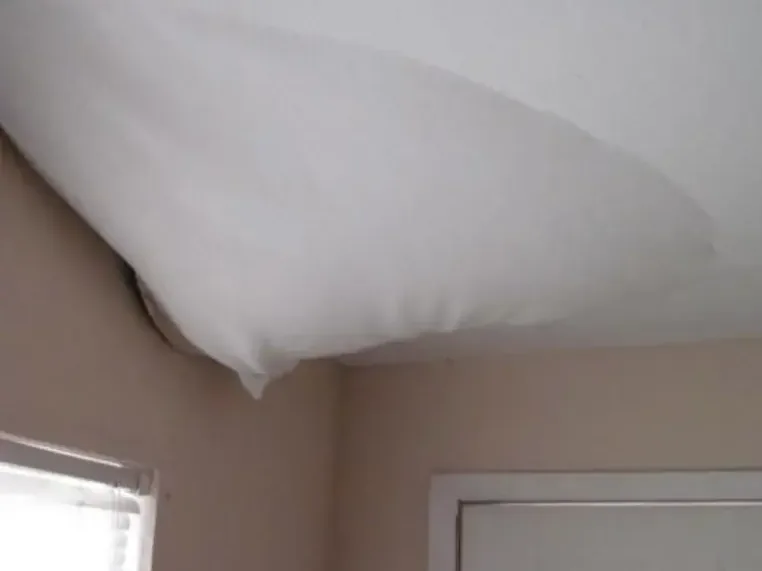
First steps for ceiling leak water damage
- 1
Shut off the source
Turn off the toilet or fixture valve upstairs, or the main if the source is unknown.
- 2
Turn off the lights
Switch off the breaker for any wet light fixture or ceiling fan.
- 3
Keep out from under it
A sagging ceiling can drop; move people, pets and furniture away.
- 4
Photograph above and below
Photograph the ceiling stain and the bath or room above it.
Trade standards on this job
- Power is off before any work near a wet fixture.
- Sagging drywall is drained and removed in a controlled way.
- Joists and the floor above are read until they are dry.
What does ceiling leak water damage cost in Holly Springs, NC?
Ceiling leak water damage cleanup here typically runs $800 to $5,000, depending on how much ceiling drywall must come down, whether insulation and the floor above got wet and how many rooms sit under the leak.
Small stain, dried in place
$800 to $1,800- Source traced
- Ceiling dried in place
- Daily readings
Ceiling opened, one room
$1,800 to $3,500- Sagging drywall removed
- Joist bays dried
- Floor above checked
Several rooms or a long leak
$3,500 to $5,000+- Wet insulation removed
- Walls below affected
- Containment
Ranges are typical, not a quote: the water category, the square footage, the materials and how fast drying started move the number most. Try the water damage cost calculator for a closer planning range.
How ceiling leak water damage is handled, start to finish
Measure first, remove the water, dry, then prove it dry with readings. The order does not change.
(888) 578-4720Start drying the joist bays- 1
Trace the source
Meters on the ceiling and the floor above find where the water started.
- 2
Make it safe
Power off, then a sagging ceiling is drained and opened at a controlled point.
- 3
Dry the joist bays
Air movers and a dehumidifier dry the framing and the subfloor above.
- 4
Check above and below
Readings on both floors match a dry reference before closing up.
Most ceiling leaks here come from inside the house, not the roof. A wax ring fails under an upstairs toilet, a shower pan cracks, a tub overflows or a supply fitting drips inside the floor. The water sits on the ceiling drywall below until it stains, sags or comes through a light fixture.
Common sources above the ceiling
- Toilet wax rings and supply fittings in upstairs baths
- Shower pans, grout and tub drains
- Second-floor laundry rooms; see washer and appliance leaks
- Attic air handlers; see AC condensate leaks
The tech who does the walkthrough uses meters and thermal imaging on the ceiling and on the floor above to find where the water started and how far it spread between the joists.
Lights, wiring and a heavy ceiling
Water in a ceiling often finds the electrical boxes first. Power to that area is turned off at the panel before anyone works near a wet light or fan. A ceiling holding water is heavy and can come down all at once, so the mitigation team drains it at a controlled point and removes drywall that has sagged or lost its strength.
Drying the joist bays
Once the wet drywall is down, the joist bays and the underside of the subfloor are open to air. Air movers and a dehumidifier dry the framing, and readings are taken on the joists and the floor above. Drywall that stayed firm and dries quickly can often stay. If the leak came from the roof instead, see roof leak water damage.
Tips for spotting slow leaks around toilets and fixtures are on the EPA WaterSense leak page, and the North Carolina Department of Insurance answers consumer questions about claims. For planning numbers, try the water damage cost calculator.
Ceiling leak water damage across Holly Springs and nearby
The restoration team covers ZIP 27540 end to end: downtown and Main Street, Sunset Ridge, 12 Oaks, Holly Glen, Woodcreek, Arbor Creek and the homes along Avent Ferry Road, Sunset Lake Road and the NC 55 Bypass.
Nearby coverage reaches Apex, Fuquay-Varina, Cary, New Hill, Willow Spring, Garner, Morrisville.
Ceiling Leak Water Damage: common questions
Is a water stain on the ceiling an emergency?
A growing or damp stain is. It means water is still collecting above, and a ceiling can sag and fall once enough water pools on it.
Is it safe to use a light with water in it?
No. Turn the breaker off and leave the fixture alone until the area is dry and checked.
Will the whole ceiling come down?
Usually only the wet section. Drywall is removed where readings and sagging say it must, and firm drywall is often dried in place.
How is the leak above found?
Meters and thermal imaging on the ceiling and the floor above show where the water is. A plumber then repairs the fixture or pipe.
How long does a ceiling take to dry?
Usually three to five days once the wet drywall is open and air reaches the joists.
Will insurance pay for ceiling damage?
Sudden leaks are commonly covered, while slow leaks from a worn seal may not be. Coverage depends on your policy, so check with your own insurer.
Ceiling sagging? Call before it drops.
Water above a ceiling keeps spreading between the joists. The restoration team traces it and dries the framing, 24/7.