Water Damage Restoration Garner, NC
In Garner, a burst pipe, a roof opened by wind, or a backed-up sewer pipe is handled by one crew that removes the water, dries the structure and logs the moisture readings.
(888) 578-4720Garner water removal help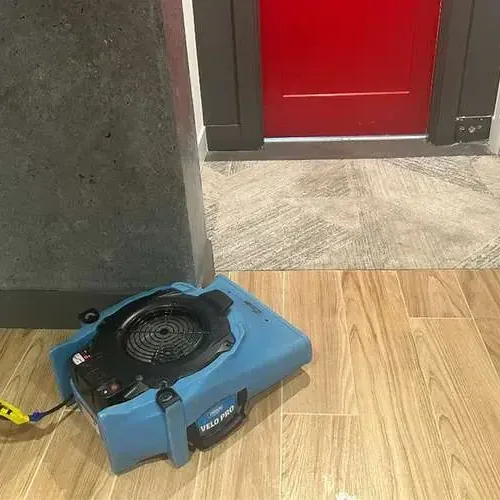
Do these four things while the water is still moving
- 1
Stop the source
Close the shutoff at the fixture or the main valve, and leave any panel in wet space alone.
- 2
Keep clear of power
Stay out of standing water near outlets, cords and appliances, and call an electrician if the floor is wet around the panel.
- 3
Record the damage
Photograph wet floors, walls and ceilings and the source before anything is moved, then list soaked belongings.
- 4
Raise and call
Lift small items and pillows onto dry surfaces, pull rugs up, then call the response team so extraction can start.
Water damage services for local homes
From a supply tube under a sink to a flooded garage, each job starts by finding where the water went.
Leaks inside the walls
Burst pipes, washer hookups and water heater leaks that soak drywall from within.
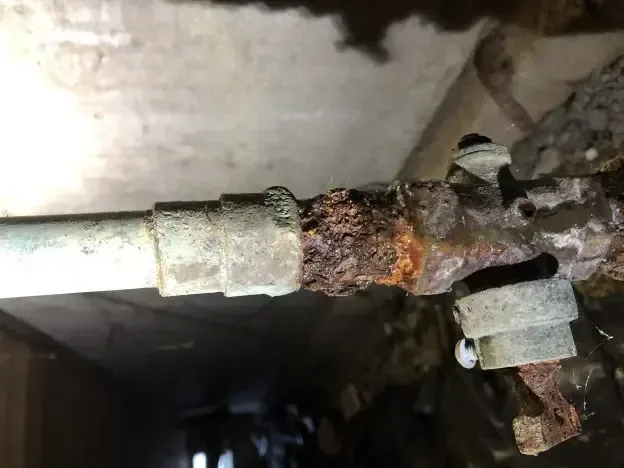 Burst Pipe Water DamageSplit supply pipes: valve shut, wet drywall opened, framing dried to a reading.View service
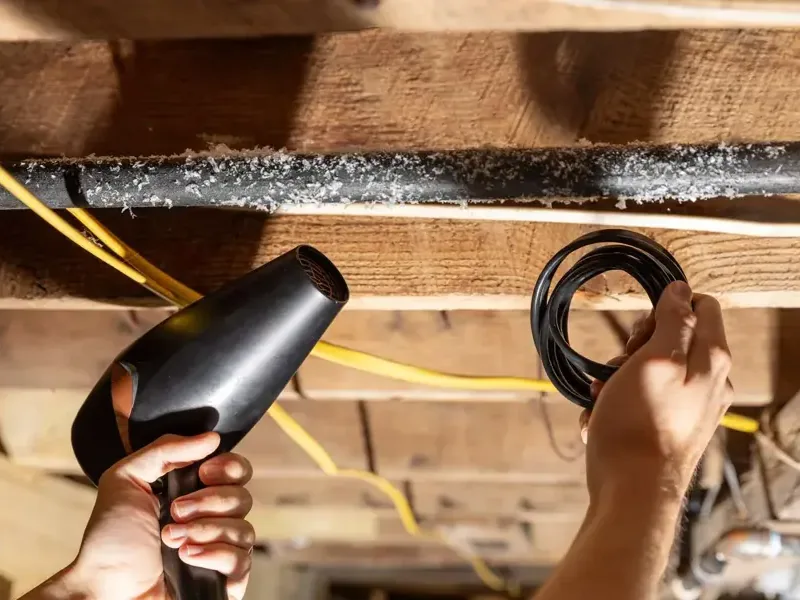 Frozen Pipe Water DamageWinter splits in attics, crawl spaces and exterior walls, found, thawed and dried out.View service
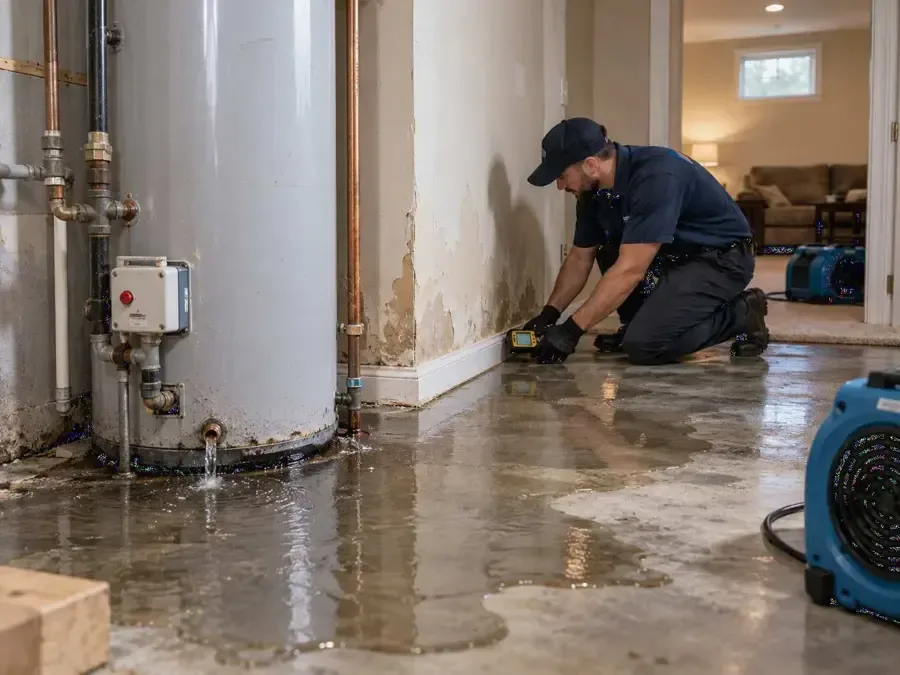 Water Heater Leak CleanupTank failures in garages, closets and attics, from floor extraction to ceilings below.View service
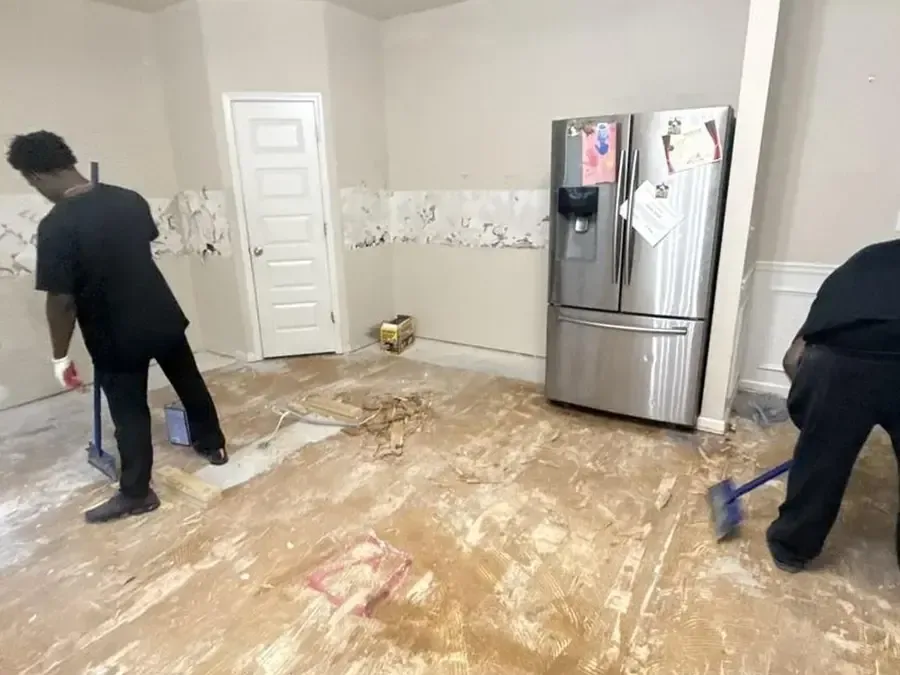 Washer and Appliance LeaksWasher hoses, dishwasher supplies and ice maker tubes that leak under floors and cabinets.View service
Water coming from above
Roof damage, ceiling stains and condensate overflow that drip into rooms below.
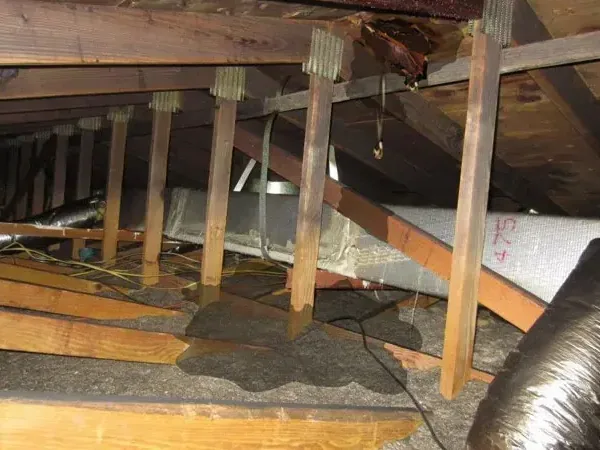 Roof Leak Water DamageWind and rain openings in shingles, flashing or decking that soak insulation and ceilings.View service
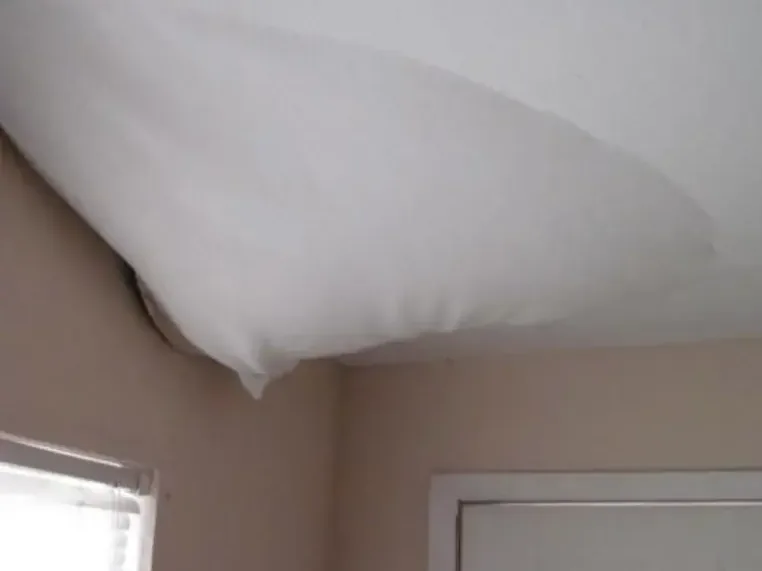 Ceiling Leak Water DamageStained or sagging ceilings traced back to a pipe, the roof or a drain above.View service
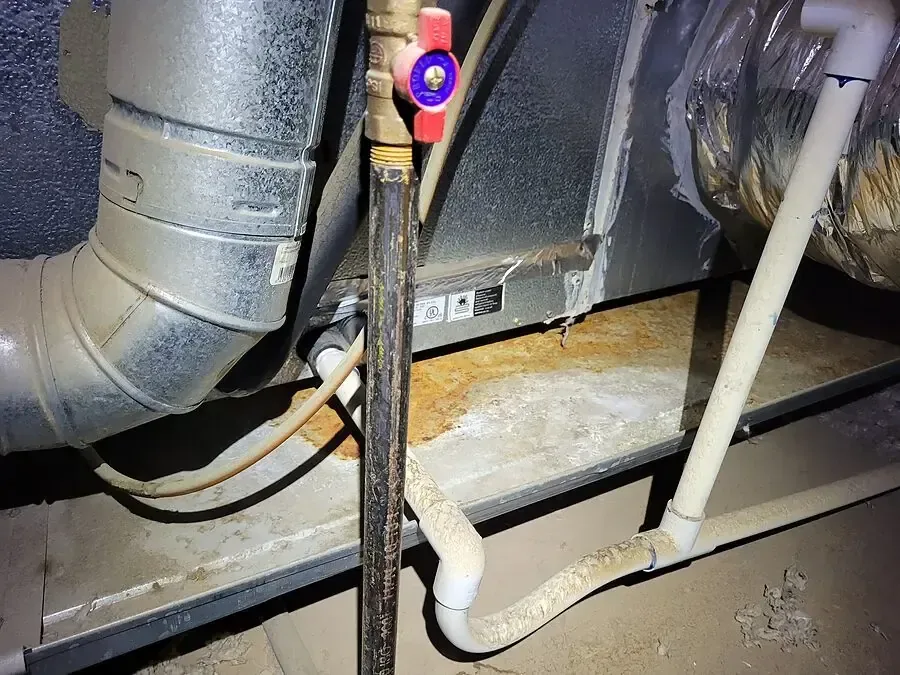 AC Condensate Leak Water DamageClogged condensate drains and overflowing pans that wet attic insulation and ceilings.View service
Water coming up from below
Rising storm water, crawl space seepage and sewage that comes up through floor drains.
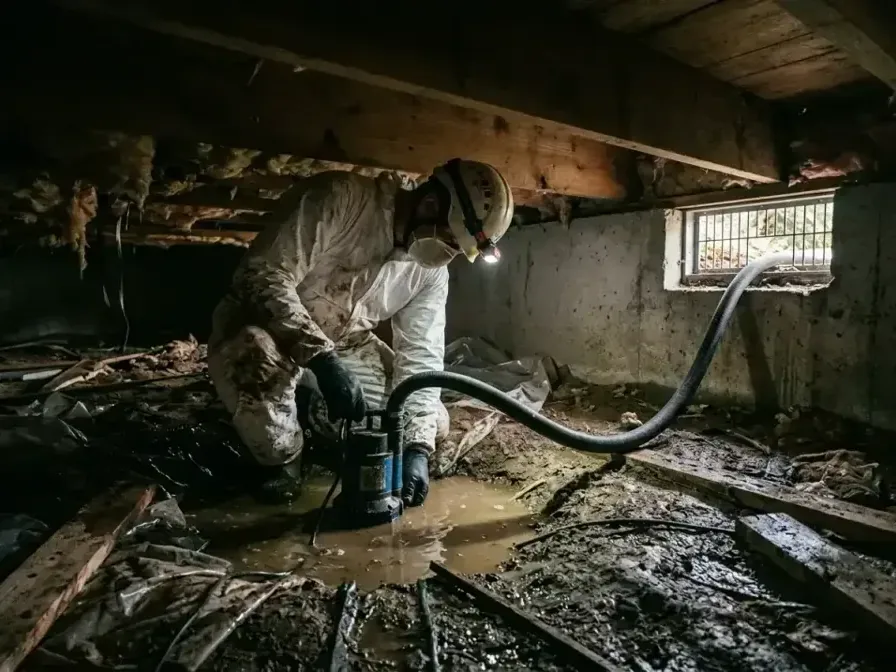 Crawl Space Water RemovalStanding water under the floor pumped out, wet insulation pulled and the joists dried.View service
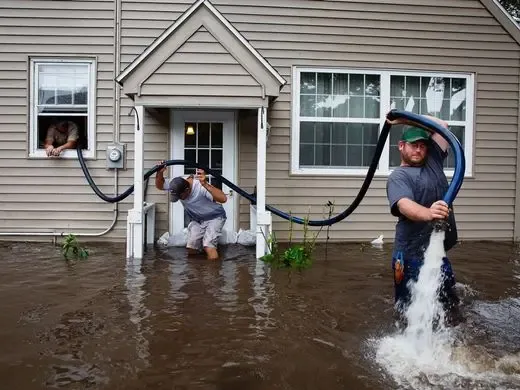 Storm and Flood Water CleanupRain and creek overflow pumped out of garages and living areas, with flood cuts and treatment.View service
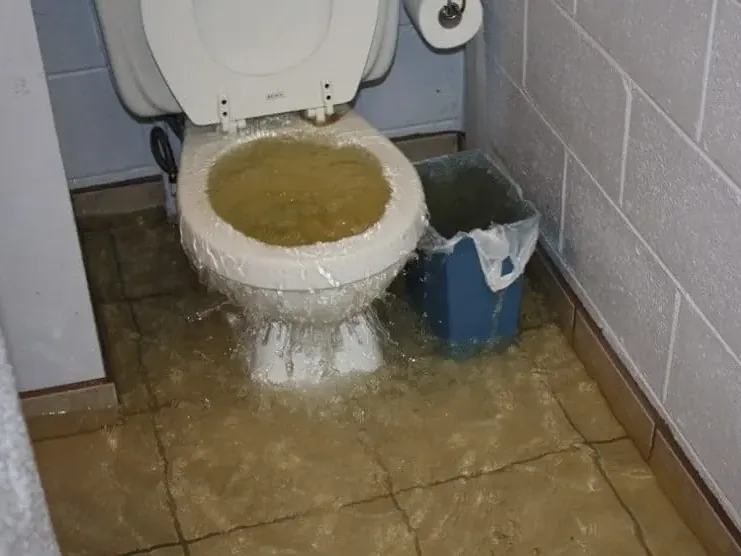 Sewage Backup CleanupBacked-up drains treated as contaminated water, with containment, removal and disinfecting.View service
Drying the structure afterward
Air movers and dehumidifiers pull moisture from framing, subfloor and drywall.
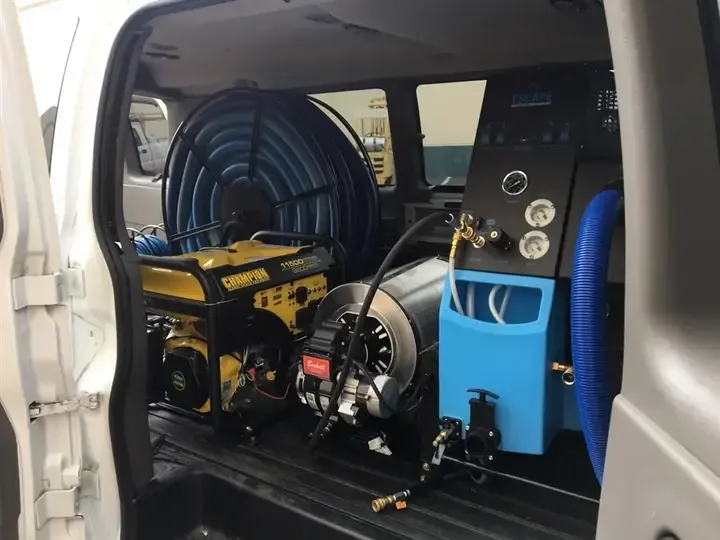
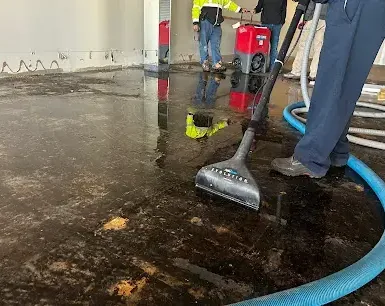 Water Extraction and RemovalTruck-mounted and portable pumps lift standing water from carpet, tile and wood floors.View service
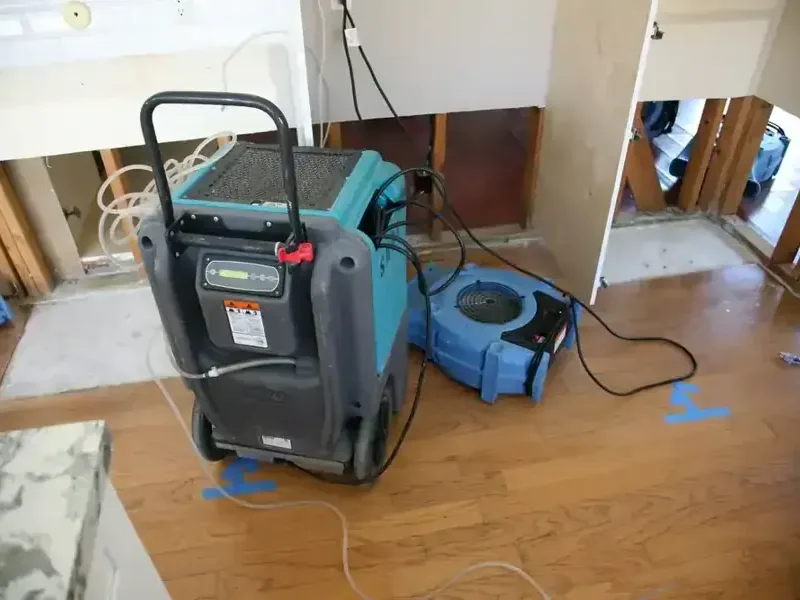 Structural Drying and DehumidificationAir movers and dehumidifiers dry framing and subfloors until moisture readings match dry goals.View service
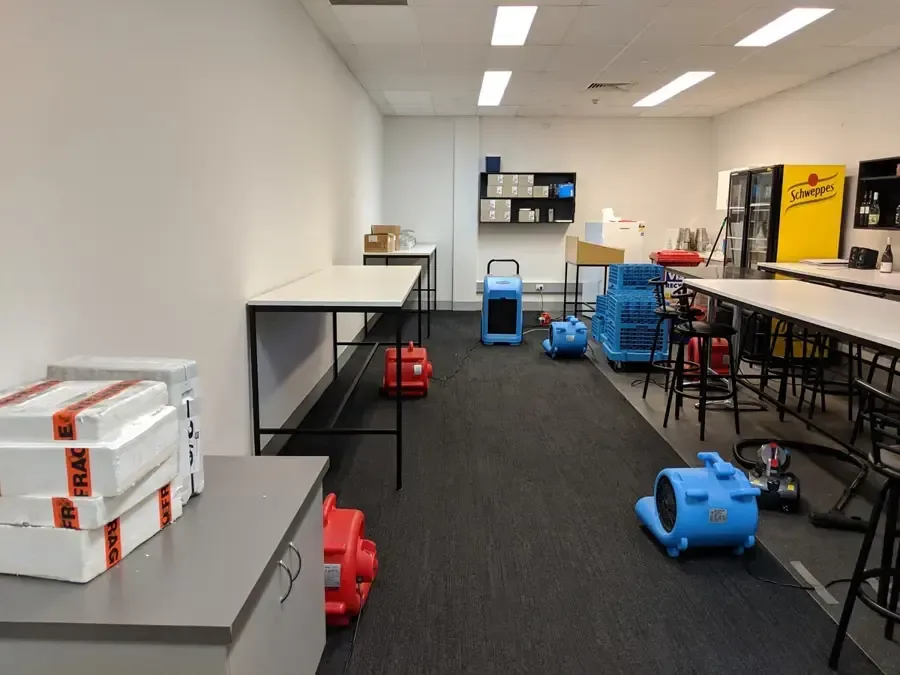 Commercial Water DamageShops, offices and warehouses dried in phases so the business can keep working.View service
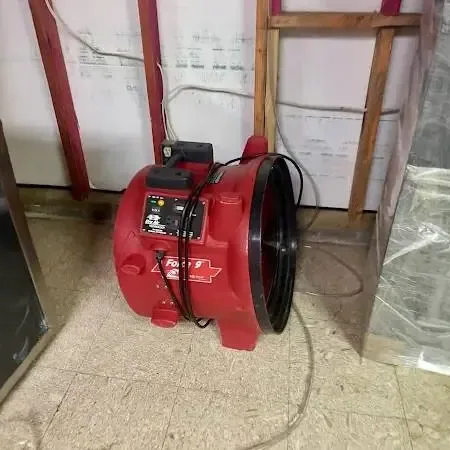
One team for the water, the drying and the paperwork
Raleigh Water runs water and sewer service for Garner, and the town says Raleigh handles breaks in street mains while owners handle breaks on private property. That split decides who fixes the source, and the drying team handles everything wet on the owner's side.
Photos, moisture logs and a written scope of work go to the insurance adjuster, so the claim has proof of what was wet and how it was dried.
Night and weekend crews
Pipes split and roofs open at any hour, so water losses get a crew after dark too.
Moisture proof, not guesses
Meters and a thermal camera show where water traveled, and daily readings show when drying is done.
Records for the adjuster
Dated photos, readings and itemized scopes are ready for the claim.
Utility know-how
The team knows when a leak belongs to Raleigh Water and when it is the owner's to repair.
Every job follows the same four steps
Measuring before and after is what separates a dried house from one that only feels dry.
- 1
Map the wet area
Meters and a thermal camera trace the water through floors, walls and ceilings, and the first readings are recorded.
- 2
Pull out the water
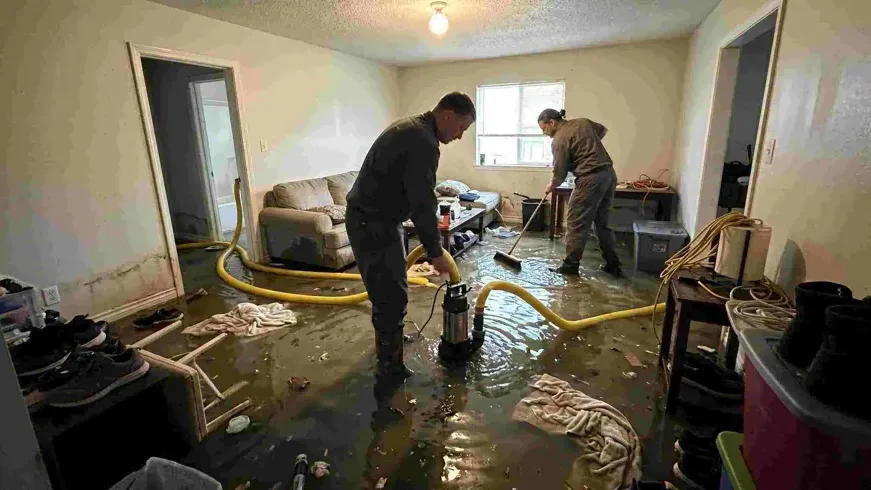
Pumps and extraction wands take off standing water, and soaked pad or insulation is cut out before it holds moisture.
- 3
Set the equipment
Air movers and low-grain dehumidifiers go where the map shows moisture, then get adjusted at every daily visit.
- 4
Confirm it is dry
Final readings are compared with the dry goal for each material, and equipment leaves only after those numbers match.
Equipment on a typical job
- Truck-mounted and portable pumps that lift standing water fast
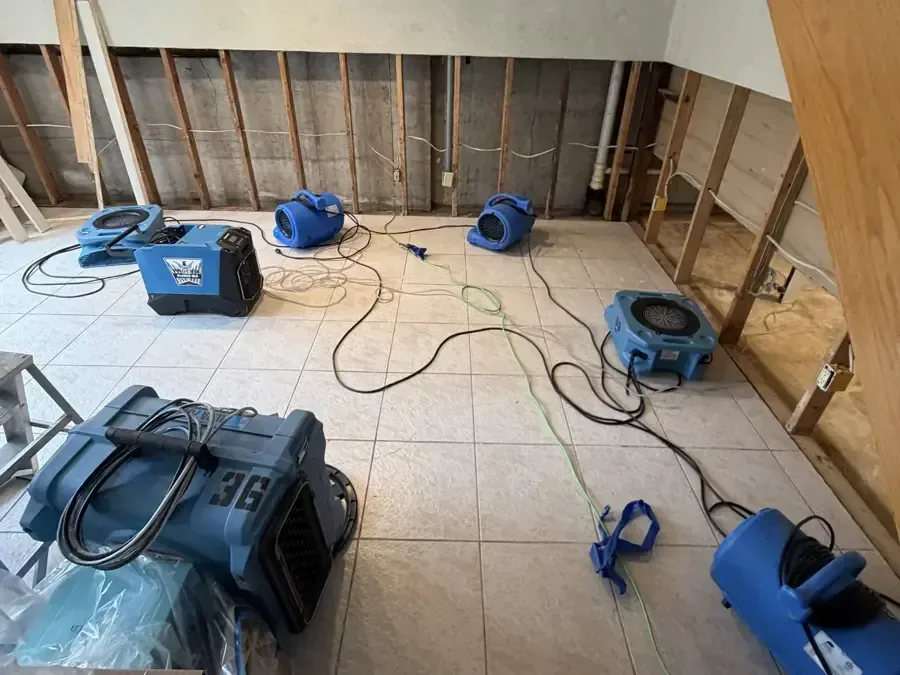
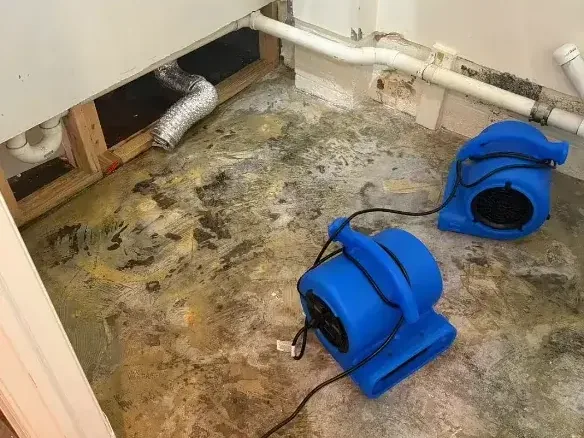
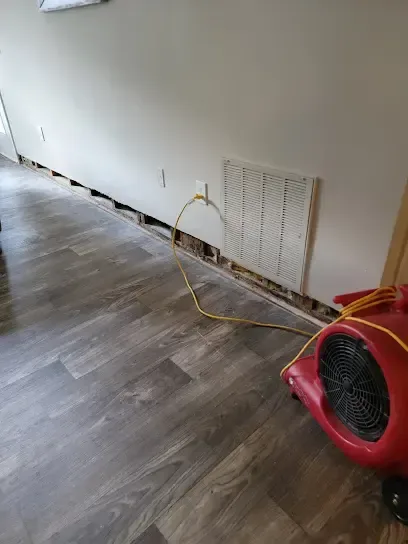
- Air movers set to push dry air across wet floors and wall bottoms
- Dehumidifiers sized to the room, plus desiccant units for tough jobs
- Moisture meters and a thermal camera that log the daily readings
What water damage cleanup usually costs here
A small, clean-water job can land near $1,000, while a contaminated loss across several rooms can pass $12,000, and the spread, the water category and the drying time set the number.
One room, caught early
$1,000 to $3,000- Water pumped off the floor
- Dried where it stands
- Meter checks each day
Wet walls or two rooms
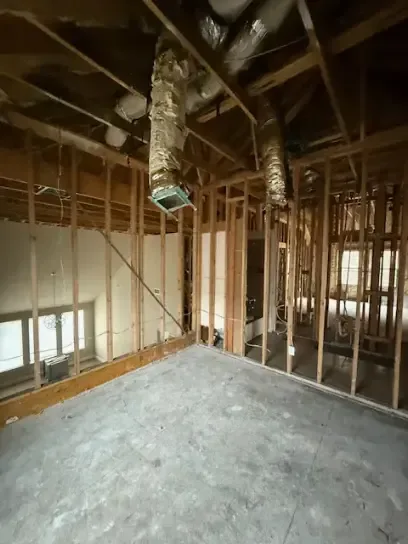
$3,000 to $7,000- Flood cuts at the baseboard
- Insulation and pad removed
- Dehumidifiers running
Contaminated or widespread
$7,000 to $12,000+- Sewage or storm water contained
- Heavy tear-out
- Desiccant drying and monitoring
Ranges are typical for the area and not a quote; an on-site walk-through with moisture readings produces the actual scope.
Clean, gray and black water are handled differently
Category one: clean water
A split supply pipe or a rain leak starts clean, and carpet and wood are easiest to save when extraction starts before the water sits.
Water extractionCategory two: gray water
Washer, dishwasher and sink overflow carries some contamination, so soaked pad and low drywall are usually removed instead of dried.
Appliance leak cleanupCategory three: black water
Sewage and creek flood water carry bacteria, so the area is sealed, porous materials are removed and what remains is disinfected.
Sewage backup cleanupDocumenting the loss for your claim
Adjusters want proof of the cause, the damage and the drying, so the file is built as work happens.
- Photos of the source and every wet surface
- Dated moisture readings for each room
- An itemized scope of work
- A list of removed materials and contents
- Notes on the water category
Owners file the claim themselves with their own insurer, and flood damage from rising water usually sits under a separate flood policy, so it helps to read the policy early and ask the adjuster what applies.
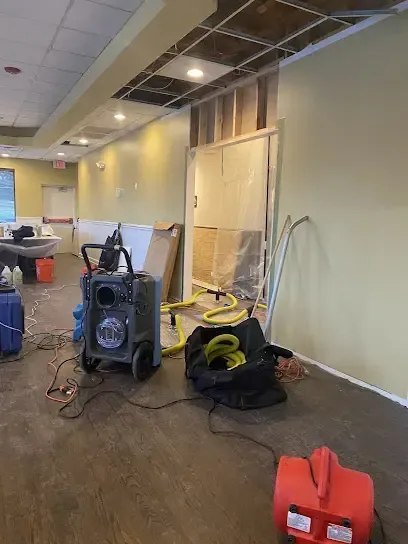
Equipment and tear-out from typical jobs
Where the crews work in and around Garner
Crews work across the town's neighborhoods and along its main roads, including the Lake Benson area and U.S. 70.
ZIP codes covered
ZIP 27529 covers the town, and some unincorporated parts of Wake County and the Cleveland community in northern Johnston County also carry Garner mailing addresses.
Historic center
Neighborhoods
More neighborhoods
Corridors and shopping
Tell the crew what happened
Calls come from kitchens, garages and crawl spaces in Garner at all hours, and the first questions are where the water started, how far it spread, whether the source is shut off and which materials are wet.
What puts Garner homes at risk of water damage
Pipes, storms, creeks and roofs each bring water into the house, and the risk shifts with the season.
Inside and under the house
- Supply pipes, washer hoses, water heaters and air handler drains hide in walls, closets and attics, so small leaks can run a long time unseen.
- Where a home has a crawl space, water that gets under the floor needs pumping and the framing needs drying.
- On private property, a broken pipe or drain is the owner's repair, so the source is found before cleanup starts.
Storms, creeks and weather
- The EF-1 tornado of December 10, 2023 damaged roofs and toppled trees, and an open roof lets rain soak the ceilings below.
- A flash flood was recorded on June 11, 2006 with no damage reported, and the county plan notes flooding also occurs outside mapped zones.
- A sleet and freezing rain storm crossed central North Carolina on January 24 and 25, 2026, cold enough to threaten pipes in attics.
Questions from local homeowners
Who fixes a water main break in the street?
Raleigh Water supplies Garner's water and sewer, and the town says Raleigh repairs breaks in the street mains. Breaks on private property are the owner's, which means a plumber fixes the pipe while the drying team handles the wet structure.
What should be done first after a pipe bursts?
Close the shutoff valve, keep clear of outlets and wet cords, take photos, and lift small items off wet floors. Then the extraction crew can pump out standing water and map the moisture.
How long does drying take?
Most homes need three to five days with equipment running, though hardwood, thick insulation or a long soak can add time. Readings taken at each visit show when the structure reaches its dry goal, and the equipment is removed only then.
What does the adjuster need to see?
Photos of the source and the damage, dated moisture readings, an itemized scope and a list of removed materials. The team keeps those records as the job moves along so nothing has to be rebuilt later.
Who handles a sewer backup?
Raleigh Water takes reports of a sewer backup or overflow at any hour, and an owner can report it while the cleanup crew works inside. The crew follows the steps in sewage backup cleanup: it seals off the area, removes soaked porous materials and disinfects the rest.
Can rain from a damaged roof be cleaned up?
Yes. A March 29, 2014 EF0 tornado took part of one house's roof, and any opening like that lets rain into insulation and ceilings. The crew removes wet materials and dries the attic while a roofer repairs the opening.
Can creek or storm water get into homes here?
About 7.3 percent of the town's land lies in the mapped 100-year floodplain, with Swift Creek feeding Lake Benson and Mahlers Creek near New Bethel Church Road. Water from a creek or storm is handled as contaminated, so porous materials are usually removed.
Do frozen pipes cause water damage here?
Yes. A pipe that splits in an attic, crawl space or exterior wall can soak insulation and ceilings once it thaws. The frozen pipe water damage work finds where the water went, removes what is wet and dries the area.
Does the work cover offices and shops?
Yes. Shopping centers along U.S. 70 such as White Oak, Timber Crossing and Forest Hills, plus warehouses and offices, get phased drying under commercial water damage so the rest of the building can keep working.
Who is responsible for a leaking water heater?
A water heater or washer hose leak sits on the private side, so the owner handles the repair, normally through a plumber. The drying team extracts the water and dries the floor, wall bottoms and anything below.
How fast does the water need to come out?
Wet drywall, pad and framing can start growing mold within 24 to 48 hours, which is why extraction and drying begin as soon as the source is stopped.
Stopping the spread starts with one call
Tell the team where the water came from, and the extraction crew will pump it out, remove wet materials and dry the structure to a measured goal.