Water Extraction in Garner, NC
Standing water on a floor soaks into pad, baseboards and walls within the first day. The extraction crew pumps it out first so drying equipment works on damp materials, not on a flood.
(888) 578-4720Call for water removal now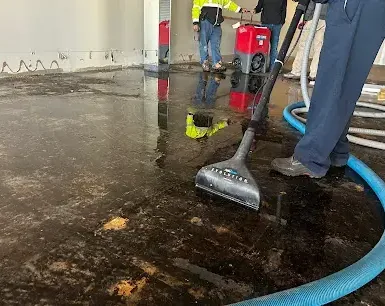
First steps for water extraction
- 1
Find the source
Shut the main or fixture valve, or turn off the appliance, so no new water arrives.
- 2
Keep power away
Stay out of standing water near outlets and cords, and let an electrician make wet circuits safe.
- 3
Lift what you can
Raise small furniture, pull up rugs and move boxes onto dry surfaces.
- 4
Photograph, then call
Capture the water level and wet contents, then call the extraction crew so the pump-out starts.
Trade standards on this job
- Raleigh repairs street mains, while the owner repairs private pipes
- Truck-mounted units handle large carpeted areas
- Carpet pad is checked and pulled when it holds water
What does water extraction cost in Garner, NC?
Extraction alone costs about $800 to $2,000 for one room of clean water and up to $5,500 or more for a whole level or a crawl space, before any structural drying is added.
Single room, clean water
$800 to $2,000- Wand or truck-mounted pass
- Wet pad checked
- Moisture map made
Several rooms or a floor
$2,000 to $4,000- Pad extracted and lifted
- Ceiling below checked
- Baseboards pulled
A whole level or crawl space
$4,000 to $5,500+- Submersible pumps used
- Contaminated water handled
- Hand-off to drying
Ranges are typical, not a quote: the water category, the square footage, the materials and how fast drying started move the number most. Try the water damage cost calculator for a closer planning range.
How water extraction is handled, start to finish
Measure first, remove the water, dry, then prove it dry with readings. The order does not change.
(888) 578-4720See the extraction plan- 1
Stop and locate
The source is shut off and the water is traced to the rooms it reached.
- 2
Set up the extractors
Truck-mounted units and portable wands are placed by floor type.
- 3
Pump and lift
Standing water goes out first, then carpet is extracted and wet pad pulled.
- 4
Map the moisture
Meters and a camera mark what is still wet for the drying plan.
In Garner, the source of the water decides who acts first: Raleigh handles breaks in street mains, and the property owner handles breaks on private property. Extraction starts once the source is stopped and located, and it is the step that decides how much of the house needs drying afterward.
How extraction works on each floor type
Truck-mounted units pull the most water from carpet and pad. Portable extractors and wands handle tile, vinyl and hardwood, and submersible pumps take deep water from garages and low rooms. The tool is matched to the floor so nothing is damaged while the water comes out.
- Carpet and pad, pulled flat and extracted layer by layer
- Tile and vinyl, wanded dry along grout seams and thresholds
- Hardwood, extracted quickly before it cups
- Garages and low rooms, cleared with submersible pumps
Why speed matters after the leak stops
Water keeps wicking into drywall, baseboards and cabinet bases as long as it stands. Removing it early cuts the amount of material that has to be torn out and the number of days equipment has to run.
The Town of Garner's engineering staff answer resident questions about drainage, erosion and flooded structures, which helps when water entered from outside rather than from a pipe.
From extraction to drying
After the pump-out, meters and a thermal camera build a moisture map that shows the drying team where wet materials remain. That map sets up structural drying, with equipment placed room by room.
A moisture map prevents guessing, because water often travels under flooring and behind baseboards far past the visible wet edge.
Contaminated water changes the plan: porous materials come out and surfaces are treated, as described under storm and flood water cleanup. Either way, no drying equipment is set until the standing water is gone.
Water extraction across Garner and nearby
Extraction work covers homes and shops across the town, including Kyndal, Turner Farms, Meadowbrook, Adams Point and the White Oak area, as well as Timber Crossing and Forest Hills, within ZIP 27529.
The same service nearby: water extraction and removal in Holly Springs, Apex, Morrisville.
Water Extraction and Removal: common questions
How soon should water be extracted?
As soon as the source is stopped, since wet pad, drywall and baseboards keep wicking water the longer it stands.
Can a wet vac do the job?
It helps with small spills, but pooled water in carpet, under pad and across tile needs truck-mounted or portable extractors that pull far more water.
What happens to wet carpet pad?
Pad is often removed because it holds water and cannot be cleaned, while the carpet itself can sometimes be extracted, dried and kept.
Is the water category checked?
Yes. Clean, gray and black water are handled differently, so the source and the materials it touched are noted first.
Who handles the pipe or main that leaked?
Raleigh handles breaks in street mains and the owner handles private pipes and fixtures, so a plumber fixes the pipe while extraction clears the house.
Does extraction include drying?
Extraction removes the standing water, then a moisture map shows what is still wet and structural drying handles the rest.
What if water reached a ceiling below?
The ceiling is scanned and opened where it reads wet, since water travels down through light fixtures and seams.
Water on the floor right now
Tell the crew how deep the water is and which rooms are affected, and the extraction crew will plan the pumps, the floor handling and the moisture map.