Structural Drying in Garner, NC
Pulling the standing water out is only half the job. Framing, subfloor and drywall hold moisture that the drying team removes with air movers and dehumidifiers, checked by meter until each material is dry.
(888) 578-4720Call about drying after water damage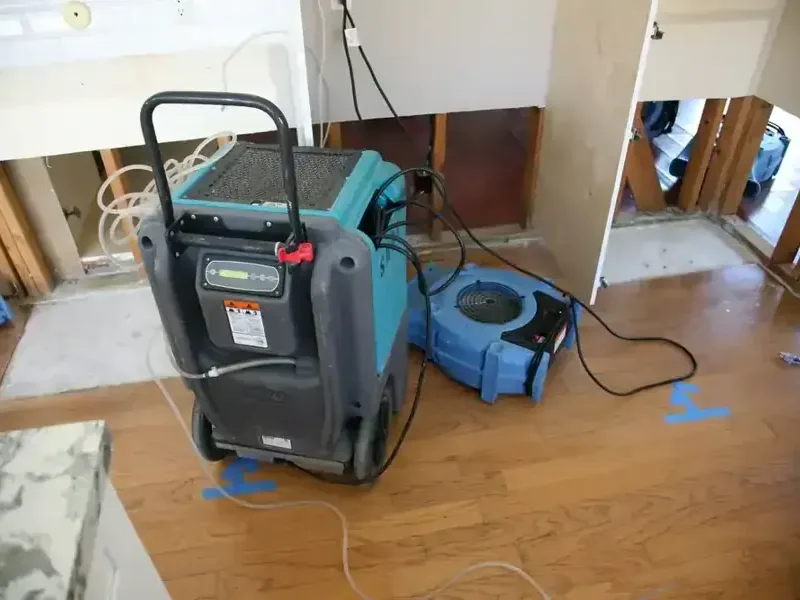
First steps for structural drying
- 1
Keep doors closed
Keep wet rooms closed so the equipment dries the affected area and not the whole house.
- 2
Leave the gear running
Do not turn off or move the air movers and dehumidifiers between visits.
- 3
Open nothing yourself
Leave baseboards, flooring and drywall alone until the crew marks what is wet.
- 4
Expect daily checks
Plan for the drying team to read meters each day and adjust the equipment.
Trade standards on this job
- Each material gets its own dry goal
- Equipment moves toward wet spots at each visit
- Final readings, not the calendar, end the job
What does structural drying cost in Garner, NC?
Structural drying runs from about $1,500 for one or two rooms to $8,000 or more for hardwood or a severe class four loss, depending on rooms, materials and days of equipment.
One or two rooms, light loss
$1,500 to $3,000- Air movers and a dehumidifier
- Daily meter readings
- Several days of drying
Whole floor or heavy loss
$3,000 to $5,500- More equipment placed
- Wall cavities dried
- Containment where needed
Hardwood or dense materials
$5,500 to $8,000+- Floor drying mats
- Desiccant dehumidifiers
- Longer monitoring
Ranges are typical, not a quote: the water category, the square footage, the materials and how fast drying started move the number most. Try the water damage cost calculator for a closer planning range.
How structural drying is handled, start to finish
Measure first, remove the water, dry, then prove it dry with readings. The order does not change.
(888) 578-4720See the drying plan- 1
Map the moisture
Meters and a camera mark every wet surface before equipment is set.
- 2
Place the equipment
Air movers and dehumidifiers are sized and placed by room.
- 3
Check each day
Readings are taken and the setup is adjusted at every visit.
- 4
Confirm the goal
Equipment is pulled once each material reads at its dry goal.
After the source is stopped and the standing water is out, framing, subfloor and drywall still hold moisture. In Garner homes the drying team removes it with air movers and dehumidifiers until meters show each material has reached its dry goal.
How the dry goal is set
Each material has its own target, taken from readings in unaffected parts of the house. Drywall, studs, subfloor and hardwood dry at different speeds, so each one is tracked on its own and none is judged by feel.
- Air movers push dry air across surfaces and into wall bottoms
- LGR dehumidifiers pull moisture out of the air and the room
- Desiccant units handle cold, large or stubborn areas
- Floor mats and wall cavity ports reach hardwood and framing
Drying classes and equipment
Light losses in one or two rooms dry with a few air movers and one dehumidifier, while a whole floor or hardwood needs more equipment and sometimes containment. Class four losses, where moisture sits in dense materials, call for desiccant units and longer monitoring.
Equipment is adjusted at each visit because rooms dry unevenly: units move toward wet spots and leave dry ones alone. See water extraction for what comes before this step.
When the drying is finished
Final readings match the dry goal for each material, and only then is equipment removed. The log of daily readings, photos and equipment placement goes into the claim file.
A repair contractor can then replace drywall, trim and flooring knowing the structure is dry. For losses that start with a leak, see burst pipe water damage.
Structural drying across Garner and nearby
Drying equipment is set in homes and businesses across the town, from Downtown Garner and Adams Point to Oak Manor and Cleveland Springs, and in suites along U.S. 70, within ZIP 27529.
The same service nearby: structural drying and dehumidification in Holly Springs, Apex, Morrisville.
Structural Drying and Dehumidification: common questions
Why are fans and a dehumidifier needed?
Fans move air over wet surfaces while the dehumidifier removes the moisture they release, and neither works well alone.
How long will the equipment run?
Usually several days, though hardwood, thick framing or a long soak can extend it. Meter readings, not a set number of days, decide.
Is the noise normal?
Yes. Air movers and dehumidifiers are loud, and their hum is a sign that the drying is working.
Will the power bill go up?
It can during a drying job, since the equipment runs around the clock, and the adjuster can say whether the claim covers it.
Can wet drywall be saved?
Clean-water drywall that is not sagging often dries in place, while drywall that bubbles, softens or touched contaminated water is removed.
How is dry confirmed?
Meters compare each material with its dry goal, and the readings are logged so the file shows the numbers, not an opinion.
Wet house, dry goal, one plan
Tell the crew which rooms got wet and what the floors are made of, and the drying team will plan the equipment, the daily readings and the finish.