Structural Drying and Dehumidification in Apex, NC
Drywall, framing and subfloor can look dry while holding moisture inside. The drying team sets measured equipment, logs the readings and keeps going until every material reaches its dry goal.
(888) 578-4720Start measured drying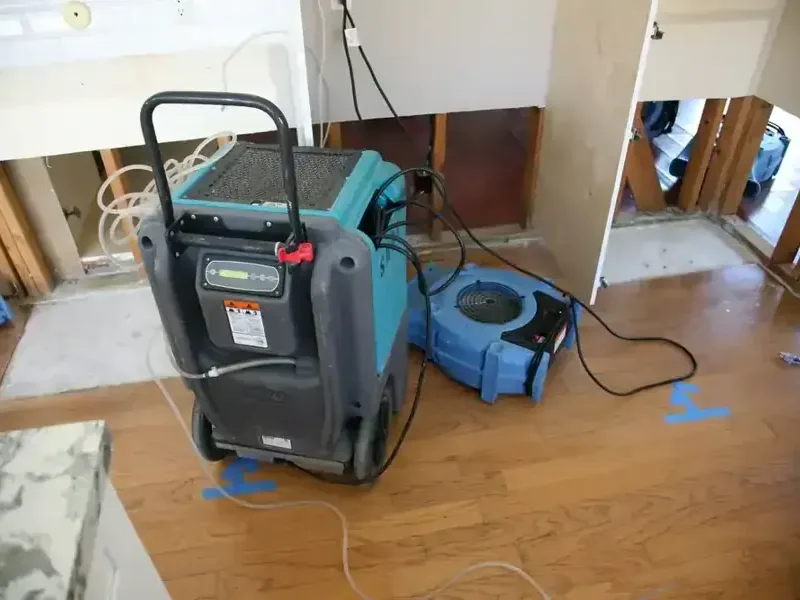
First steps for structural drying
- 1
Stop the water
Make sure the source is fixed, because equipment cannot out-dry a leak that is still running.
- 2
Keep doors closed
Closed doors and windows let the dehumidifiers work against a smaller volume of air.
- 3
Leave the gear alone
Do not move or unplug the equipment, since each unit sits where the readings call for it.
- 4
Share the readings
Keep the daily log and photos for the insurance file.
Trade standards on this job
- Equipment placement follows the moisture map.
- Readings are logged at every visit.
- Gear leaves only when materials reach their dry goals, not on a calendar date.
What does structural drying cost in Apex, NC?
Structural drying runs about $1,500 to $8,000 or more, depending on the class of loss, how many rooms are wet and what the floors are made of. Hardwood and dense materials push the job higher.
One or two rooms, Class 1 or 2
$1,500 to $3,000- Air movers and LGR units
- Daily log kept
- Several days of drying
Whole floor or Class 3
$3,000 to $5,500- More equipment on site
- Wall cavities dried
- Containment barriers
Hardwood or Class 4
$5,500 to $8,000+- Floor drying mats
- Desiccant dehumidifiers
- Longer monitoring
Ranges are typical, not a quote: the water category, the square footage, the materials and how fast drying started move the number most. Try the water damage cost calculator for a closer planning range.
How structural drying is handled, start to finish
Measure first, remove the water, dry, then prove it dry with readings. The order does not change.
(888) 578-4720Read the drying steps- 1
Map the moisture
Meters and a thermal camera mark every wet material and its starting level.
- 2
Place the equipment
Air movers and dehumidifiers go in where the map shows the most water.
- 3
Log each visit
Moisture, temperature and humidity readings go into a daily record.
- 4
Release the gear
Equipment comes out after every material reaches its dry goal.
Structural drying removes moisture from framing, subfloor and drywall once the water source is stopped. It is a measured process, not a few fans in a hallway, and its job is to return every material to the moisture level it had before the loss.
How the classes shape the plan
Drying plans follow the class of loss, which measures how much water the materials took on and how fast they release it. A pipe leak in one room is often Class 1 or 2, while a ceiling failure that drops water through two floors pushes the plan toward Class 3.
- Class 1: little water and low-porosity materials
- Class 2: a whole room of carpet and wall bottoms
- Class 3: water from above, soaking ceilings, walls and floors
- Class 4: dense wood and slab materials that hold deep moisture
What the equipment does
Air movers push dry air across wet surfaces, and LGR dehumidifiers pull water vapor out of the room. Desiccant units handle cold or humid conditions where refrigerant units slow down. Floor drying mats pull water up from hardwood, and small holes in walls let warm air reach the cavity. Containment keeps humidity from spreading to dry rooms, and temperature control matters because warmer air holds more moisture.
Equipment is placed from the moisture map, then moved as readings change.
Why daily readings decide the finish
Each visit records moisture content, temperature and humidity, and the numbers show whether the drying is working. Equipment is reduced when materials near their goals and removed once every reading passes.
Extraction comes first in water extraction, and most pipe losses start from burst pipe water damage.
Structural drying across Apex and nearby
Drying jobs run through Bradley Park, Scotts Mill, Beaver Creek Crossings and Waterford Green, and in homes near the Apex Peakway and Hunter Street, with ZIP codes 27502, 27523 and 27539 all covered.
The same service nearby: structural drying and dehumidification in Holly Springs, Morrisville, Garner.
Structural Drying and Dehumidification: common questions
How long does structural drying take?
Most losses take three to five days, though hardwood, or thick plaster can take longer. The daily readings show when drying is finished.
Why are dehumidifiers and fans both needed?
Air movers move moisture off the surface, and dehumidifiers take it out of the air. Without both, the humidity stays high and drying stalls.
Can I turn the equipment off at night?
It should stay on, since drying needs constant airflow and dehumidification. Turning it off lets humidity rise and moisture return to the materials.
What are the drying goals?
The goal is a moisture level that matches an unaffected area of the same material in the same home. The crew sets that reference before drying starts.
Why drill small holes in the walls?
Warm air blown into the wall cavity dries studs and the back of the drywall without removing the board. The holes are small and easy to patch.
Will the drying logs help insurance?
The logs show what was wet, how it dried and when it reached the dry goal. Adjusters can use them to support the drying portion of a claim.
Dry means measured, not guessed
The drying team places equipment from the moisture map, logs readings every visit and removes it only once framing, subfloor and drywall are dry in every room.