Crawl Space Water Removal in Holly Springs, NC
Red clay holds water under raised floors long after a storm or a leak. The extraction crew pumps it out, pulls wet insulation and dries the joists and subfloor before the floors above start to cup.
(888) 578-4720Water under the floor? Call now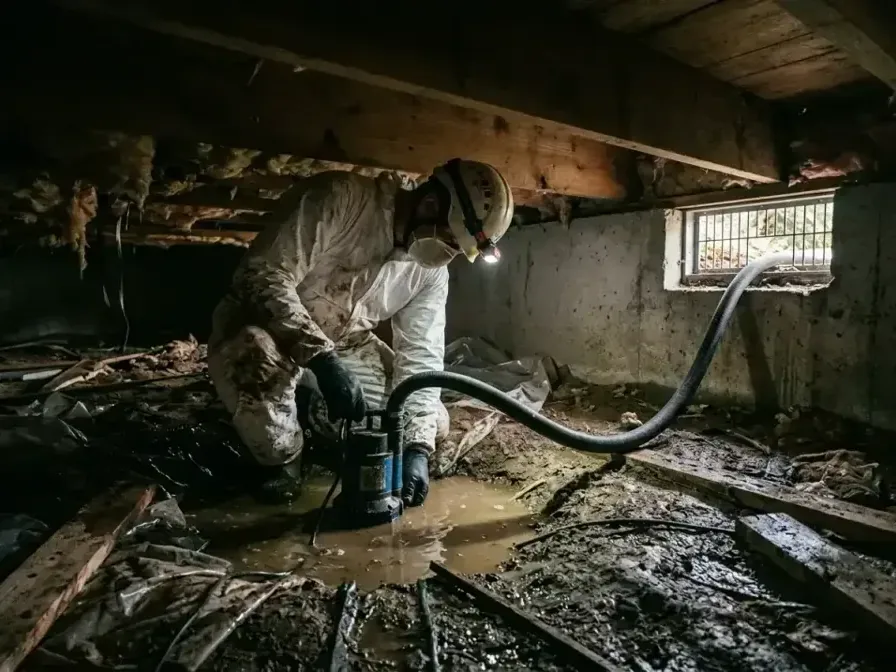
First steps for crawl space water removal
- 1
Stay out if power is on
Do not enter a flooded crawl space until power to that area is off.
- 2
Check the sump
If there is a sump pump, see whether it runs and whether its breaker tripped.
- 3
Stop the source
Close the main if a pipe is leaking; turn downspouts away if rain is the source.
- 4
Note the floors above
Photograph soft spots, cupping boards and musty smells in the rooms over the crawl space.
Trade standards on this job
- Water is pumped out before any drying equipment goes in.
- Soaked insulation and a flooded vapor barrier come out.
- Joists and subfloor are read daily until they match a dry reference.
What does crawl space water removal cost in Holly Springs, NC?
Crawl space water removal here typically runs $1,200 to $6,500, depending on how much water is standing, whether insulation and the vapor barrier must come out, the water category and how long the framing needs to dry.
Pump and dry
$1,200 to $2,500- Standing water pumped
- Dehumidifier set
- Daily wood readings
Insulation and barrier out
$2,500 to $4,500- Wet batts removed
- Vapor barrier pulled
- Joists and subfloor dried
Category 3 or a long soak
$4,500 to $6,500+- Storm or sewer water
- Cleaning and antimicrobial
- Extended drying
Ranges are typical, not a quote: the water category, the square footage, the materials and how fast drying started move the number most. Try the water damage cost calculator for a closer planning range.
How crawl space water removal is handled, start to finish
Measure first, remove the water, dry, then prove it dry with readings. The order does not change.
(888) 578-4720Start drying under the floor- 1
Inspect and test
The source is found, the water category set and the framing measured.
- 2
Pump and vacuum
Submersible pumps and wet vacuums clear the standing water.
- 3
Remove the wet
Soaked insulation and a flooded vapor barrier are bagged and removed.
- 4
Dry the framing
Dehumidifiers and air movers run until joist readings match a dry reference.
Many homes around town sit on crawl spaces over dense Piedmont clay. Clay drains slowly, so water that gets under the house from a storm, a gutter dumping at the foundation, a failed sump pump or a broken pipe can sit there for days. Standing water under a floor raises the humidity in the whole house and soaks the wood that holds it up.
Where crawl space water comes from
The source decides how the job is handled. Clean water from a burst pipe or a water heater is Category 1. Rain that crossed the yard, ran along the foundation and seeped in is treated as Category 3, because it carries soil and runoff. A broken sewer pipe under the house is Category 3 from the start.
- Heavy rain and tropical storms with poor grading or short downspouts
- A sump pump that failed or lost power during a storm
- Supply or drain pipe leaks under the floor, including frozen pipes
- AC condensate and sweating ducts in humid summers
How the crawl space is dried
The extraction crew pumps standing water with submersible pumps and pulls what is left with wet vacuums. Fiberglass batts that sagged or soaked through come out, along with a torn or flooded vapor barrier. Then the drying team runs dehumidifiers sized for the space, with air movers aimed at the joists and subfloor. Readings are taken on the wood every day until they match a dry reference.
Wet wood under the floor is what turns into cupped hardwood and soft spots above, so drying the framing is the point of the job, not just clearing the puddles. More on the method: structural drying.
Keeping water out next time
Grading, gutters and drainage belong to a contractor, and the fixes are often simple: downspout extensions, yard slope away from the house and a tested sump pump. The crawl space water risk check gives a quick read on a home's risk. The EPA's indoor air quality page explains why damp spaces under a home affect the air inside, and Ready.gov covers flood safety, including staying out of flooded spaces with the power on.
Crawl space water removal across Holly Springs and nearby
The restoration team covers ZIP 27540 end to end: downtown and Main Street, Sunset Ridge, 12 Oaks, Holly Glen, Woodcreek, Arbor Creek and the homes along Avent Ferry Road, Sunset Lake Road and the NC 55 Bypass.
Nearby coverage reaches Apex, Fuquay-Varina, Cary, New Hill, Willow Spring, Garner, Morrisville.
Crawl Space Water Removal: common questions
Is standing water in a crawl space an emergency?
It is urgent. The longer it sits, the more the joists, subfloor and insulation soak up, and humid air spreads into the house above.
Why does water keep collecting under my house?
Red clay drains slowly, so rain sent toward the foundation by short downspouts or flat grading seeps in and pools. A failed sump pump makes it worse.
Does wet crawl space insulation have to be replaced?
Fiberglass batts that soaked through or sagged are removed. They hold water against the subfloor and lose their insulating value.
How long does a crawl space take to dry?
Usually three to seven days with dehumidifiers and air movers running. Category 3 water and long soaks take longer.
Is crawl space water covered by insurance?
Water from a burst pipe is commonly covered; groundwater and storm seepage often are not without a flood policy. Coverage depends on your policy, so check with your own insurer.
Will my hardwood floors above be damaged?
They can cup if the subfloor stays wet. Drying the framing from below quickly is the best way to protect them.
Water sitting under the house? Get it out today.
Every day on the clay soaks more of the framing that holds up the floor. The extraction crew pumps it and dries the joists, 24/7.