Roof Leak Water Damage in Holly Springs, NC
Wind-driven rain finds lifted shingles, worn flashing and cracked vent boots, then soaks the attic before a stain ever shows. The drying team pulls the wet insulation and dries the decking, joists and ceiling.
(888) 578-4720Roof leaking in the storm? Call now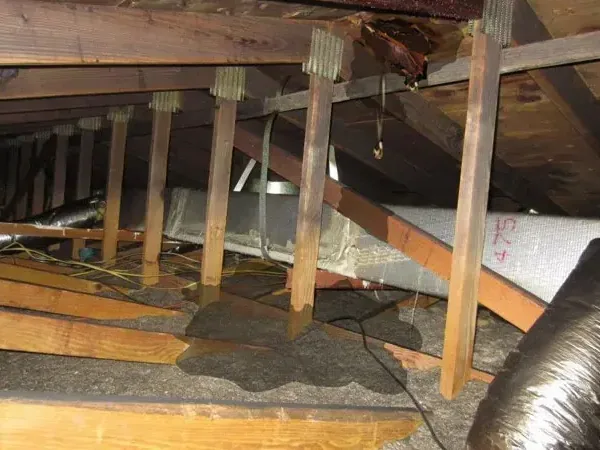
First steps for roof leak water damage
- 1
Catch the drip
Set buckets under drips and move furniture and electronics out of the way.
- 2
Keep clear of a sagging ceiling
A ceiling that fills with water can drop; keep people and pets out from under it.
- 3
Stay off the roof
Do not climb a wet roof in a storm; wait for the roofer or the tarp crew.
- 4
Photograph inside and out
Photograph the ceiling, the attic if it is safe to enter and any visible roof damage.
Trade standards on this job
- Attic insulation that soaked through is removed, not dried.
- Decking and rafters are read with meters, not judged by eye.
- The ceiling is opened only if it sags or reads wet after drying.
What does roof leak water damage cost in Holly Springs, NC?
Roof leak water damage cleanup here typically runs $1,000 to $7,500, depending on how much attic insulation got wet, whether ceiling drywall must come out and how many rooms the water reached. The roof repair is separate.
Small leak, one ceiling
$1,000 to $2,500- Attic inspection
- Ceiling dried in place
- Daily readings
Wet insulation and ceilings
$2,500 to $5,000- Insulation bagged out
- Ceiling drywall opened
- Attic dehumidifier
Storm opening, several rooms
$5,000 to $7,500+- Emergency tarp coordination
- Walls and floors affected
- Extended drying
Ranges are typical, not a quote: the water category, the square footage, the materials and how fast drying started move the number most. Try the water damage cost calculator for a closer planning range.
How roof leak water damage is handled, start to finish
Measure first, remove the water, dry, then prove it dry with readings. The order does not change.
(888) 578-4720Dry the attic before the next storm- 1
Trace the leak path
Meters follow water from the entry point across the decking and rafters.
- 2
Remove wet insulation
Soaked insulation is bagged and carried out of the attic.
- 3
Dry attic and ceiling
Air movers and a dehumidifier dry the decking, framing and drywall.
- 4
Confirm and document
Readings and photos go into the claim file for the insurer and the roofer.
Most homes here have asphalt shingle roofs with plenty of valleys, dormers and roof-to-wall joints, and each one is a place for water to get in. Tropical storms and summer thunderstorms push rain sideways under shingles and past flashing. The roof is a roofer's job; the water that got inside is the restoration team's.
How rain gets into the attic
Water rarely comes through the middle of a sound roof. It comes in where something breaks the surface: a pipe boot that cracked in the sun, step flashing where a roof meets a second-story wall, a valley packed with leaves, or shingles that lifted in high wind. Once inside, it runs along rafters and decking before dripping onto the insulation, so the ceiling stain can sit well away from the actual leak.
- Cracked rubber boots around plumbing vents
- Step flashing at dormers and roof-to-wall joints
- Wind-lifted or missing shingles after a storm
- Clogged gutters that back water under the drip edge
Drying the attic and the ceiling
The tech who does the walkthrough checks the decking, rafters, insulation and the ceiling drywall below with meters and thermal imaging. Insulation that got soaked is bagged out, because it packs down, holds water on the drywall and loses its value. Wet decking and framing are dried with air movers and a dehumidifier in the attic, and the ceiling is dried in place or opened if it sags.
A ceiling stain from a source other than the roof, such as an upstairs bath, is a different job; see ceiling leak water damage.
Tarps, roofers and the claim
When a storm opens the roof, an emergency tarp keeps the next rain out until the roofer can repair it. The claim file shows the opening, the wet areas and the drying readings. Storm preparation tips are on Ready.gov's hurricane page, and weather.gov's flood safety page explains heavy rain warnings. For a rough budget, try the water damage cost calculator.
Roof leak water damage across Holly Springs and nearby
The restoration team covers ZIP 27540 end to end: downtown and Main Street, Sunset Ridge, 12 Oaks, Holly Glen, Woodcreek, Arbor Creek and the homes along Avent Ferry Road, Sunset Lake Road and the NC 55 Bypass.
Nearby coverage reaches Apex, Fuquay-Varina, Cary, New Hill, Willow Spring, Garner, Morrisville.
Roof Leak Water Damage: common questions
Why is the stain far from where the roof leaks?
Water runs along rafters and decking before it drops onto the insulation, so the stain can show up several feet from the entry point.
Does wet attic insulation have to be replaced?
Usually. Soaked insulation packs down, holds water against the ceiling and loses its value, so it is removed and replaced after drying.
Can the ceiling drywall be saved?
A ceiling with a small stain that dries quickly often stays. Drywall that sags, crumbles or keeps reading wet comes down.
Who repairs the roof?
A roofer repairs the roof. The restoration team handles the water inside: insulation, framing, ceilings and the drying records.
Is roof leak damage covered by insurance?
Sudden storm damage is often covered, while leaks from worn-out roofing may not be. Coverage depends on your policy, so check with your own insurer.
How long does an attic take to dry?
Usually three to six days. Summer attic heat helps the decking dry, while humid weather keeps the dehumidifier busy.
Storm got into the attic? Get it dried.
Wet insulation holds water on the ceiling and the framing. The drying team pulls it out and dries the attic, 24/7.