Water Extraction and Removal in Apex, NC
Standing water does its worst damage in the first hours of sitting. The extraction crew lifts it out with truck-mounted units, pumps and wands, then hands the structure over to drying.
(888) 578-4720Pull the standing water out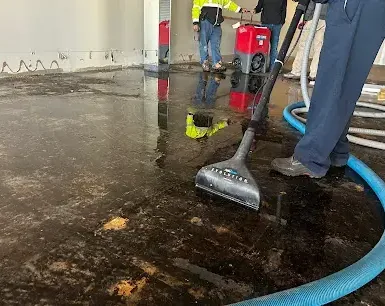
First steps for water extraction
- 1
Stop the source
Close the supply valve or stop the leak so the water does not keep coming.
- 2
Cut power
Switch off circuits that serve wet outlets, and stay out of deep water.
- 3
Move dry items
Lift furniture, rugs, files and electronics onto dry ground or counters before the water reaches them.
- 4
Photograph and call
Record the standing water and the damage, then call the extraction crew.
Trade standards on this job
- Truck-mounted units lift the most water the fastest.
- Submersible pumps handle deeper water and crawl spaces.
- A moisture map shows what extraction left behind in the walls and floors.
What does water extraction cost in Apex, NC?
Extraction alone usually costs $800 to $5,500 or more, depending on how much floor is wet and whether the water is clean or contaminated. Clean water in one room sits at the low end.
One room, clean water
$800 to $2,000- Hard floor or carpet
- Truck-mounted extraction
- Moisture map drawn
Several rooms or a floor
$2,000 to $4,000- Carpet and pad lifted
- Pad removed when ruined
- Ceiling below checked
Whole level or crawl space
$4,000 to $5,500+- Submersible pumps used
- Category 2 or 3 handling
- Hand-off to drying
Ranges are typical, not a quote: the water category, the square footage, the materials and how fast drying started move the number most. Try the water damage cost calculator for a closer planning range.
How water extraction is handled, start to finish
Measure first, remove the water, dry, then prove it dry with readings. The order does not change.
(888) 578-4720See the extraction steps- 1
Check the source
The water source is identified and stopped before pumping starts.
- 2
Map the wet areas
Moisture meters outline walls, floors and ceilings that took on water.
- 3
Pump and extract
Pumps clear deep water, then extractors work carpet, pad and hard floors.
- 4
Hand over to drying
The wet materials left behind move straight into the drying plan.
Water extraction is the first physical step in almost every water loss. The more water the crew lifts out, the less is left to wick into drywall, wood and subfloor, and the shorter the drying that follows.
Placing the source before pumping
The Town asks residents to call Water Resources first when water or sewer trouble shows up. Staff can say whether the problem is on the Town side or the property side, which decides who repairs the source before extraction starts.
- Street or meter-side leaks: reported to the Town
- Pipe from the meter to the house: the homeowner's
- Pipes, fixtures and appliances inside: a plumber's
- Private sewer service pipe: the homeowner's, not the Town's
How the water comes out
Truck-mounted units carry the most suction and heat, so they handle carpet, pad and large floor areas. Portable extractors reach upstairs rooms and tight spaces, and submersible pumps clear deeper water in basements, garages and crawl spaces.
Hard floors get squeegee tools and wands, while carpet is worked in passes until the flow of water thins.
Water category changes the method. Clean supply water can often be extracted and the materials saved, gray water from a washer or dishwasher needs more caution, and sewage or flood water means contaminated materials come out. The crew tests and decides before the first pass.
After the water is lifted
Extraction removes bulk water, not moisture held in wood and drywall. A moisture map marks what is still wet, and pad that cannot be saved is removed so the floor underneath can dry. Extraction also protects the rooms below, since water left on an upper floor keeps dripping through the ceiling. Furniture legs get foil or blocks so wet carpet does not stain the wood. Structural drying takes over from there. Larger events continue under storm and flood cleanup.
Water extraction across Apex and nearby
Extraction jobs run through Haddon Hall, Villagio, Carriage Downs, Kelly Grove and Bella Casa, and along Hunter Street and the Apex Peakway, with ZIP codes 27502, 27523 and 27539 all covered.
The same service nearby: water extraction and removal in Holly Springs, Morrisville, Garner.
Water Extraction and Removal: common questions
What does water extraction include?
It covers pumping deep water and extracting carpet, pad and hard floors, followed by a moisture map. The drying equipment goes in after the bulk water is gone.
Why call Water Resources first?
The Town asks residents to call Water Resources first, so staff can say whether the source is on the Town side or the property side.
Can wet carpet be saved?
Carpet from a clean water source that is extracted early is often saved. The pad underneath is usually removed, and contaminated water means the carpet goes too.
Is a wet vacuum enough?
A household wet vacuum removes surface water, but it leaves water in the pad and subfloor. Extraction units pull water from deeper layers.
How fast does extraction need to start?
Sooner is better, since water spreads into drywall and wood the longer it sits. Wet materials can begin to grow mold after 24 to 48 hours.
What happens to the pad?
Pad that is soaked or contaminated is removed and replaced, while carpet is lifted so the floor beneath can dry.
Standing water spreads each hour
The extraction crew removes bulk water with truck-mounted units and pumps, then maps what is still wet so drying can start on target.