Water Extraction and Removal in Morrisville, NC
Every minute water stays on a floor, more of it wicks into drywall and subfloor. The extraction crew stops the source, pumps and vacuums the water out, and maps what stays wet.
(888) 578-4720Call about standing water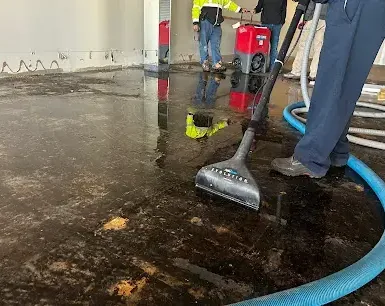
First steps for water extraction
- 1
Stop the water
Close the fixture valve or the main shutoff, and leave the power off in any room with standing water.
- 2
Lift what is movable
Raise furniture legs onto blocks or foil, and carry rugs, books and electronics to a dry room.
- 3
Clear the shallow water
Squeegee or mop shallow water toward a drain, but leave deep water for pumps.
- 4
Call before pulling carpet
Phone the restoration team before tearing out carpet, since pad and tack strips affect how the floor is dried.
Trade standards on this job
- The source is stopped before any pumping begins.
- Equipment size follows the volume and depth of the water in the room.
- A moisture map closes out every extraction visit.
What does water extraction cost in Morrisville, NC?
Clean water in one room costs $800 to $2,000 to extract. A full floor runs $2,000 to $4,000, and a whole level or crawl space with Category 2 or 3 water can reach $4,000 to $5,500+.
One room, clean water
$800 to $2,000- Carpet or hard floor
- Truck-mounted pumping
- Moisture map made
Several rooms or a floor
$2,000 to $4,000- Carpet and pad extraction
- Pad removal if needed
- Ceiling below checked
A whole level or crawl space
$4,000 to $5,500+- Submersible pumps
- Category 2 or 3 handling
- Handoff to drying
Ranges are typical, not a quote: the water category, the square footage, the materials and how fast drying started move the number most. Try the water damage cost calculator for a closer planning range.
How water extraction is handled, start to finish
Measure first, remove the water, dry, then prove it dry with readings. The order does not change.
(888) 578-4720See the extraction steps- 1
Stop the source
The valve, fixture or entry point is shut off or blocked before pumping starts.
- 2
Choose the equipment
Truck-mounted units, portable extractors or submersible pumps are matched to the volume.
- 3
Pull the water
Floors and carpet are extracted in passes until little free water remains.
- 4
Map and hand off
Moisture readings show what stayed wet, and drying equipment takes over from there.
Extraction is the first stage of nearly every water job, and it only works once the source is stopped. Water and sewer service in Morrisville comes from the Town of Cary, but water that enters a building from a pipe, a sewer or a creek event is dealt with the same way: stop it, then pump it out.
Equipment matched to the water
Truck-mounted units pull large volumes quickly and send the water outside through long hoses, which suits big rooms and flooded floors. Portable extractors and submersible pumps reach upstairs rooms, closets and low spots where the truck cannot.
- Wands and weighted tools for carpet
- Submersible pumps for deep standing water
- Squeegee tools for hard flooring
- Pad extraction through the carpet before removal
Extraction also protects what is still dry. Pulling water off the floor early keeps it from wicking up drywall and into cabinet bases, and it limits how far the stain spreads into rooms beside the wet one.
The crew reads the room before choosing a tool, because a wand that suits carpet will not clear a tile floor or a flooded closet.
What extraction cannot do alone
Pumping removes free water, but wet materials still hold moisture. Carpet pad, insulation and wall bottoms release water for days unless they are opened or dried, which is why extraction ends with a moisture map.
The map shows which materials are saved, which are removed and which need structural drying.
Clean, gray and black water
Clean water from a supply pipe allows the most salvage. Gray water from a washer or dishwasher calls for more cleaning, and black water from a sewer or creek means removal and sanitizing, as covered under sewage backup cleanup.
Photos and readings from the first visit begin the file for the adjuster.
Water extraction across Morrisville and nearby
Extraction runs wherever water has pooled across town, from townhome and condo floors in Town Hall Commons and Carpenter Park to single-family homes in Breckenridge and Weston Estates and commercial space at McCrimmon Corners.
The same service nearby: water extraction and removal in Holly Springs, Apex, Chapel Hill.
Water damage restoration in Morrisville · every town covered
Water Extraction and Removal: common questions
How fast does extraction need to start?
As early as possible, because water keeps wicking into drywall, pad and subfloor. Starting quickly shrinks the area that has to be opened and dried.
Can carpet stay in place during extraction?
Often yes for clean water. The crew extracts through the carpet and pad, then decides whether the pad stays or goes based on readings.
Does a wet vacuum from a hardware store work?
It can handle shallow spills, but it leaves moisture in pad, wall bottoms and subfloor. Professional extraction paired with drying equipment removes far more water.
What happens to the water that is removed?
Clean water is discharged outside. Contaminated water from sewage or flooding is contained and disposed of as contaminated waste.
When does extraction lead to structural drying?
Once standing water is gone, moisture mapping shows what stayed wet. Wet framing, subfloor and drywall move into drying with air movers and dehumidifiers.
Is extraction covered by insurance?
Sudden water losses are often covered, but policies vary and the adjuster decides. Photos, readings and the equipment log document the work.
Standing water is easiest to remove at the start
Stop the source if it is safe, stay out of deep water and call so extraction equipment can be matched to the job.