Water Extraction and Removal in Chapel Hill, NC
Standing water keeps soaking flooring and framing for as long as it stays. The extraction crew pulls it out with truck-mounted or portable equipment, maps what stayed wet and hands the job to drying.
(888) 578-4720Call about standing water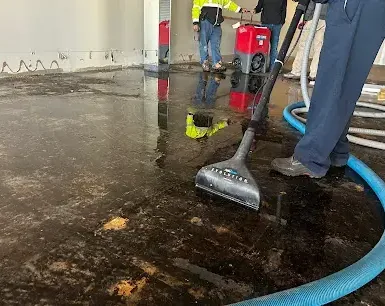
First steps for water extraction
- 1
Stop more water coming in
Shut off the supply or close the doors facing the water, if it is safe to do so.
- 2
Stay out of deep water
Standing water can hide electrical hazards and contamination, so do not walk through it.
- 3
Lift what can be lifted
Raise furniture and boxes onto dry surfaces. Do not drag wet rugs, which spreads dirt.
- 4
Call for extraction
Report the depth, the floor type and the source so the right equipment is sent.
Trade standards on this job
- Truck-mounted extraction for large floor areas and long hose runs
- Portable and submersible pumps for tight, low and awkward spots
- Moisture map written up and handed to the drying team afterward
What does water extraction cost in Chapel Hill, NC?
Extraction usually runs $800 to $5,500 or more. One room of clean water is the low end, while a whole level or crawl space with Category 2 or 3 water pushes toward the top.
One room of clean water
$800 to $2,000- Hard floor or carpet
- Truck-mounted extraction pass
- Moisture map drawn
Several rooms or a full floor
$2,000 to $4,000- Carpet and pad extracted
- Pad removed if ruined
- Ceiling below checked
An entire level or crawl space
$4,000 to $5,500+- Submersible pumps
- Category 2 or 3 handling
- Hand-off to drying
Ranges are typical, not a quote: the water category, the square footage, the materials and how fast drying started move the number most. Try the water damage cost calculator for a closer planning range.
How water extraction is handled, start to finish
Measure first, remove the water, dry, then prove it dry with readings. The order does not change.
(888) 578-4720See how extraction works- 1
Assess the water
Depth, source and category are checked before equipment goes in.
- 2
Extract
A truck-mounted unit or submersible pump removes standing water from every low spot.
- 3
Remove what cannot recover
Soaked pad and other porous materials come out and are bagged.
- 4
Map and hand off
A moisture map shows what stayed wet, and the drying team plans the equipment.
Extraction is the first physical step after any water loss. Every gallon pulled out with a wand or pump is a gallon that does not have to be dried out of carpet, pad and framing later, which is why the work is thorough and goes first.
Creeks that rise fast
Morgan Creek, Bolin Creek and Booker Creek divide the town and drain toward Jordan Lake, and stream valleys with narrow flood zones are more prone to flash flooding. After hard rain, water can reach a lower level or a garage quickly and stand there.
Heavy leaks inside the house behave the same way. A failed supply pipe or a burst water heater tank can put gallons across a slab in a short time, and the crew works from the lowest point of the floor outward so water is not pushed into dry rooms.
- Truck-mounted units lift water from carpet and hard floors
- Submersible pumps clear garages, utility rooms and low levels
- Pad and carpet that cannot recover are cut and removed
- A moisture map shows what stayed wet after the visible water is gone
Clean, gray or black water
The category of the water decides what happens to the materials it touched. Clean supply water allows more drying in place, while gray and black water call for removal and treatment. Anything that came from a drain or a flood is handled as contaminated.
When the source was a creek or a sewage backup, see storm and flood cleanup and sewage backup cleanup.
The hand-off to drying
Extraction is not the end. The extraction crew maps the remaining moisture, and the drying team takes over with air movers and dehumidifiers so framing and subfloor get the attention they need. That hand-off matters because extraction removes the water that is visible, while the structure still holds moisture. The moisture map is the bridge between the two stages, and it keeps drying equipment from being placed by guesswork.
Water extraction across Chapel Hill and nearby
Extraction covers Chapel Hill homes, rentals and shops, including garages and lower levels near Booker Creek, Bolin Creek and Morgan Creek, and shopping areas such as University Place and Eastgate Crossing.
The same service nearby: water extraction and removal in Holly Springs, Morrisville, Apex.
Water damage restoration in Chapel Hill · every town covered
Water Extraction and Removal: common questions
How quickly does extraction need to happen?
As early as possible. Water soaks into pad, baseboards and drywall continuously, and the longer it stands, the more material has to be removed and dried.
Can wet carpet be saved?
Often yes if the water was clean and extraction began quickly. Pad is more likely to be removed, while carpet can sometimes be dried and reused.
Is extraction the same as drying?
No. Extraction pulls out liquid water, while drying removes moisture held in materials. Both are needed, and extraction comes first.
Can extraction handle a flooded garage?
Yes. Submersible pumps clear garages and low levels, and the crew checks adjoining rooms for water that moved under walls.
What if the water came from a creek?
Creek and storm water are treated as contaminated. Extraction still comes first, followed by removal and treatment of the materials the water touched.
Does extraction include moisture mapping?
Yes. A moisture map shows where water remains after the visible water is gone, and it is the basis for the drying plan.
Standing water in Chapel Hill?
Water keeps soaking into floors and framing for as long as it stays. The extraction crew lifts it out and maps what remains wet.