Storm and Flood Water Cleanup in Chapel Hill, NC
When creek water or storm runoff gets into a house, the cleanup starts with pumping and ends with proof of dryness. The response team removes contaminated materials and treats what stays before drying begins.
(888) 578-4720Call about flood water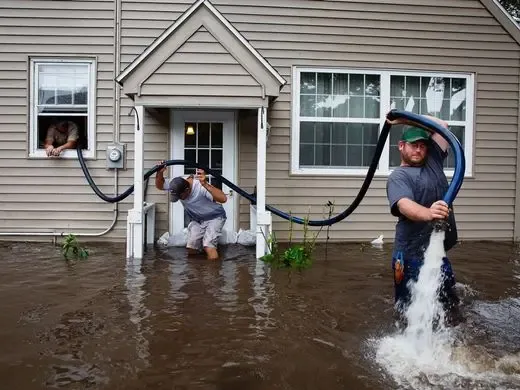
First steps for storm and flood water cleanup
- 1
Stay out of moving water
Never wade through flood water. It hides debris, electrical hazards and contamination.
- 2
Cut power at the panel
If water reached outlets, switch off the main breaker only when the panel is dry and easy to reach.
- 3
Mark the high water
Photograph the water mark on walls and furniture, and note when the water rose and fell.
- 4
Call before cleaning
Skip mopping with household tools. The response team handles Category 3 water with the right gear and treatment.
Trade standards on this job
- Flood water pumped and extracted from every room
- Contaminated materials removed and surfaces treated
- Structure dried and fully documented for the flood claim
What does storm and flood water cleanup cost in Chapel Hill, NC?
Storm and flood cleanup usually runs $3,000 to $20,000 or more. A garage or single room is the low end, while a whole first floor that needs Category 3 removal and desiccant drying reaches the top.
A garage or one room
$3,000 to $6,000- Water pumped and extracted
- Flood cuts
- Antimicrobial wash
Several rooms
$6,000 to $12,000- Flooring and pad removed
- Wall cavities opened
- Containment barriers
An entire first floor
$12,000 to $20,000+- Full Category 3 removal
- Desiccant dehumidifiers
- Longer monitoring
Ranges are typical, not a quote: the water category, the square footage, the materials and how fast drying started move the number most. Try the water damage cost calculator for a closer planning range.
How storm and flood water cleanup is handled, start to finish
Measure first, remove the water, dry, then prove it dry with readings. The order does not change.
(888) 578-4720See how flood cleanup works- 1
Pump and extract
Submersible pumps and extractors clear the water and silt.
- 2
Cut and remove
Flooring, pad and drywall that the water touched are removed.
- 3
Clean and treat
Surfaces are cleaned and treated before any drying equipment goes in.
- 4
Dry and verify
Dehumidifiers and air movers run until readings match dry reference values.
Flood water is never treated as clean. It carries soil, bacteria and runoff from yards, roads and parking lots, so porous materials it touched are removed instead of dried. Once the water is out, structural drying takes over with dehumidifiers and air movers, and the readings decide when the equipment leaves.
Storms that tested the town
Hurricane Dennis and Hurricane Floyd brought widespread flooding in September 1999, Hurricane Florence flooding reached historic levels on September 17, 2018, and Tropical Storm Chantal pushed Booker Creek above 9 feet on July 6, 2025, flooding Eastgate Crossing and University Place. Each storm showed how quickly creeks can rise.
- Pumps and extractors clear the standing water
- Flooring, pad and wet drywall are cut out
- Surfaces are cleaned and treated before drying
- Readings are logged to support the claim
Creeks, culverts and gauges
Booker Creek runs underground through a culvert beneath the Eastgate Crossing parking lot, and the Town built Booker Creek Basin Park to divert water away from the center. The Town also lists USGS stream gauges on Bolin Creek at Village Drive and on Booker Creek at Piney Mountain Road, which show how fast creek levels move.
The insurance reality
Homeowner policies typically exclude flood damage, and a National Flood Insurance Program policy has a 30-day waiting period on new coverage. Records of water height and timing help whichever policy ends up responding. When contaminated water came up through a drain instead of a creek, sewage backup cleanup follows a similar protocol.
Cleanup demand rises fast after a storm, which makes early documentation useful. A dated photo of the high water mark, a list of ruined contents and the first set of readings give an adjuster a clear baseline.
Storm and flood water cleanup across Chapel Hill and nearby
Storm and flood cleanup covers Chapel Hill homes and shops, including areas near Booker Creek, Bolin Creek and Morgan Creek, the Eastgate Crossing and University Place shopping areas and neighborhoods across town.
The same service nearby: storm and flood water cleanup in Holly Springs, Morrisville, Apex.
Water damage restoration in Chapel Hill · every town covered
Storm and Flood Water Cleanup: common questions
Is flood water considered contaminated?
Yes. Flood water is treated as Category 3, so flooring, pad and wet drywall are removed and surfaces are cleaned and treated before drying.
Does homeowners insurance cover flood damage?
It typically does not. A National Flood Insurance Program policy covers flood loss, but it has a 30-day waiting period on new coverage.
How fast can creek flooding happen?
Stream valleys have narrow flood zones and are prone to flash flooding, so water can rise quickly after hard rain.
What gets thrown out first?
Porous items the water touched, such as carpet, pad and upholstered furniture, are usually discarded. The team sorts out the hard items worth saving.
Can a lower level be saved?
Yes, if the water is pumped, the contaminated materials are removed and the structure is dried. How deep the water got and how long it stayed decide how much comes out.
Why record the water height?
Photos of the high water mark and the readings help adjusters and flood claims, and they show how far the water reached into the structure.
Flood water in a Chapel Hill house?
Flood water keeps spreading contamination until it is pumped and removed. The response team starts with extraction, then cuts, cleaning and drying.