Structural Drying and Dehumidification in Chapel Hill, NC
Water that soaked into framing, subfloor and drywall needs controlled drying, not just fans. The drying team stages air movers and LGR dehumidifiers, then logs readings until every material reaches its dry goal.
(888) 578-4720Chapel Hill drying equipment help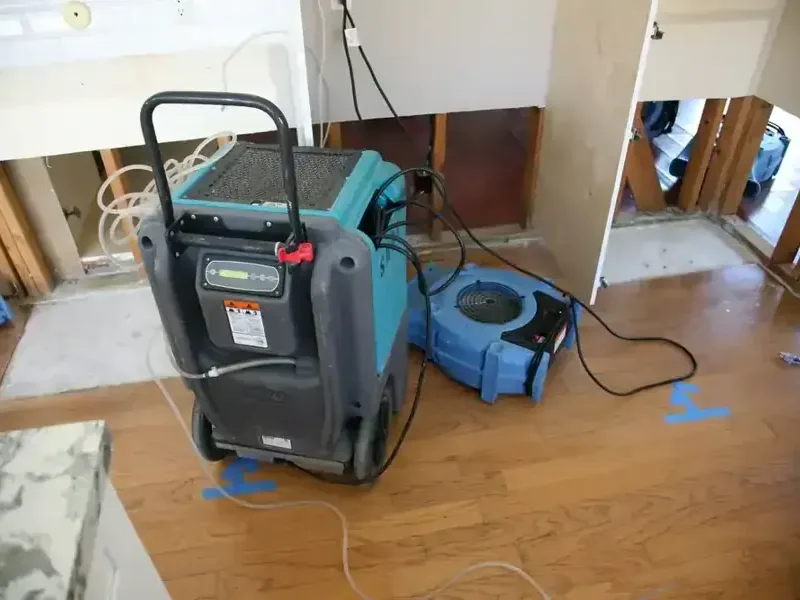
First steps for structural drying
- 1
Keep doors closed
Close doors and windows in the wet area so the equipment can control the humidity.
- 2
Leave equipment running
Do not switch machines off to save power. Interrupting the drying can leave pockets of moisture.
- 3
Stay clear of cords
Keep children and pets away from air movers and the hoses behind them.
- 4
Call if smells linger
A musty smell after the equipment leaves is a sign to check the readings again.
Trade standards on this job
- Air movers and dehumidifiers sized to each room and its volume
- Moisture readings logged on every visit
- Equipment removed only when the numbers say dry
What does structural drying cost in Chapel Hill, NC?
Structural drying usually runs $1,500 to $8,000 or more. One or two rooms with a light soak sit at the low end, while hardwood or a Class 4 loss that needs desiccant units reaches the top.
One or two rooms, light soak
$1,500 to $3,000- Air movers and LGR units
- Daily moisture logs
- Several days of drying
A full floor or heavy soak
$3,000 to $5,500- Extra equipment
- Wall cavity drying
- Containment barriers
Hardwood or deep saturation
$5,500 to $8,000+- Floor drying mats
- Desiccant dehumidifiers
- Longer monitoring
Ranges are typical, not a quote: the water category, the square footage, the materials and how fast drying started move the number most. Try the water damage cost calculator for a closer planning range.
How structural drying is handled, start to finish
Measure first, remove the water, dry, then prove it dry with readings. The order does not change.
(888) 578-4720See how drying is measured- 1
Map the moisture
A meter and thermal camera set the starting readings.
- 2
Place the equipment
Air movers and LGR dehumidifiers are staged room by room.
- 3
Monitor daily
Readings are logged and equipment is moved or added as needed.
- 4
Confirm and remove
Equipment is removed once readings match dry goals.
Drying is a science of air, heat and humidity. Wet materials give up water slowly, and the equipment is placed to move that water into the air and out of the room as vapor.
Storm demand shows the stakes
After Tropical Storm Chantal, 448 homes in Orange County were impacted and more than half suffered major damage or were destroyed, with about 190 residents displaced. That scale shows how drying demand surges when many homes get wet at once.
- Air movers push dry air across wet surfaces
- LGR dehumidifiers pull moisture out of the air
- Desiccant units help in cold or very wet conditions
- Floor mats and cavity systems reach hardwood and wall interiors
Why the readings matter
Moisture meters give a number for each material, and a thermal camera shows cool, wet areas behind finishes. The drying team logs those numbers daily so equipment is moved, added or removed with evidence. Drying stops when the numbers match dry reference material, not when the room feels dry. Equipment is placed with room volume in mind, so a large open area gets more dehumidifier capacity than a closet.
Water losses are sorted by how much moisture a room can release. A light soak in a small room is a low class loss, while saturated hardwood and framing is a high class loss that needs more equipment and more days. The class sets the equipment plan, and the daily numbers adjust it.
Special cases
Hardwood needs mats because boards trap water in their edges. Wall cavities are dried by drilling small holes or removing baseboards. Insulation that stays wet is removed. The first step of pulling water out is covered under water extraction, and the leaks that start the process under burst pipe water damage.
Structural drying across Chapel Hill and nearby
Structural drying covers homes, rentals and shops across Chapel Hill, from the historic streets of Gimghoul and Cameron-McCauley to Northside, Pine Knolls, Southern Village, Meadowmont Village and the Franklin Street area.
The same service nearby: structural drying and dehumidification in Holly Springs, Morrisville, Apex.
Water damage restoration in Chapel Hill · every town covered
Structural Drying and Dehumidification: common questions
How long does structural drying take?
Many jobs take several days, and hardwood, thick framing or a long soak can take longer. The readings decide when the job is done.
Why are dehumidifiers needed with air movers?
Air movers lift moisture off surfaces, and dehumidifiers remove it from the air. Without both, humidity rises and drying slows.
Can hardwood floors be dried?
Often yes with floor mats and early action. Cupped or buckled boards may need replacement, and the meter shows how deep the water went.
Is drying equipment loud?
Air movers and dehumidifiers make steady noise and use electricity, but they are what keeps drywall, framing and subfloor from staying wet.
What does the daily log show?
It records moisture readings, temperature and humidity in each area. Insurance adjusters often ask for that record.
Can drying be skipped if the surface looks dry?
No. Surfaces dry first while subfloor and wall cavities stay wet, which is how swelling, odor and mold begin.
Wet framing in Chapel Hill?
Water left in subfloor and wall cavities causes damage long after the surface looks dry. The drying team measures it, removes it and proves the result with readings.