Crawl Space Water Removal in Chapel Hill, NC
Water that collects under a house keeps wetting floor framing, insulation and the air above. The extraction crew pumps the space out, removes soaked material and dries the joists with dehumidifiers.
(888) 578-4720Call about crawl space water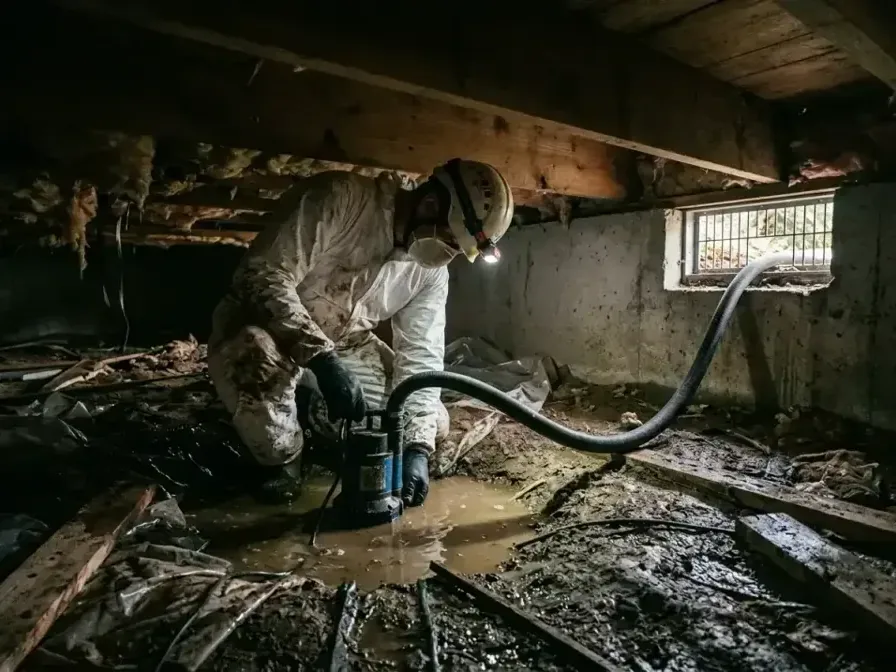
First steps for crawl space water removal
- 1
Stay out of the space
Do not enter a flooded crawl space, where wiring, slick mud and tight clearances make it risky.
- 2
Close the main if pipes leaked
If a supply pipe is the source, shut the main valve before anything else.
- 3
Turn off power to the area
Switch off breakers serving crawl space lights and outlets, and keep cords away from standing water.
- 4
Call the crawl space crew
Describe how deep the water is and whether it came from rain or a pipe.
Trade standards on this job
- Standing water pumped out of the whole space before drying starts
- Soaked batts and torn barrier removed and bagged for disposal
- Joist wood readings logged every single day
What does crawl space water removal cost in Chapel Hill, NC?
Crawl space water jobs usually run $1,200 to $6,500 or more. A pump-out with drying sits at the low end, while storm or sewer water and a long soak push toward the top.
Pump-out and drying
$1,200 to $2,500- Water pumped out
- Dehumidifier running
- Wood checked daily
Insulation and barrier removed
$2,500 to $4,500- Soaked batts bagged
- Torn barrier pulled
- Joists and subfloor dried
Contaminated or long soak
$4,500 to $6,500+- Storm or sewer water
- Cleaning and treatment
- Longer drying
Ranges are typical, not a quote: the water category, the square footage, the materials and how fast drying started move the number most. Try the water damage cost calculator for a closer planning range.
How crawl space water removal is handled, start to finish
Measure first, remove the water, dry, then prove it dry with readings. The order does not change.
(888) 578-4720See how the pump-out works- 1
Survey the space
A flashlight, camera and moisture meter show water depth and how far the soaking reaches.
- 2
Pump it out
Submersible pumps clear the standing water, and the mud is checked.
- 3
Remove what is soaked
Wet batts and torn barrier come out so the wood can dry.
- 4
Dry the wood
Dehumidifiers and air movers run until joist readings reach the dry goal.
A crawl space is the lowest part of a house, so it collects whatever the yard sheds. Water that sits there soaks insulation, wets the floor framing and sends moisture up into the rooms above, long before anyone can see it.
Slow drainage and low spots
Lowlands in the Triassic Basin have poorly draining soils, and some elevations sit close to the pool elevation of Jordan Lake, which slows drainage. After storms, water can linger around the low parts of a home. Upland slopes between the streams drain well but shed runoff fast.
- Pumps remove the standing water and the space is surveyed
- Wet batt insulation and torn vapor barrier come out
- Joists and subfloor are dried with dehumidifiers and air movers
- Cleaning and antimicrobial treatment follow when storm water got in
Moisture that rises
Water under a house does not stay there. Damp joists lift humidity into the floor above, which can cup hardwood and loosen subfloor. The team reads wood moisture in the joists each day, because air readings alone can look fine.
Storm water and sewage carry contamination. When the water came from a flood or a backup, the cleanup uses protective gear and treatment, as described under storm and flood cleanup.
Standing water also changes the air. A damp crawl space pushes humidity into the house through gaps around pipes and ducts, and that moisture settles on cool surfaces. Pumping alone is not enough, and the dehumidifier phase is what brings the wood back to a safe reading.
After the water is gone
Once the space is pumped and the soaked material is out, dehumidifiers dry the air and the wood. A homeowner can then decide with a contractor whether drainage, grading or a new vapor barrier is worth adding. Bulk pumping is covered in water extraction. The team writes down depth, source and the readings on each day so the file matches what was done.
Crawl space water removal across Chapel Hill and nearby
Crawl space work covers homes across Chapel Hill, from Pine Knolls and Northside to Southern Village and Meadowmont Village, including houses near the creek valleys where runoff collects after hard rain, plus homes on the slopes between streams.
The same service nearby: crawl space water removal in Holly Springs, Morrisville, Apex.
Water damage restoration in Chapel Hill · every town covered
Crawl Space Water Removal: common questions
Why does a crawl space collect water?
Rain runs toward low ground, and slow draining soils hold it there. Plumbing leaks and condensation add to it, so the cause is traced before the pump is removed.
Is crawl space water dangerous?
Storm water can carry bacteria, and the space has slick mud, tight clearances and wiring. That is why crews wear protective gear and the area is treated afterward.
Does the insulation have to come out?
Wet batt insulation sags and holds water against the subfloor, so it is normally removed. Foam board may be saved if it dries completely.
Can wet joists cause problems upstairs?
Yes. Moisture rising from damp joists can cup hardwood and loosen subfloor, and it raises humidity in the rooms above.
Does insurance cover crawl space flooding?
Policies often exclude flood water, while a sudden pipe leak may be covered. A National Flood Insurance Program policy has a 30-day waiting period, so timing matters.
How long does the drying take?
Wood dries slowly. Daily readings in the joists decide when the equipment leaves, and a long soak takes longer than a quick pump-out.
Crawl space water in Chapel Hill?
Water under the floor keeps wetting framing and insulation until it is pumped out and dried. The extraction crew can explain what comes out and what dries in place.