Crawl Space Water Removal in Apex, NC
A leak or storm runoff under a raised floor stays out of sight until the floors above soften or smell musty. The extraction crew pumps it out, bags the soaked insulation and dries the framing.
(888) 578-4720Water pooled under the floor? Call now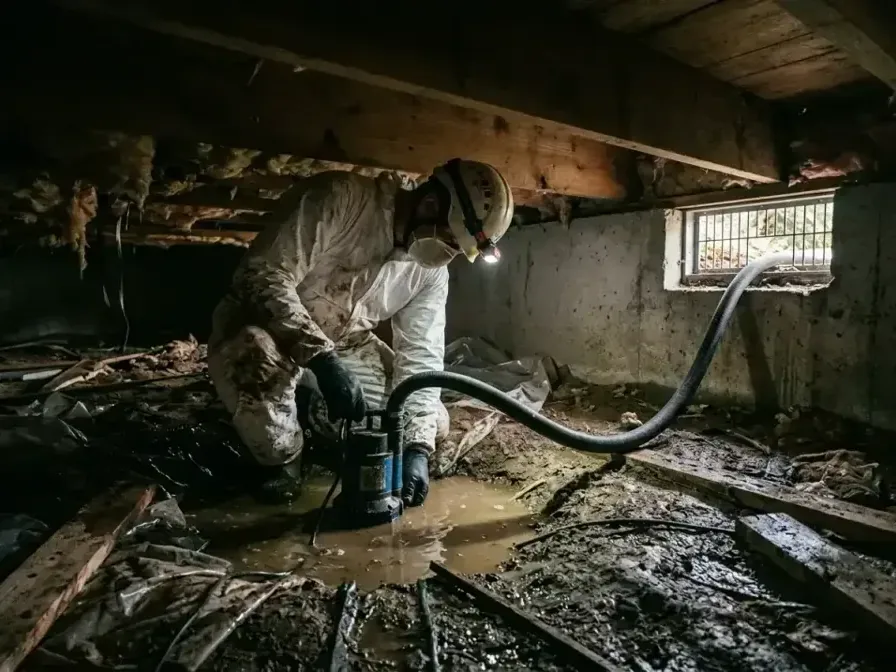
First steps for crawl space water removal
- 1
Cut the power first
Keep out of a flooded crawl space until power to that area is switched off.
- 2
Close the main
If a pipe under the house is leaking, shut the main and report it to Town Water Resources.
- 3
Turn the downspouts
When rain is the source, point downspouts and gutters away from the foundation.
- 4
Photograph the rooms above
Record soft spots, cupping boards and musty smells over the crawl space for the claim.
Trade standards on this job
- Standing water is pumped out before any drying gear goes in.
- Soaked batts and a flooded vapor barrier are removed.
- Wood readings are logged daily until they match a dry reference.
What does crawl space water removal cost in Apex, NC?
Crawl space water removal here typically runs $1,200 to $6,500, set by how much water is standing, whether insulation and the vapor barrier come out, the water category and how many days the framing needs.
Pump-out and drying
$1,200 to $2,500- Pumps and wet vacuums
- Dehumidifier sized to the space
- Wood readings each day
Batts and barrier removed
$2,500 to $4,500- Soaked insulation bagged
- Vapor barrier taken out
- Joists and subfloor dried
Contaminated or long-standing
$4,500 to $6,500+- Storm runoff or sewage
- Cleaning and antimicrobial
- Longer drying and monitoring
Ranges are typical, not a quote: the water category, the square footage, the materials and how fast drying started move the number most. Try the water damage cost calculator for a closer planning range.
How crawl space water removal is handled, start to finish
Measure first, remove the water, dry, then prove it dry with readings. The order does not change.
(888) 578-4720Dry the joists and subfloor- 1
Find the source
The supply pipe, drain, sewer pipe or runoff path is traced and the category set.
- 2
Pump it out
Submersible pumps and wet vacuums remove what stands on the ground.
- 3
Strip what is soaked
Wet batts and a flooded vapor barrier are bagged and carried out.
- 4
Dry the wood
Dehumidifiers and air movers run until joists and subfloor read dry.
In many homes here the water pipe enters through the crawl space, and the Town notes that the pressure reducer valve usually sits there or in a closet at the front of the home. That puts fittings, a valve and long pipe runs under the floor, where a slow leak can soak the space for weeks before anyone looks.
What puts water under the house
A supply leak caught early is Category 1. Storm runoff that crosses the yard and seeps in along the foundation is treated as Category 3, and so is anything from a cracked sewer service pipe under the floor.
- Fittings and the pressure reducer valve where the water pipe comes in
- Drain and sewer service pipes running under the floor
- Heavy rain from hurricanes and severe storms, risks named in the Wake County hazard mitigation plan
- Pipes that split in arctic cold, like the January 2026 freeze that kept Piedmont highs in the 20s
Pumping and drying the crawl space
The extraction crew starts with submersible pumps and finishes with wet vacuums. Fiberglass batts that soaked through or fell come out, along with any flooded or torn vapor barrier. Then the drying team sets a dehumidifier sized to the space, aims air movers at the joists and subfloor, and takes readings on the wood each day until they match a dry reference.
Getting the framing dry is the real goal. Wet joists and subfloor are what turn into cupped hardwood and soft spots in the rooms above. The same method runs through the whole house in structural drying.
Leaks at the meter and the sewer pipe
The Town says constantly wet ground around the meter box can mean a leak at the meter or a broken pipe. Homeowners handle repairs from the house to the meter, while the Town handles the street side. For sewage under the house, Town staff say most backups happen between the house and the main, and the tee and private service pipe belong to the owner; see sewage backup cleanup.
For a quick read on a home's risk, try the crawl space water risk check.
Crawl space water removal across Apex and nearby
The restoration team covers all three local ZIP codes, 27502, 27523 and 27539, from Salem Street and the depot area to Haddon Hall, Scotts Mill, Waterford Green, Beaver Creek Crossings and Bradley Park.
The same service nearby: crawl space water removal in Holly Springs, Morrisville, Garner.
Crawl Space Water Removal: common questions
Is water under the house an emergency?
Treat it as one. Joists, subfloor and insulation take on more water each day, and the damp air works its way up into the living space.
Why is the ground around the meter box always wet?
The Town says constantly wet ground around the meter box can mean a leak at the meter or a pipe break. Repairs from the house to the meter fall to the homeowner.
Does soaked crawl space insulation have to go?
Yes, when the batts soaked through or dropped from the joists. Wet fiberglass presses water into the subfloor and stops insulating.
How long does drying under the house take?
Three to seven days is common once the dehumidifier and air movers are set. Sewage, storm runoff and leaks that ran for weeks stretch that out.
Is crawl space water covered by insurance?
A sudden pipe leak is commonly covered, while groundwater and storm seepage often need a flood policy. Policies differ, so check with your own insurer.
Can the floors above be saved?
Often, if the framing is dried quickly. Subfloor that stays wet is what makes hardwood cup and soften.
Standing water under the house? Get it out today.
Each day on the ground soaks more of the framing that carries the floor. The extraction crew pumps the space and dries the wood, 24/7.