Crawl Space Water Removal in Garner, NC
Water under a house stays out of sight while it soaks insulation, joists and the subfloor above. The extraction crew pumps it out, removes what is ruined and dries the wood to a measured goal.
(888) 578-4720Call about water under the house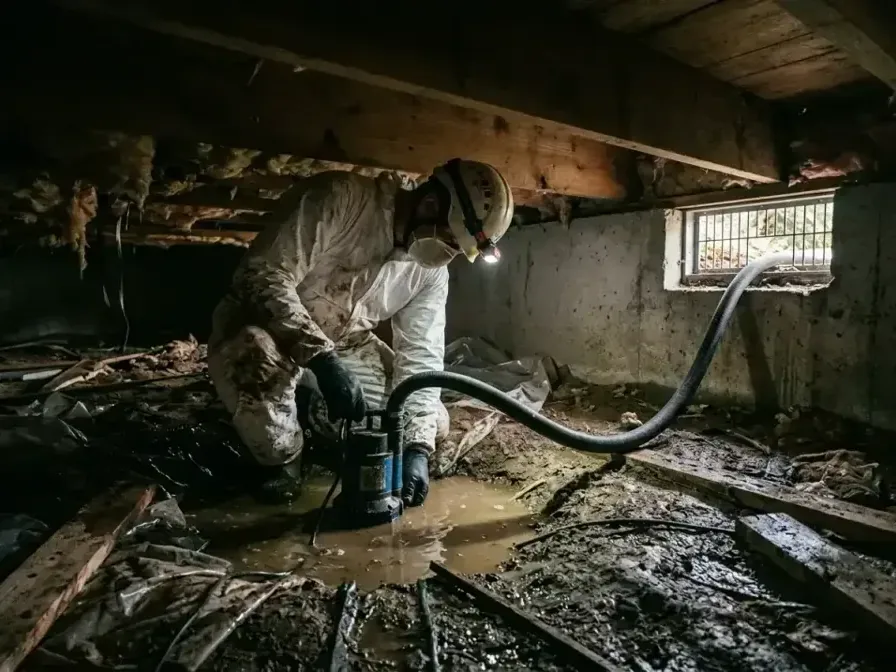
First steps for crawl space water removal
- 1
Stay out for now
Do not crawl under the house with water present, especially near wiring or gas equipment.
- 2
Turn off the source
Close the main valve if a pipe is leaking, and turn downspouts away from the house.
- 3
Photograph the entry
Capture any water, wet insulation and a sagging or soft floor above the space.
- 4
Call for a pump-out
Call the extraction crew, since a dry crawl space keeps the floor above from staying damp.
Trade standards on this job
- Where the home has a crawl space, wood readings steer the drying
- Wet insulation and a soaked vapor barrier are taken out
- Storm or sewer water is cleaned and treated before drying
What does crawl space water removal cost in Garner, NC?
Crawl space jobs usually cost between $1,200 and $6,500 or more, with a clean pump-out at the low end and sewer or storm water, wet insulation and a long soak pushing the total up.
Pump out and dry
$1,200 to $2,500- Standing water removed
- Dehumidifier running
- Wood readings daily
Insulation and barrier ruined
$2,500 to $4,500- Wet batts bagged out
- Barrier pulled
- Joists and subfloor dried
Contaminated or long soak
$4,500 to $6,500+- Storm or sewer water
- Cleaning and treatment
- Longer drying
Ranges are typical, not a quote: the water category, the square footage, the materials and how fast drying started move the number most. Try the water damage cost calculator for a closer planning range.
How crawl space water removal is handled, start to finish
Measure first, remove the water, dry, then prove it dry with readings. The order does not change.
(888) 578-4720See the pump-out plan- 1
Find the water source
The crew checks pipes, drains and runoff paths to see where the water entered.
- 2
Pump it out
Submersible pumps remove standing water from the low spots.
- 3
Remove the ruined layers
Wet insulation and a soaked vapor barrier come out.
- 4
Dry the framing
Dehumidifiers and air movers run until wood readings reach the goal.
Where a Garner home has a crawl space, water under the floor is easy to miss, and it can arrive from a broken pipe, a downspout, heavy rain or a creek that has risen. Pumping it out and drying the framing keeps the floor above from sagging and the air in the house from picking up damp odors.
Where crawl space water comes from
Supply or drain leaks under the floor run quietly for a long time. About 7.3 percent of the town's land is in the mapped 100-year floodplain, and the county plan notes that flooding also happens outside mapped zones, so a dry yard does not prove a dry crawl space.
- Leaking supply or drain pipes under the floor
- Downspouts that dump water beside the foundation
- Heavy rain and runoff after a storm
- Sewer or storm water that has come in from outside
Pumping out and removing what is ruined
Submersible pumps move the standing water first. Insulation batts that fell or got wet are bagged out, and a vapor barrier that holds water is pulled so the soil and framing can breathe.
Where mud or debris has settled, it is shoveled or vacuumed out so the pumps keep working and the dehumidifiers can reach the framing. Crew members wear protective gear because the space is cramped and often damp.
If the water came from a sewer or from outside floodwater, it is category three, and the cleanup adds cleaning and antimicrobial treatment before the drying starts. See sewage backup cleanup for that process.
Drying the wood and checking the floor above
Joists and subfloor are checked with wood moisture readings, and dehumidifiers and air movers work until the numbers reach the dry goal. The floor above is scanned for cupping or soft spots.
Daily readings go into the record for the adjuster. For the equipment side, see structural drying.
Crawl space water removal across Garner and nearby
Crawl space jobs reach homes across the town, from Downtown Garner and the Lake Benson area to Cleveland Springs, Chadbourne and Turner Farms, within ZIP 27529, wherever a house sits over one.
The same service nearby: crawl space water removal in Holly Springs, Apex, Morrisville.
Crawl Space Water Removal: common questions
How is water in a crawl space found?
Moisture meters, a flashlight check and wood readings show standing water, wet insulation and soft framing, even where the floor above looks normal.
Is water under the house always an emergency?
Standing water keeps soaking wood and insulation and raises humidity in the house, so it should come out soon after the source is stopped.
Can wet insulation stay in place?
Usually not. Wet batts hold moisture against the joists and sag, so they are removed and replaced after the wood is dry.
What if creek or storm water got in?
That is category three water. The crew pumps it out, removes porous materials, cleans and treats the framing and dries it before anything is replaced.
How long does a crawl space take to dry?
Usually several days to a week, depending on the soak, and wood readings decide when the dehumidifiers come out.
What proof helps the claim?
Photos of the standing water and wet insulation, dated wood readings and an itemized scope all help the adjuster, and the crew records them during the job.
Standing water under the floor
Tell the crew where the water came from and how the crawl space is reached, and the extraction crew will plan the pump-out, the removal and the wood drying.