Washer and Appliance Leaks in Garner, NC
A washer hose, dishwasher supply or ice maker tube can leak for days behind an appliance before the floor gives it away. The crew extracts the water and dries the floor, cabinet bases and ceiling below.
(888) 578-4720Call about an appliance leak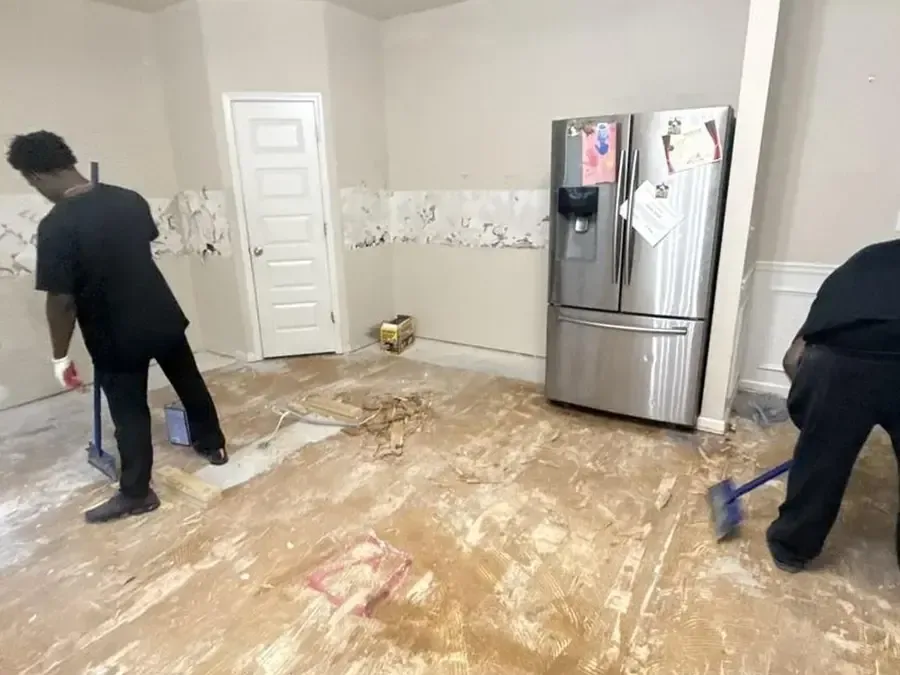
First steps for washer and appliance leak damage
- 1
Shut the supply valve
Turn the valve behind the washer or under the sink, then unplug the appliance if the outlet is dry.
- 2
Stop the spread
Pull the appliance out only if the floor is safe, and put towels or a wet vac on pooling water.
- 3
Photograph first
Capture the hose, the appliance and the wet floor before anything is dried or discarded.
- 4
Call for extraction
Call the drying team so the subfloor and cabinet bases are dried before they swell.
Trade standards on this job
- Hose and valve repairs belong to the owner
- Toe kicks come off to check wet cabinet bases
- A ceiling below the kitchen or laundry gets scanned
What does washer and appliance leak damage cost in Garner, NC?
Appliance leaks here usually cost between $1,000 and $6,500 or more to dry out, with the biggest swings coming from cabinets, how long the leak ran and whether a ceiling below got wet.
One room, found quickly
$1,000 to $2,500- Water extracted
- Floor dried in place
- Meter checks daily
Cabinets or ceiling below
$2,500 to $4,500- Toe kicks removed
- Ceiling drywall opened
- LGR dehumidifiers running
Days-long leak, two floors
$4,500 to $6,500+- Flooring pulled up
- Walls and ceilings dried
- Longer monitoring
Ranges are typical, not a quote: the water category, the square footage, the materials and how fast drying started move the number most. Try the water damage cost calculator for a closer planning range.
How washer and appliance leak damage is handled, start to finish
Measure first, remove the water, dry, then prove it dry with readings. The order does not change.
(888) 578-4720See the cabinet drying plan- 1
Locate the leak
Meters and a camera follow the water from the appliance outward.
- 2
Extract and remove
Pumps take off standing water, and soaked pad or low drywall is removed.
- 3
Open the cabinet bases
Toe kicks come off so wet particleboard and subfloor can dry.
- 4
Dry and record
Equipment runs until readings match the dry goal, then logs go to the claim.
Appliance supply leaks sit on the private side of the connection, so the owner repairs the hose or fitting. In Garner homes the drying team handles what the water reached, usually the floor, the cabinet bases and sometimes a ceiling below.
Slow leaks cause the biggest losses
A small drip behind a washer or dishwasher soaks the subfloor and cabinet bases long before anything shows on top. Vinyl and laminate can trap the water underneath, so a dry surface proves very little.
- Washer hoses that split or loosen at the valve
- Dishwasher supply and drain connections under the sink
- Ice maker tubes behind the refrigerator
- Overflowing washer drain standpipes
Gray water changes the cleanup
Water from washers and dishwashers carries soap, food or lint, so it is treated as category two. Carpet pad and low drywall that soaked in it are usually removed rather than dried, while hard flooring is often saved.
Toe kicks come off the cabinets and the bases are checked, because wet particleboard swells and does not recover. See water extraction for the pump-out step.
Drying below and beside the leak
Readings are taken in the kitchen or laundry, the rooms next to it and any ceiling below. LGR dehumidifiers and air movers run until each reading reaches the dry goal.
Photos of the appliance, the hose and the damaged flooring support the claim, along with the daily readings. A failed tank follows a similar path under water heater leak cleanup.
Washer and appliance leak damage across Garner and nearby
The service covers kitchens and laundry rooms across the town, including Adams Point, Kyndal, Meadowbrook and Oak Manor, within ZIP 27529, and suites near White Oak and Timber Crossing, wherever a hose lets go.
The same service nearby: washer and appliance leaks in Holly Springs, Apex, Morrisville.
Washer and Appliance Leaks: common questions
Who repairs a leaking washer hose?
The owner does, with a plumber or an appliance technician. The drying team deals with the water that already reached the floor, cabinets and walls.
Is dishwasher or washer water clean?
It is usually category two, meaning it carries some contamination. Pad and low drywall that soaked in it are removed, while sealed hard flooring often dries in place.
Can wood floors and cabinets be saved?
Often, if the water is found early. Floor drying mats and dehumidifiers pull moisture from hardwood, while swollen particleboard cabinet bases usually have to be replaced.
How can hidden water under flooring be found?
Moisture meters and a thermal camera show wet areas under vinyl, laminate and tile, even when the surface looks and feels dry.
Will the ceiling below be affected?
If the leak ran long enough, yes. The ceiling is scanned and any section reading wet is opened so the joist bays can dry.
What does the claim file include?
Photos of the appliance and the damage, dated readings, equipment logs and an itemized scope, collected while the job runs.
Leak behind the washer or dishwasher
Tell the crew which appliance leaked and how far the water reached, and the drying team will plan the extraction, the cabinet checks and the equipment.