Washer and Appliance Leaks in Apex, NC
A split washer hose, a dishwasher supply or a refrigerator ice maker tube can soak a floor for hours. The crew extracts the water and dries the cabinets, subfloor and rooms underneath.
(888) 578-4720Dry out an appliance leak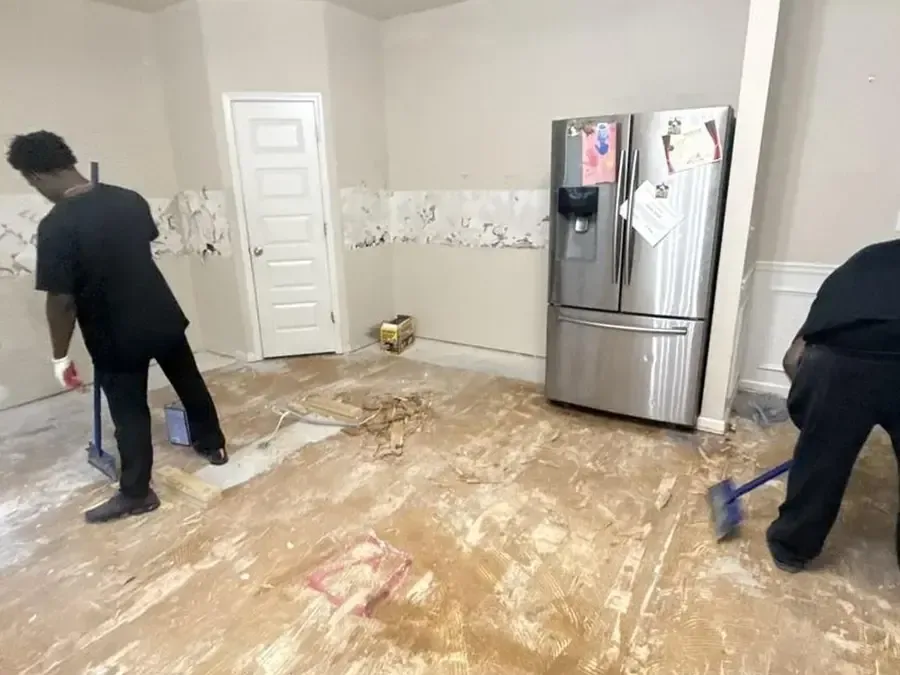
First steps for washer and appliance leak damage
- 1
Shut the supply valve
Turn off the small valve behind the appliance, or the home's main valve if it will not close.
- 2
Unplug the appliance
Pull the plug only when the floor and outlet are dry, otherwise switch off the breaker.
- 3
Soak up the pool
Towels and a wet vacuum can lift surface water, but wet cabinets still need readings.
- 4
Photograph and call
Record the appliance, the wet floor and any stain on the ceiling below, then call the crew.
Trade standards on this job
- Toe kicks and baseboards come off so wet bases can dry.
- Ceilings below upstairs units are checked for moisture.
- Floor drying is measured, not guessed.
What does washer and appliance leak damage cost in Apex, NC?
An appliance leak runs about $1,000 to $6,500 or more, depending on how long it ran and whether water reached cabinets or the floor below. A quick catch in one room costs the least.
One room, noticed quickly
$1,000 to $2,500- Water extracted
- Flooring dried in place
- Daily readings
Cabinets or the ceiling below
$2,500 to $4,500- Toe kicks pulled
- Ceiling drywall opened
- LGR dehumidifiers
Long leak, two floors
$4,500 to $6,500+- Floors removed
- Walls and ceilings dried
- Extended monitoring
Ranges are typical, not a quote: the water category, the square footage, the materials and how fast drying started move the number most. Try the water damage cost calculator for a closer planning range.
How washer and appliance leak damage is handled, start to finish
Measure first, remove the water, dry, then prove it dry with readings. The order does not change.
(888) 578-4720Walk through the drying- 1
Find the leak path
Meters trace water under the appliance, along the floor and into cabinet bases.
- 2
Pull the water
Extractors lift standing water from tile, hardwood or carpet and pad.
- 3
Open the hiding places
Toe kicks, baseboards and a section of ceiling below are opened for airflow.
- 4
Verify the dry
Readings on cabinets, subfloor and drywall must match dry reference points.
Appliance leaks are quiet. A hose weeps behind a washer or a tube cracks behind a refrigerator, and the water slides under flooring long before a puddle shows. The damage tends to sit under cabinets and in the subfloor, where it keeps wicking.
Where the water hides
Supply hoses, drain connections and ice maker tubes sit on the home side of the water meter, so repairs belong to the homeowner and a plumber. A rising water bill can be the first sign, and the Town offers one water meter test each year to help rule the meter in or out.
- Washer: braided hoses, drain standpipes and overflow into laundry closets
- Dishwasher: door seals, supply fittings and the pump area
- Refrigerator: ice maker tubes and water filter fittings
- Second-floor units: water drops into the ceiling below
Why cabinets and floors need attention
Kitchen toe kicks and laundry baseboards trap moisture against plywood and particle board, which swell and fail when they stay wet. Floating floors can cup as water moves underneath them.
The drying team lifts a few boards or pulls toe kicks, extracts what pooled and measures the cabinet bases and subfloor before deciding what stays.
Drying and cleanup
Air movers push warm air under cabinets, and LGR dehumidifiers pull the moisture out of the room. If the leak came from an upstairs unit, the ceiling below is opened to dry the joist bays. Related work includes water extraction and ceiling leak water damage.
Washer and appliance leak damage across Apex and nearby
Appliance leak work reaches kitchens and laundry rooms across Haddon Hall, Shangri-La Mobile Home Park, Kelly Grove and Scotts Mill, plus homes close to Beaver Creek Commons, in ZIP codes 27502, 27523 and 27539.
The same service nearby: washer and appliance leaks in Holly Springs, Morrisville, Garner.
Washer and Appliance Leaks: common questions
How can a small hose leak cause big damage?
A hose can drip for weeks behind an appliance, wetting subfloor and cabinet bases. By the time a stain appears, the wet area is usually larger than it looks.
Should the appliance be moved?
Pulling it out lets the crew reach the wet floor, but only after the supply is shut and the floor is safe.
Is a rising water bill a clue?
It can be. The Town points to a rising bill as a sign of a leak, and a found and repaired leak can support a bill adjustment request.
Will hardwood in the kitchen survive?
Hardwood dried promptly can often be saved, though cupping may show within days. Flooring that stays wet for long is usually replaced.
Does insurance pay for a washer hose burst?
Many policies cover sudden hose failures but not the hose itself. The extraction and drying logs show the adjuster what was wet and when it was dry.
Can the cabinets be dried in place?
Often yes, using air movers aimed under the toe kick. Swollen particle board or delaminated plywood is replaced instead.
Leaks hide under the cabinets
The mitigation team lifts the water, dries the subfloor and cabinet bases, and records readings that confirm the kitchen or laundry is dry.