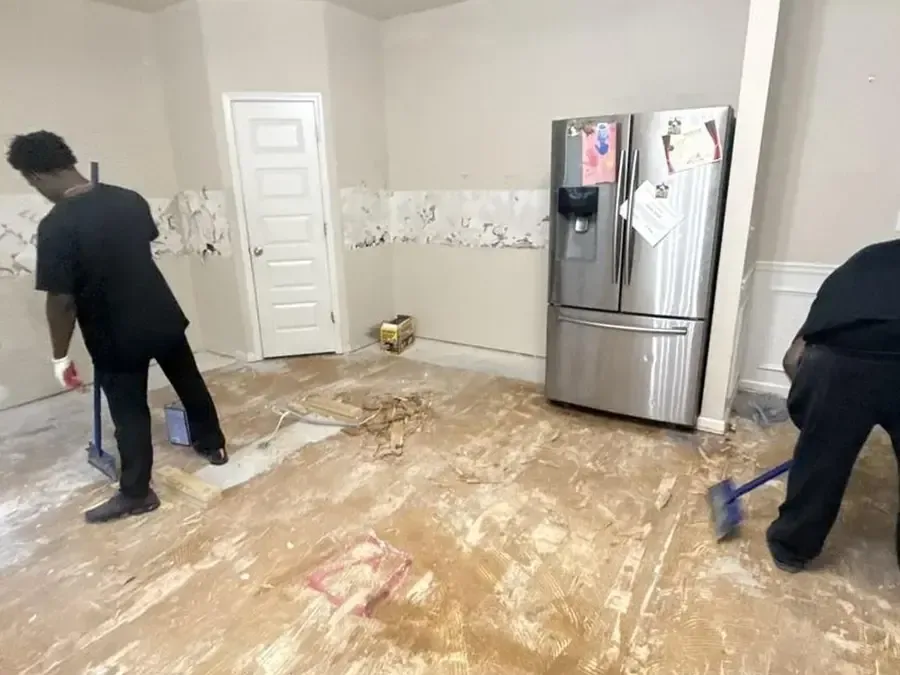
Many homes in Holly Springs put the laundry room on the second floor, with the washer, its hoses and a drain pan sitting right over finished living space. When a hose lets go or a drain backs up, the water does not stay put, and it often turns up as a stain or a drip in the room below.
Key takeaways
- Closing the two washer supply valves is the first move, and the main shutoff for the house is the backup.
- Water from a second floor laundry room follows the floor framing, so the wet area below is often wider than the stain.
- A ceiling that is bulging or dripping can drop without warning, so people and furniture stay out from under it.
- Wet drywall, insulation and flooring are checked and dried in a set order, with readings guiding each step.
- A stain that returns after the washer is fixed means a second source is feeding it.
How water from an upstairs washer reaches the room below
In a two story home, the laundry room is often the one wet room that sits directly over finished space. Holly Springs has grown mostly since the 1990s, and many of its two story homes put the washer upstairs near the bedrooms.
A leak does not need to be large to cause trouble. Water runs under the washer, finds the edge of the floor and drops into the wall cavities and the ceiling below.
Hoses, valves and the drain
The common failures are a hose that bulges and splits, a supply valve that weeps at the stem and a standpipe that cannot keep up with the discharge.
- A split or burst supply hose pours water until the valve is closed.
- A loose hose connection can drip for weeks before anyone sees it.
- A clogged standpipe overflows during the drain cycle.
- A cracked pan under the washer holds water that then seeps through the floor.
Why a pan has limits
A drain pan under an upstairs washer catches a small leak. A hose that gives way pushes more water than a pan can hold, and the extra goes over the edge.
First steps while the water is still moving
The first job is to stop new water. Closing both supply valves behind the washer usually does it, and if a valve is stuck or leaking, the main shutoff for the house is the next move.
After the water stops, the goal is to protect people and belongings below the leak. A ceiling that is holding water can fail without warning.
A short walk through the house helps. Check the closet, the hall ceiling and the walls beside the laundry room, because the water may have left through a different edge than the one that shows a stain.
- Close both washer supply valves, or the main shutoff if a valve will not turn.
- Keep people and pets out of the room below a bulging or dripping ceiling.
- Leave the circuit off for any light fixture or fan under a wet ceiling until it has been checked.
- Lift small rugs and electronics out of the wet path and move furniture off damp carpet.
- Photograph the laundry room, the hose and the ceiling before anything is moved.
What happens in the rooms below
Water moves down through the floor system. It follows joists, soaks the insulation in the ceiling cavity and finds recessed lights, exhaust fans and the tops of walls along the way.
The stain is only the spot where water finally came through. The wet drywall, insulation and wall cavities around it can reach much farther, and the room below may also have damp baseboards, carpet pad and flooring.
When water has already reached the ceiling, the work moves into ceiling leak cleanup. Wet drywall and insulation are checked, cut out where needed and the cavity is dried.
- A brown or yellow ring that keeps growing.
- Paint that bubbles or drywall that sags.
- Water around a recessed light or a fan opening.
- A damp smell or warm, muggy air in the room below.
- Baseboards that swell or cup.
What the laundry room floor type changes
The material under the washer decides how fast the water leaves the room and how much of the floor survives. A few minutes of work early on can save a floor that a long soak would ruin.
Tile and sheet vinyl shed water and often dry in place. Laminate and engineered planks take it in at the seams and can swell, so they are checked closely.
- Tile and sheet vinyl: usually cleaned and dried where they lie.
- Plank flooring: lifted at the edges to see whether water went underneath.
- Carpet in an adjoining hall: pulled back and the pad checked, since pad holds water longer than carpet does.
- Cabinets and a utility sink: toe kicks are removed so the wall base can be read.
How extraction and drying are staged
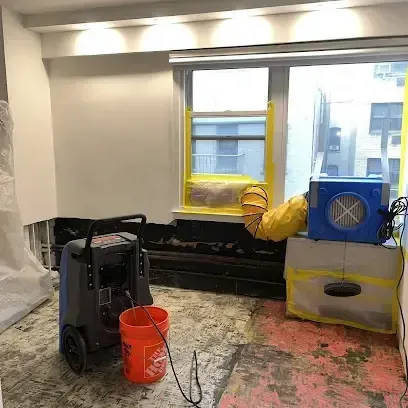
The upstairs floor comes first. The extraction crew pulls standing water off the laundry room floor, and a pass with a water extraction unit lifts what carpet, pad or flooring can hold.
The laundry room floor
Readings on the subfloor show whether water went down into the framing. Vinyl and tile can often be dried in place, while soaked laminate or pad is lifted.
Fans push dry air across the floor and a dehumidifier pulls moisture out of the room.
The ceiling and walls below
Readings are taken at set spots in the ceiling and the walls so progress can be tracked. Where the numbers stay high, small openings let dry air move through the cavity.
Drying is finished when framing, subfloor and drywall reach the dry goal, not when the surface feels dry. That steady checking is the heart of structural drying.
When the washer is not the only source
A stain that comes back after the washer repair means another source is feeding it. In a home with a second floor laundry room, the other suspects often share the same wall.
- A standpipe or trap that leaks a little during every cycle.
- A supply pipe inside the wall behind the washer.
- A condensate drain from an attic air handler that runs nearby.
- A bathroom above or beside the laundry room.
Habits that cut the risk upstairs
Hose, valve and pan problems are the ones that can be caught early. Washer, dishwasher and ice maker tube failures are handled under washer and appliance leak cleanup, and a few habits keep most of them from happening.
- Replace rubber washer hoses with braided steel hoses and look for bulges or cracks each year.
- Close the supply valves when the house will sit empty for several days.
- Set the washer on a pan with a drain and make sure the drain is clear.
- Put a small leak sensor on the floor beside the washer.
- Check the ceiling below after the first few loads from a new washer.
Questions
Can an upstairs washer leak damage the first floor?
Yes. Water drops through the floor system into the ceiling and wall cavities below, so a leak that looks small in the laundry room can reach the room under it.
Should a bulging ceiling be cut open?
A ceiling holding water is heavy and can fall on its own. Keeping people out from under it and having the drying team open it in a controlled way is safer than waiting.
How long does an upstairs leak take to dry out?
That depends on how long the water ran and what it soaked. The team keeps taking readings on framing and drywall and stops when they reach the dry goal.
Does a drain pan stop a washer flood?
A pan catches a small leak and a slow drip. A burst hose moves more water than a pan holds, so closing the valves is still the first step.
What if the stain stopped growing?
A stain that stops growing can still sit on top of wet insulation. Damp material left in a ceiling can grow mold, which is why dry readings matter more than how the surface looks.