Water Heater Leak Cleanup in Chapel Hill, NC
A tank that fails in a garage, closet or attic puts gallons of clean water on the floor at once. The extraction crew lifts it, dries the walls and floors around the heater and checks the rooms above and below.
(888) 578-4720Call about a leaking heater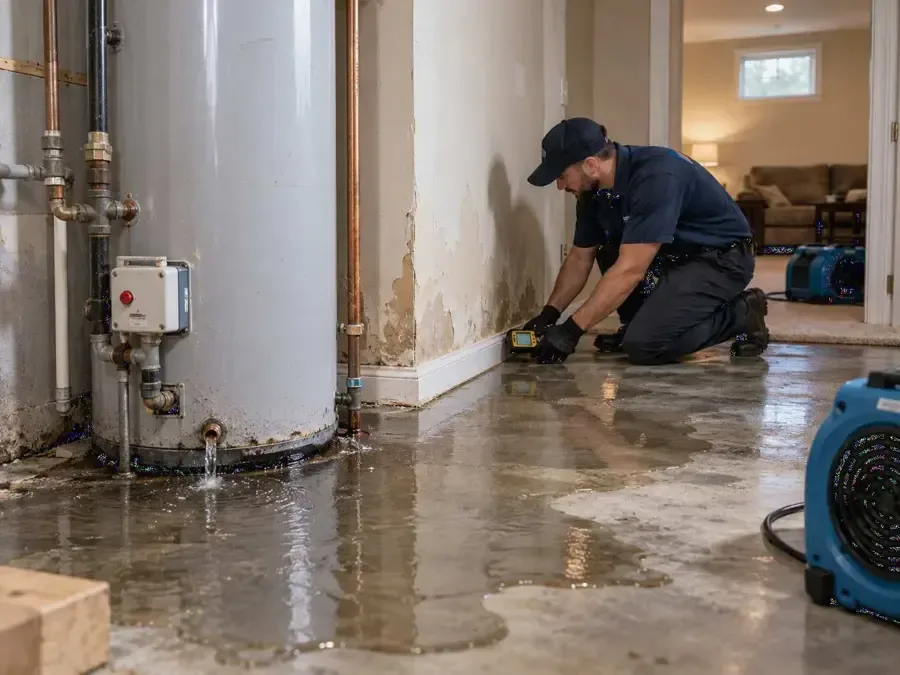
First steps for water heater leak cleanup
- 1
Shut off the supply
Close the cold water valve above the tank, then turn the heater off at the breaker or the gas control.
- 2
Mind the power
Keep clear of wet outlets and cords, and switch off breakers for the room if water reached them.
- 3
Take pictures
Photograph the tank, its label and every wet surface before towels and furniture are moved.
- 4
Tell the landlord
In a rental, notify the owner or manager, and call for drying so the damage does not spread to a neighbor.
Trade standards on this job
- Water extracted from slab, carpet and pad before drying starts
- Wall bottoms checked and dried to the target reading
- Floors above and below tested for moisture
What does water heater leak cleanup cost in Chapel Hill, NC?
Water heater leaks usually cost $900 to $5,000 or more. A garage slab caught early sits at the low end, while an attic tank failure that wets ceilings and a second floor reaches the upper range.
Garage leak, found early
$900 to $2,000- Slab water extracted
- Baseboards removed
- Readings each day
Closet leak reaching rooms
$2,000 to $3,500- Carpet and pad lifted
- Wall bottoms dried
- Belongings relocated
Attic tank failure
$3,500 to $5,000+- Wet insulation bagged
- Ceiling below opened
- Two floors dried
Ranges are typical, not a quote: the water category, the square footage, the materials and how fast drying started move the number most. Try the water damage cost calculator for a closer planning range.
How water heater leak cleanup is handled, start to finish
Measure first, remove the water, dry, then prove it dry with readings. The order does not change.
(888) 578-4720Ask how the cleanup works- 1
Stop and measure
With the tank off, a meter and thermal camera show how far water crept.
- 2
Extract
Water comes off the slab, carpet or subfloor, and soaked pad is removed.
- 3
Dry
Air movers and dehumidifiers run, and wall bottoms open if readings stay high.
- 4
Confirm
Daily readings continue until floors, walls and ceilings are dry.
Water heaters fail at the tank seam, the drain valve or the relief valve, and the result is the same: a puddle that spreads fast. Where the heater sits decides what gets wet, from a bare garage slab to carpet in a hall closet or a ceiling under an attic tank.
Rentals add a second question
Renter-occupied households slightly outnumber owner-occupied ones, so a heater leak often involves a landlord and sometimes the neighbor next door or below. Photos and notes taken before anything moves help everyone agree on what happened.
Where the water travels
Garage leaks spread across the slab and into walls and stored boxes. Closet leaks reach carpet and the base of interior walls. Attic tank failures soak insulation and then the ceiling below.
- Slab and carpet pad pulled and extracted
- Drywall checked a few inches above the floor
- Ceilings below attic tanks opened if they sag
- Stored items moved to dry ground
Drying and cleanup
Truck-mounted or portable extraction removes the water first. Air movers and dehumidifiers follow, and the drying team logs readings until baseboards, drywall and floor materials reach their targets. Similar leaks that start at a washer or dishwasher are covered under appliance leak water damage.
A garage slab can look dry on top while the concrete still holds water, and a closet leak can wick up the base of the wall. The mitigation team reads those surfaces with a meter instead of trusting a hand on the baseboard.
Water heater leak cleanup across Chapel Hill and nearby
Heater leak service covers houses, townhomes and apartment buildings across Chapel Hill, including Northside, where many houses have been converted to student rentals, and the apartment communities near East Franklin Street.
The same service nearby: water heater leak cleanup in Holly Springs, Morrisville, Apex.
Water damage restoration in Chapel Hill · every town covered
Water Heater Leak Cleanup: common questions
Who pays when a rental water heater leaks?
That depends on the lease and the policy, so tell the landlord quickly and keep photos. Mitigation can start to protect the building while responsibility is sorted out.
Can a heater leak damage the unit below?
Yes. Water follows framing, so a tank in an upstairs closet can reach ceilings and walls below. The team tests both levels to see how far it went, and ceiling leak water damage work covers anything that sags.
Is the water clean?
Fresh water from the tank is clean at first. If it sat or soaked porous material, the team treats the area before drying.
Does the slab need drying?
Concrete holds water. Extraction and air movement draw it out, and readings confirm that the slab and any floor on top are dry.
Is a leaking tank a covered loss?
Sudden failures are often covered, while a slow drip over months may not be. Photos of the tank and the readings document the timing.
Water heater leaking in Chapel Hill?
Shut the supply, then call the restoration team. Starting with the wet slab, carpet and wall bottoms keeps a closet leak from turning into a ceiling problem below.