Roof Leak Water Damage in Apex, NC
When rain gets past shingles or flashing, it soaks the attic floor first and the ceiling second. The drying team removes wet insulation, opens what stays wet and dries the rooms beneath.
(888) 578-4720Dry the attic and ceilings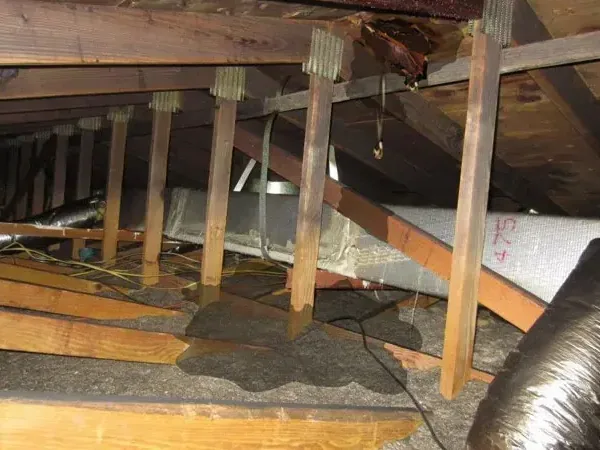
First steps for roof leak water damage
- 1
Catch the drips
Set out buckets, slide furniture aside and lay plastic to keep water off floors and electronics.
- 2
Stay off the roof
Wet shingles are slick, so leave the climb to a roofer and take photos from the ground.
- 3
Mind the ceiling
Keep clear of a bulging ceiling, because it can drop water and drywall at once.
- 4
Record and call
Photograph the stains and the weather, then call a roofer and the drying crew.
Trade standards on this job
- Attic floors and ceilings are measured from above and below.
- Wet insulation is bagged out, never dried in place.
- Roofers repair the opening while the crew dries the house.
What does roof leak water damage cost in Apex, NC?
Roof leak drying commonly costs $1,000 to $7,500 or more, depending on how much insulation and ceiling got wet. The roof repair itself is a separate roofer's bill, and a storm opening over several rooms sits at the top.
Small leak, one ceiling
$1,000 to $2,500- Attic checked first
- Ceiling dried in place
- Readings every day
Insulation and ceilings wet
$2,500 to $5,000- Insulation bagged out
- Ceiling drywall cut open
- Attic dehumidifier running
Storm opening, many rooms
$5,000 to $7,500+- Tarping coordinated
- Walls and floors dried
- Repeat drying visits
Ranges are typical, not a quote: the water category, the square footage, the materials and how fast drying started move the number most. Try the water damage cost calculator for a closer planning range.
How roof leak water damage is handled, start to finish
Measure first, remove the water, dry, then prove it dry with readings. The order does not change.
(888) 578-4720Preview the drying plan- 1
Inspect from above
The attic floor and decking are checked for wet insulation and the path the leak took.
- 2
Remove wet insulation
Soaked batts and blown fill are bagged out to expose the ceiling.
- 3
Open and dry the ceiling
Sagging drywall comes down and air movers dry the joist bays.
- 4
Confirm and close
Readings must reach dry marks in the attic and rooms before repairs start.
A roof leak rarely shows where it starts. Rain runs along decking and rafters, soaks the insulation and only then stains the ceiling, so the hidden damage is far larger than the brown spot a household notices.
What the local risk plan says
The Wake County Multi-Jurisdictional Hazard Mitigation Plan, which Apex takes part in, assesses flooding, heat, hurricane, severe weather and winter weather risks. Wind, falling limbs and freezing rain are the usual ways a roof opens, and a small gap lets in a lot of water over one storm.
A leak at a roof valley or vent boot can follow a rafter several feet before it drips, which is why the stain and the opening rarely line up.
- Lifted or missing shingles after high wind
- Failed flashing around vents and chimneys
- Clogged gutters pushing water under the roof edge
- Ice or debris damage from winter weather
What gets wet in the attic
Insulation acts like a sponge, holding water against the ceiling drywall and the top of interior walls. It also loses its value once it has been soaked, so wet batts are bagged out. Decking and rafters dry in place with airflow and an attic dehumidifier. Bathroom fan ducts that end in the attic can add moisture, so those runs are checked as well.
The crew maps wet ceilings with a moisture meter from below and checks the attic floor from above.
Drying below the roofline
Sagging drywall is cut out, joist bays are dried, and the rooms underneath get air movers and LGR dehumidifiers. A roofer repairs the opening, and the crew coordinates temporary tarping when the weather demands it.
Related work is described under ceiling leak water damage and storm and flood cleanup.
Roof leak water damage across Apex and nearby
Roof leak drying reaches Bradley Park, Beaver Creek Crossings, Falcons Reach and Bella Casa, and homes along NC 55 and US 64, across ZIP codes 27502, 27523 and 27539, wherever storms leave a wet attic.
The same service nearby: roof leak water damage in Holly Springs, Morrisville, Garner.
Roof Leak Water Damage: common questions
Does the roof get fixed first or the water?
Both start together. A roofer closes or tarps the opening while the drying crew removes wet insulation and sets equipment. Waiting on the roof alone leaves the attic wet.
Is rain damage covered by insurance?
Policies often cover sudden storm damage to the roof and the water that follows, while wear and old leaks are treated differently. Moisture logs and photos show when the water came in.
How can wet attic insulation be spotted?
Wet insulation looks flattened, dark or clumped, and feels cold and heavy. A moisture meter or thermal camera finds wet spots hidden from the attic hatch.
Will the ceiling stain go away after drying?
Dry drywall usually keeps the stain, and stain-blocking primer and paint cover it. Ceiling board that sagged or softened is replaced instead.
How soon does mold become a concern?
Wet insulation and drywall can support mold growth after about 24 to 48 hours, so wet material comes out quickly rather than drying in place.
Does a fallen limb or hail strike count too?
Yes. Any opening that lets water in leads to the same wet attic, and the drying steps stay the same.
A small roof gap floods a ceiling
The mitigation team clears wet insulation, dries the ceiling and joists, and documents readings that show the attic and rooms are dry.