Roof Leak Water Damage in Morrisville, NC
Rain that gets past shingles, flashing or a vent boot soaks the decking and attic insulation before a stain ever shows. The drying team removes what is wet and dries the ceilings and walls below.
(888) 578-4720Morrisville roof leak help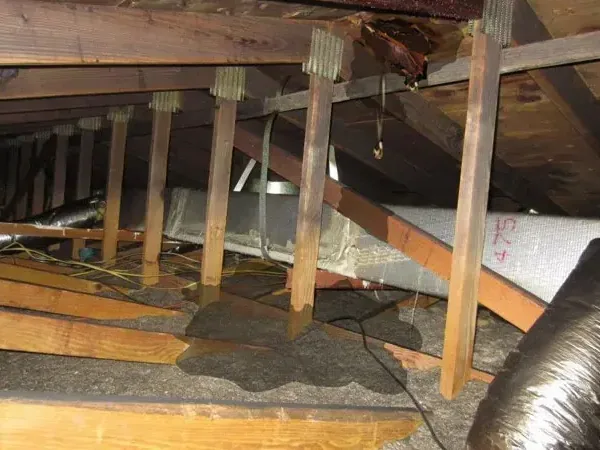
First steps for roof leak water damage
- 1
Contain the drip
Set buckets under active drips and move furniture and electronics out of the room, including the closet below the leak.
- 2
Check the ceiling
Look for sagging or bubbles and keep people out from under them, since a saturated ceiling can drop without warning.
- 3
Photograph the damage
Capture the stains, the drips and any visible roof damage from the ground, without climbing a wet roof.
- 4
Call both trades
Phone the restoration team for the water and a roofer for the opening, so neither job waits on the other.
Trade standards on this job
- Attic insulation is checked before the ceiling is judged.
- The roof opening is sealed by a roofer, not the drying crew.
- Ceilings and wall bottoms get readings below the leak.
What does roof leak water damage cost in Morrisville, NC?
A small leak over one ceiling usually costs $1,000 to $2,500. Wet insulation and several ceilings run $2,500 to $5,000, and a storm opening that reaches several rooms can reach $5,000 to $7,500+.
A small leak over one ceiling
$1,000 to $2,500- Attic checked
- Ceiling dried where it hangs
- Readings every visit
Wet insulation and ceilings
$2,500 to $5,000- Insulation bagged and removed
- Ceiling drywall opened
- Attic dehumidifier
Storm opening, several rooms
$5,000 to $7,500+- Tarping coordinated
- Walls and floors affected
- Extended drying
Ranges are typical, not a quote: the water category, the square footage, the materials and how fast drying started move the number most. Try the water damage cost calculator for a closer planning range.
How roof leak water damage is handled, start to finish
Measure first, remove the water, dry, then prove it dry with readings. The order does not change.
(888) 578-4720See the roof leak steps- 1
Inspect the attic
Meters and a thermal camera map the wet decking, insulation and ceiling.
- 2
Remove the wet
Saturated insulation is bagged out and standing water is extracted.
- 3
Open the ceiling
Sagging or saturated drywall is cut so trapped water can drain.
- 4
Dry and document
Air movers and dehumidifiers run while readings and photos are logged.
A roof leak rarely announces itself where it starts. Water enters at a worn flashing or a lifted shingle, runs along the decking and rafters, and soaks insulation far from the opening before it darkens a ceiling. By the time a stain appears, the attic has usually been wet for a while.
Storm leaks and age leaks
Wake County's hazard mitigation plan lists hurricanes, floods and severe thunderstorms among the county's natural hazards, and Hurricane Fran in September 1996 remains a regional reference for storm-driven roof leaks. Wind-driven rain forces water under shingles that would shed ordinary rainfall, and older roofs fail at seams and penetrations without any storm at all.
- Flashing around chimneys and walls
- Plumbing and exhaust vent boots
- Lifted or missing shingles after wind
- Valleys where debris holds water
Attic work before ceiling work
The first visit checks the attic with a meter and a thermal camera, because wet insulation hides a larger area than the ceiling stain suggests. Saturated batts or blown insulation are bagged and removed, since compressed wet insulation holds water against the ceiling for days.
Decking and rafters are measured and dried in place when possible, with a small attic dehumidifier and fans moving air across the framing.
Ceilings, walls and the repair handoff
Ceiling drywall that sags, bubbles or reads wet is opened so water can drain and the cavity can dry. Walls below the leak are metered down to the baseboard, because water that runs inside a wall surfaces at the bottom.
A roofer seals or tarps the opening, and the drying team coordinates around that work. Daily readings and photos support the claim. Related pages cover ceiling leak water damage and structural drying.
Roof leak water damage across Morrisville and nearby
Roof leak work covers single-family roofs in Breckenridge and Weston Estates, townhome and condo roofs in Carpenter Park and Town Hall Commons, and commercial roofs around the McCrimmon Corners shopping center.
The same service nearby: roof leak water damage in Holly Springs, Apex, Chapel Hill.
Water damage restoration in Morrisville · every town covered
Roof Leak Water Damage: common questions
Is a ceiling stain after rain a roof leak?
Often, but not always. Condensation, a leaking pipe or an air conditioner drain can leave the same stain, so the source is traced before any roof work begins.
Should the attic insulation be removed?
When it is soaked, yes. Wet insulation compresses, holds water against the ceiling and dries slowly. Lightly damp insulation can sometimes stay if readings drop quickly.
Who stops the leak, the roofer or the restoration crew?
A roofer repairs or tarps the opening. The restoration crew removes the water and dries the structure, and the two schedules are coordinated so the home stays protected.
Does insurance cover storm-driven roof leaks?
Coverage depends on the policy and the cause, and the adjuster decides. Photos of the opening, the stains and the drying readings document the loss.
Can a ceiling dry in place after a roof leak?
A stained but firm ceiling often can. Sagging, bubbled or dripping drywall is opened so the water can drain and the cavity above it can dry.
Rain that got in is still soaking the attic
Contain the drips, keep clear of sagging ceilings and call so the attic and the rooms below can be checked and dried.