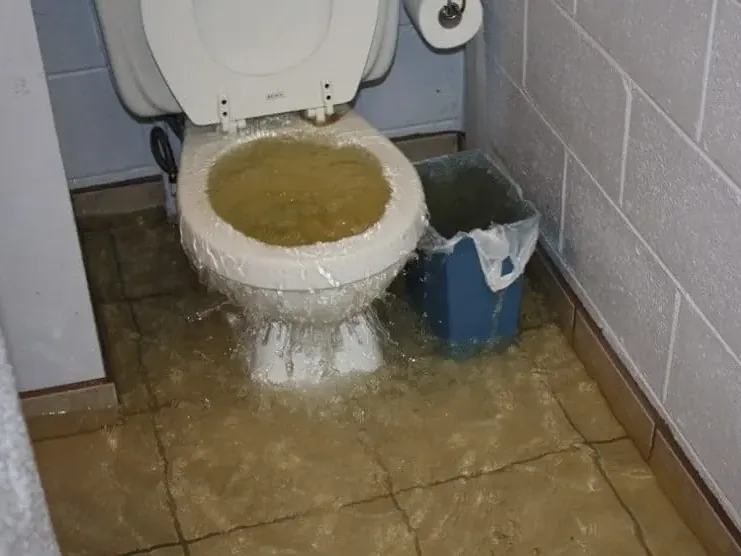
Renter-occupied households slightly outnumber owner-occupied ones in Chapel Hill, so a sewage backup often involves a landlord and sometimes a neighboring unit. Orange Water and Sewer Authority, known as OWASA, provides water, wastewater and reclaimed water service to Carrboro and Chapel Hill, and it takes calls at any hour for a sewage overflow or backup.
Key takeaways
- OWASA asks customers to call at any time of day for a water emergency, sewage overflow or backup.
- Sewage is black water, which is contained, removed and cleaned, never mopped up like a spill.
- Tenants should tell the landlord or property manager right away, since a shared drain can serve more than one unit.
- Porous materials that sewage touched, such as carpet, pad and drywall, are usually removed.
- A backup that returns points to a blockage that has to be found and cleared.
Why a backup is different in a rental heavy town
Chapel Hill's homeownership rate was 48.7% in 2023, and renter-occupied households slightly outnumber owner-occupied ones. The 2024 five year American Community Survey counts 21,189 households.
A sewage backup in a building with shared walls and shared drains can reach more than one unit. That makes calls, notes and photographs matter more.
Students and renters move often, and a backup can land on someone who just moved in. A simple plan, written down, helps in that case.
- The tenant or owner living in the affected unit.
- The landlord or property manager.
- Neighbors on the same drain or the same floor.
- OWASA, which runs the sewer system.
- A plumber, when a blockage needs to be cleared.
Who to call and in what order
OWASA asks customers to call at any time of day for a water emergency, sewage overflow or backup. Its Mason Farm Wastewater Treatment Plant treats the sewage that the system collects.
A call to OWASA helps show whether the problem sits in the street or in the building. A plumber clears a blockage that sits on the building side.
The order is not a rule, but it keeps the right people informed. The key is that nobody waits on someone else before stopping the water and reporting the problem.
- Stop using sinks, tubs, toilets and the washer, since each one sends more water into the same drain.
- Call OWASA about the overflow or backup.
- Tell the landlord or property manager in writing, and keep a copy.
- Call a plumber to clear the blockage if it is on the building side.
- Call for cleanup so the contaminated water does not sit.
What black water means
Sewage backup water is grossly contaminated. It carries bacteria and waste, and the restoration industry calls it Category 3 or black water.
That label changes everything about the cleanup. Mops and towels spread the problem, and the water soaks into anything porous.
Protective gear matters for the same reason. Gloves, boots and masks keep contaminated water off skin and out of lungs, and everything that touched the water is cleaned or discarded afterward.
- Stay out of the affected room and keep children and pets away.
- Do not run the vacuum or a fan, since it spreads contamination through the air.
- Do not try to wash sewage down another drain.
- Photograph the room before anything is moved.
How the cleanup is contained and carried out
A sewage backup is handled in two parts. First the area is contained, then the contaminated material is removed and the surfaces are cleaned.
The sewage backup cleanup crew wears protective gear and works room by room, so the problem does not move through the building.
Containment
Containment keeps the problem in one place. It matters most in an apartment, where a hall or a shared wall is only steps away.
- Barriers keep the affected room separate from the rest of the unit.
- Foot traffic is limited and supplies are kept inside the work area.
- Fans are used only when they help drying and do not spread contamination.
Removal and cleaning
Removal follows a clear order, from the standing sewage to the materials it touched and finally the surfaces that stay.
- Standing sewage is pumped or vacuumed out.
- Carpet, pad, low drywall and soft trim that the water touched are removed.
- Hard surfaces and framing are cleaned and treated before drying starts.
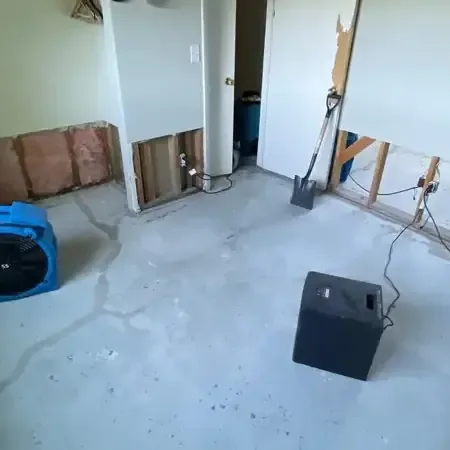
Drying after the contaminated material is gone
With the contaminated material out, the room still holds moisture. A water extraction crew pulls any remaining water, and the drying team sets equipment and reads framing and subfloor.
Work is done when the readings meet the dry goal. Rebuilding should wait until then, so moisture is not sealed into a wall.
A sewage job often runs longer than a plain water job, since removal comes first and the drying can only begin once the space is stripped and cleaned.
- Remaining water is extracted from the floor and low areas.
- Equipment is set and readings are taken on framing, subfloor and drywall.
- Readings repeat at each visit until the dry goal is met.
- Rebuilding starts only after the readings say the area is dry.
Shared walls and neighboring units
A backup that starts in one unit can send water into the one below or beside it. Readings in neighboring rooms show whether the water traveled.
Everyone in the building benefits when the first unit reports the problem early and clearly.
Floors matter as much as walls. Water that goes through a floor can reach a ceiling in the unit below.
- Check ceilings and walls in rooms below and beside the affected unit.
- Tell neighbors early, since they may need to stop using their drains.
- Share photographs and times with the landlord and the cleanup team.
Keeping drains from backing up
Not every backup can be prevented, but a few habits cut the risk. The main sewage backup cleanup service deals with the result when a drain does back up.
Slow drains are an early warning, and a backup that returns means the real blockage has not been cleared.
Tenants and owners both help when they report problems early, since a clog that is caught while it is small is far cheaper than a backup.
- Keep grease, wipes and food scraps out of drains and toilets.
- Use a hair catcher in tubs and showers.
- Report slow drains in a rental before they turn into a backup.
- Treat a repeat backup as a sign that the blockage is still there.
Questions
Who should be called for a sewage backup in Chapel Hill?
OWASA asks customers to call at any time of day for a sewage overflow or backup. The landlord or property manager should also be told right away.
Is sewage backup water dangerous?
Yes. It is black water, grossly contaminated with bacteria and waste, so people and pets stay out and the cleanup uses protective gear.
Can carpet be saved after a sewage backup?
Carpet and pad that sewage touched are usually removed. The floor underneath is cleaned and dried.
What if the backup reached a neighbor's unit?
Readings in neighboring rooms show how far the water went. The landlord and the cleanup team should be told so each affected unit can be checked.
Why does a backup keep returning?
A repeat backup usually means the blockage was not cleared. A plumber or the utility needs to find and fix the real cause.