AC Condensate Leak Water Damage in Chapel Hill, NC
An air conditioner pulls gallons of water out of the air on every hot day. When the drain clogs or the pan rusts through, that water soaks insulation, ceilings and the closet around the air handler.
(888) 578-4720Call about an AC leak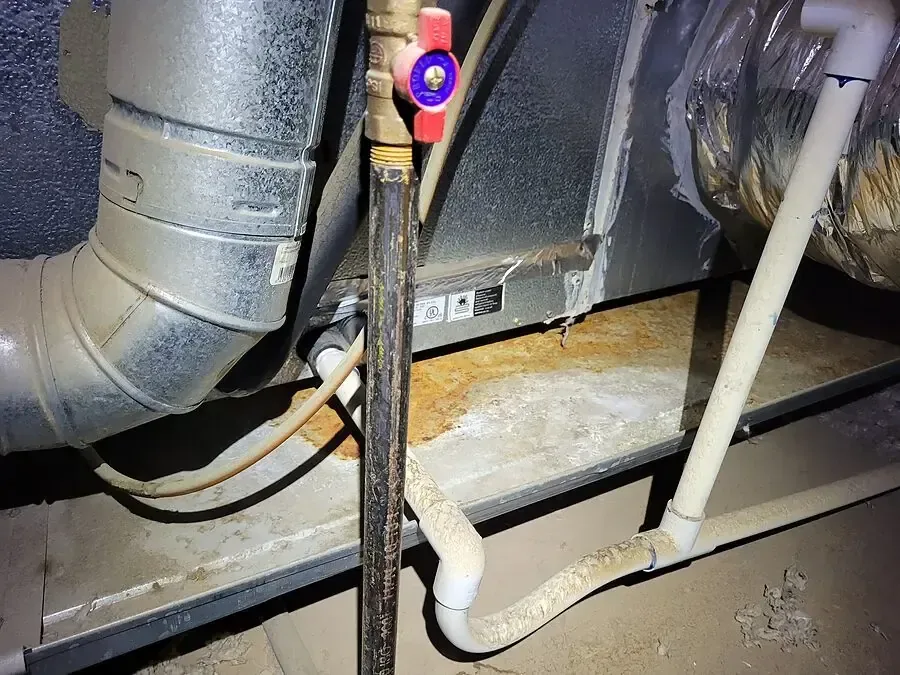
First steps for AC condensate leak water damage
- 1
Turn the system off
Switch the thermostat and breaker off so the unit stops sending water into the pan.
- 2
Check the pan
If the pan is reachable, note standing water, rust and a clogged drain, and photograph them.
- 3
Clear the area
Move boxes and stored items away from the wet closet or attic floor.
- 4
Call for drying
Say where the air handler sits so the ceiling below can be checked.
Trade standards on this job
- Insulation checked and removed wherever it is wet
- Ceilings dried in place or opened where they hold water
- Drain pan area cleaned, treated and dried
What does AC condensate leak water damage cost in Chapel Hill, NC?
AC condensate leaks usually cost $600 to $4,000 or more. A small stain caught early is the low end, while a long overflow that soaked walls and floors, with treatment, moves toward the top.
A small stain, caught early
$600 to $1,500- Insulation inspected
- Ceiling dried where it hangs
- Readings each day
Soaked insulation and ceiling
$1,500 to $3,000- Insulation removed
- Ceiling opened
- Attic dehumidifier
Long overflow into walls and floors
$3,000 to $4,000+- Walls and floors dried
- Antimicrobial treatment
- Longer drying
Ranges are typical, not a quote: the water category, the square footage, the materials and how fast drying started move the number most. Try the water damage cost calculator for a closer planning range.
How AC condensate leak water damage is handled, start to finish
Measure first, remove the water, dry, then prove it dry with readings. The order does not change.
(888) 578-4720See how the cleanup works- 1
Stop the water
The unit is switched off and the pan and drain are inspected.
- 2
Find the spread
A meter and thermal camera trace the wet insulation and ceiling.
- 3
Remove and treat
Soaked insulation comes out, and surfaces that sat wet are treated.
- 4
Dry and confirm
An attic dehumidifier and air movers run until readings clear.
Condensate is the water an air conditioner removes from indoor air, and it should leave through a drain. When that path clogs, the pan overflows slowly and quietly, often inside an attic, a closet or above a ceiling.
Hot summers keep the system working
Summers here run hot, with a record high of 107 F in July, so an air conditioner works for months and the drain pan sees constant water. A clog of algae and dust builds slowly, and the overflow may begin before anyone hears it.
- Overflow stains on the ceiling under an attic unit
- Water in the closet or on the floor around a wall unit
- Rust or standing water in the drain pan
- A musty odor near the air handler
Cleanup steps
The first move is turning the system off so it stops adding water. The drying team then inspects the pan, the drain and the insulation, removes what is soaked and opens ceilings that hold water. Air movers and an attic dehumidifier dry the framing.
Because condensate can carry dirt and microbes, materials that sat wet are treated before they are closed up. An HVAC technician fixes the drain, while the mitigation team handles the water damage.
A condensate leak in an attic can also stain walls and soak the attic floor, so the drying team checks around the air handler as well as below it. Insulation that stayed wet for weeks is removed rather than dried, because it will keep the drywall damp.
Why it is easy to miss
Slow leaks hide above ceilings. By the time a stain shows, insulation may have been wet for weeks, and water that spread sideways can reach spots away from the unit, much like ceiling leak water damage.
AC condensate leak water damage across Chapel Hill and nearby
AC leak cleanup covers houses, townhomes and apartments across Chapel Hill, from Meadowmont Village and Southern Village to Rosemary Street and Franklin Street, wherever an air handler sits in a closet or attic.
The same service nearby: ac condensate leak water damage in Holly Springs, Morrisville, Apex.
Water damage restoration in Chapel Hill · every town covered
AC Condensate Leak Water Damage: common questions
Why does an air conditioner leak water?
It removes moisture from the air, and that condensate normally drains away. A clogged drain or rusted pan sends it into the attic, closet or ceiling instead.
Is the water dirty?
It starts as clean condensate but picks up dust and algae from the pan. If it sat on insulation or drywall, the team treats the area before closing it.
Who fixes the drain?
An HVAC technician clears the drain or replaces the pan. The restoration team handles the wet materials, and the two jobs are timed so the leak does not return.
How can a leak be caught early?
A stain on a ceiling under an attic unit, water around a closet air handler or a full pan are warning signs. Checking the drain before summer helps.
Does insurance cover AC overflow?
Coverage varies, and sudden overflow is treated differently from a slow, long running leak. Dated photos and readings help show what happened and when.
Can the ceiling be saved?
If the drywall is firm and the stain is small, it can often be dried in place. Sagging or soft sections are removed, and water extraction handles any pooled water.
AC leaking in Chapel Hill?
A condensate overflow keeps soaking insulation and ceilings until it is dried out. The restoration team finds how far it spread and removes what cannot recover.