Frozen Pipe Water Damage in Apex, NC
Ice can crack a pipe without a drop showing, and the thaw then sends water into an attic, a wall or a crawl space. The drying team handles the water and the wet structure behind it.
(888) 578-4720Get help after the thaw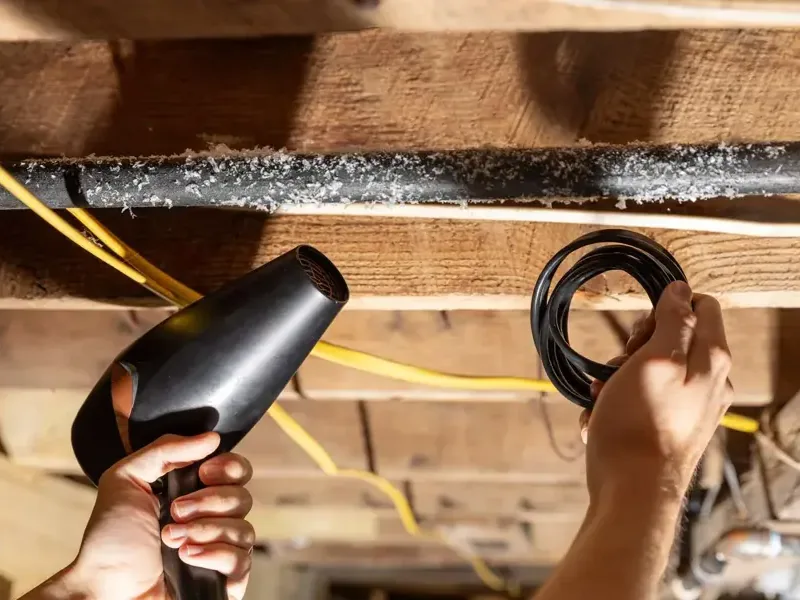
First steps for frozen pipe water damage
- 1
Open the faucets
Let the pipe thaw with the tap open and a gentle heat source nearby, never an open flame.
- 2
Close the main
Shut the main valve before the thaw so a hidden crack cannot flood the structure.
- 3
Check the high spots
Look in the attic, the crawl space and outer walls for drips, stains or bulging pipe.
- 4
Photograph and call
Record any water, then call a plumber and the drying crew for the repair and the wet materials.
Trade standards on this job
- Thermal imaging finds wet insulation long before any stain appears on a ceiling.
- Cold attic and crawl space cavities get warm-air or desiccant drying.
- Daily readings decide when the equipment leaves.
What does frozen pipe water damage cost in Apex, NC?
Frozen pipe losses in Apex commonly run from $1,500 to $9,000 or more, depending on the number of splits and where the water went. Attic and crawl space leaks cost more because insulation and ceilings get wet.
One split, found quickly
$1,500 to $3,000- Extraction at once
- Thawed runs checked
- Floor dried in place
Attic or crawl space leak
$3,000 to $6,000- Soaked insulation removed
- Ceiling or subfloor dried
- Warm-air or desiccant drying
Several splits, two floors
$6,000 to $9,000+- Drywall and flooring removed
- Containment barriers
- Longer monitoring
Ranges are typical, not a quote: the water category, the square footage, the materials and how fast drying started move the number most. Try the water damage cost calculator for a closer planning range.
How frozen pipe water damage is handled, start to finish
Measure first, remove the water, dry, then prove it dry with readings. The order does not change.
(888) 578-4720Read the thaw steps- 1
Follow the thaw
Meters and a thermal camera trace each split to the surfaces it wet.
- 2
Pull out the water
Extraction clears standing water and wet pad from low rooms first.
- 3
Cut out wet material
Wet insulation and drywall are bagged out and replaced later.
- 4
Dry in steps
Heat or desiccant units run with daily logs until readings are dry.
A frozen pipe often splits quietly, and the real flood starts once temperatures climb and the ice melts. By then water may be running inside a wall, an attic or a crawl space while nobody is looking at it.
Why central North Carolina still sees burst pipes
Mild winters lull households into skipping freeze prep. The arctic front of January 24 to 25, 2026 kept afternoon highs in the 20s across most of the Piedmont, a reminder that hard freezes do reach this part of the state. Pipes in attics, crawl spaces and outer walls go first.
- Faucets that slow to a trickle or stop in cold weather
- Frost on exposed pipe in a crawl space or garage
- A bulge or crack along a pipe run
- Damp ceiling or wall spots after the thaw
What the thaw reveals
A split pipe may hold a plug of ice and leak nothing until it warms. Then the crack lets go, and the water runs into insulation first, so damage hides above ceilings and inside walls before a stain shows.
The restoration team follows the wet path with a moisture meter and a thermal camera, then removes insulation and drywall that stayed saturated.
Repair, then drying
A plumber repairs or replaces the split section while the crew extracts standing water. Warm-air or desiccant drying pulls moisture out of cold cavities, and daily readings show when framing is dry. Slow, steady heat is gentler on wood than blasting it.
Homeowners handle repairs on the house side of the meter. Related jobs are covered under burst pipe water damage and roof leak water damage.
Frozen pipe water damage across Apex and nearby
Thaw cleanup runs in Waterford Green, Bradley Park, Falcons Reach and Beaver Creek Crossings, and in homes along Hunter Street and the Apex Peakway, across ZIP codes 27502, 27523 and 27539.
The same service nearby: frozen pipe water damage in Holly Springs, Morrisville, Garner.
Frozen Pipe Water Damage: common questions
Will a frozen pipe always burst?
No. Some pipes stretch and survive, others crack where the ice plugs. The leak often shows only when the pipe thaws, so a quiet frozen pipe is still worth checking.
Is the damage covered by insurance?
Freeze damage is often covered when it is sudden, but policies differ on vacant homes and heat settings. The drying logs and photos back up whatever the adjuster needs.
Where do frozen pipes usually split?
Attics, crawl spaces, garages and outer walls are the usual places, since cold air reaches them first. A split on a crawl space pipe can soak subfloor and insulation before anything shows indoors.
Can a thawed pipe be left alone?
A thawed pipe should be checked for cracks before the water stays on. A plumber confirms the repair, and the crew checks hidden cavities for moisture.
How fast does mold become a concern?
Wet drywall and insulation can start growing mold after about 24 to 48 hours, which is why extraction and drying begin quickly.
Who handles a leak at the meter?
The Town handles leaks in the street or between the street and the meter. Pipe from the meter to the house is the homeowner's repair.
Cold snaps leave wet walls behind
The drying team removes thaw water and wet insulation, then logs readings every day until the attic, walls and floors are dry.