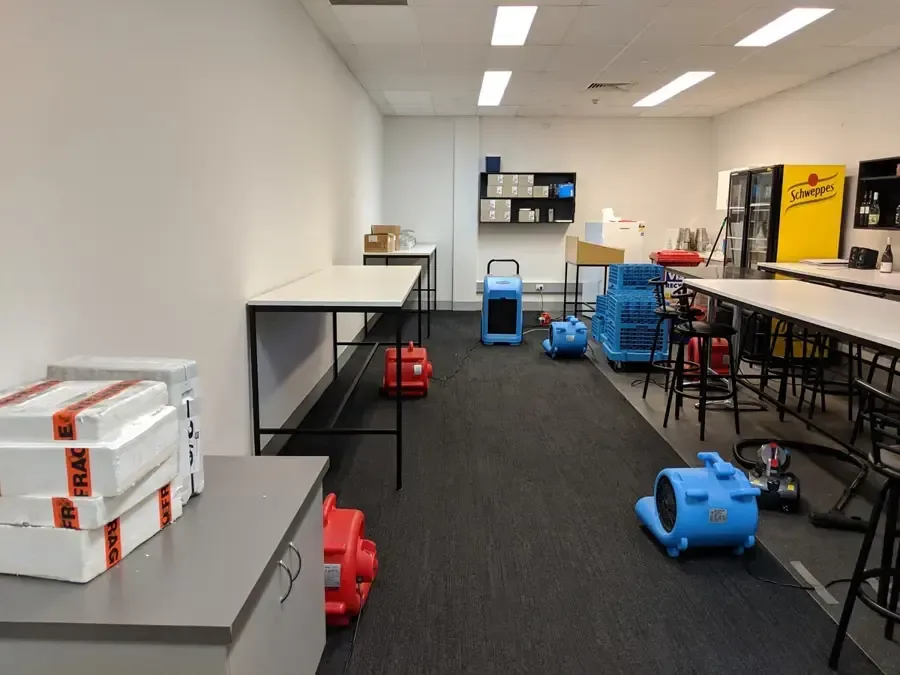
Little Buffalo Creek flows north through the center of Sanford, and on Thursday, June 5, 2025, flash flooding along it put downtown on edge. Portions of Lee County received up to 6 inches of rain, roughly a dozen streets closed temporarily and some downtown businesses shut for the day.
Key takeaways
- On June 5, 2025, flash flooding along Little Buffalo Creek closed roughly a dozen downtown streets and shut some businesses for the day.
- Lower levels take on water first, and one downtown building stayed closed through the weekend after lower level flooding.
- Day one is for safety, records, protecting inventory and getting extraction started.
- Flood water is Category 3, so carpet, pad and drywall that it touched are usually removed.
- Phased drying lets part of a space open while the rest is still being dried.
What happened downtown on June 5, 2025
The storm hit on a Thursday, and downtown felt it quickly. The Sanford Fire Department answered 25 calls that day, including at least 3 that helped people leave homes or businesses.
None of these numbers describe one building. They show how fast a creek can climb in a downtown core, and how little time owners had to react.
One downtown building closed because of lower level flooding and storm damage, and it stayed closed through the weekend.
- Up to 6 inches of rain fell in portions of Lee County.
- A water rescue pulled a person from a vehicle between McIver and Jenkins streets downtown.
- Roughly a dozen streets closed temporarily.
- Some downtown businesses closed for the day after flooding along Little Buffalo Creek.
The first day for a business owner
The first day is about safety, records and stopping the damage from spreading. Getting into a flooded building should wait until the water and the power have been dealt with.
A few quick choices on day one decide how much stock and equipment survive. Wet inventory left on a floor wicks water upward, and paper records soak through fast.
Calling for help early also helps. Extraction can start while the owner sorts out the building's other needs.
- Do not enter a flooded space until it is safe and the power is off.
- Photograph the high water mark, the floor and every damaged item.
- Move stock, files and electronics above the wet floor if it can be done safely.
- Tell the landlord or property manager what happened and when.
- Tell staff when and where work will resume.
- Keep a simple log of the work: who called, when and what was said.
Why lower levels and storefronts need special handling
Downtown buildings come in many shapes, and the water finds the low points. A lower level or back room can fill while the front of the store stays dry.
Lower levels and stockrooms
A lower level holds water the longest. Stairs, storage shelves and mechanical gear in these rooms all need attention before the space can be used again.
- Stairs and landings that collect water.
- Shelving and stock stored low to the floor.
- Mechanical gear and wiring near the floor.
- Walls that touch the ground on one side.
Street level storefronts
At street level, water enters at doors and travels across floors. Display fixtures, counters and the base of walls are the first things it reaches.
The Downtown Sanford Historic District is listed on the National Register of Historic Places, which makes the removal and drying plan worth talking through with the building owner.
How extraction and structural drying are staged
Water comes out first. A crew pulls standing water from floors and low rooms, and that storm and flood water cleanup removes soaked materials that cannot be saved.
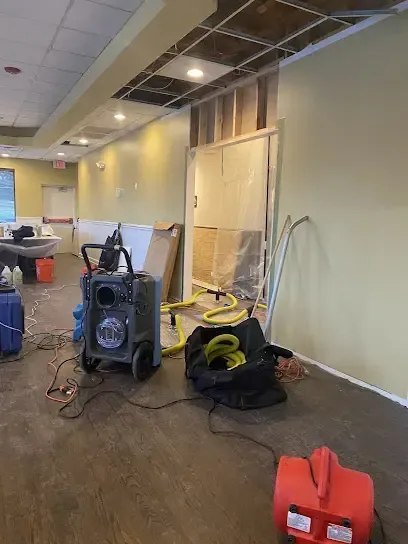
Drying comes next. Fans and dehumidifiers move dry air through the space, and readings on walls, framing and concrete decide when the work is done through structural drying.
The same order applies to a small office and to a large shop. Only the amount of equipment changes.
- Standing water is extracted before anything else moves.
- Carpet, pad and wet drywall are removed.
- Surfaces are cleaned, since flood water is Category 3.
- Readings direct the drying until the dry goal is reached.
Phased work that gets doors open sooner
A business cannot always wait for the whole building to dry. Commercial water damage work is often planned in phases, so the part that dries first can open first.
A schedule helps a business plan around the work. Each phase has a clear end point, set by readings on the materials, not by a calendar guess.
Closing off the dry areas from the wet ones also keeps noise, dust and equipment out of the rooms that are open.
- Sales floors and front counters first, when they are ready.
- Back rooms and storage areas next.
- Lower levels last, since they hold water the longest.
- Equipment is moved and rechecked as each phase finishes.
Talking with staff, customers and the landlord
A closed business still has to keep people informed. A short note to staff, a sign on the door and a call to the landlord keep everyone on the same page.
Each person needs the same facts: what happened, which part is closed and when the next update will come.
Written updates are easier to share than phone calls. A short email or posted notice means everyone hears the same message.
- Staff need to know whether to come in and what work to expect.
- Customers need a clear sign or message about what is open.
- The landlord needs photographs and a list of damaged items.
- Neighbors in the same building need to know if water crossed a shared wall.
Preparing for the next heavy rain
After the June 2025 flood, the mayor said renderings showed a Green Restoration Project meant to redirect Little Buffalo Creek to its naturally flowing path and help absorb water downtown. Plans like that take time, and owners can still prepare.
A few steps keep a repeat from costing as much.
- Keep a list of who to call, with numbers saved on a phone.
- Store paper records and electronics off the floor.
- Know where the main shutoff and the electrical panel are.
- Photograph the space while it is in good shape.
- Move valuable stock to shelves above floor level before a storm.
Questions
What happened in downtown Sanford on June 5, 2025?
Flash flooding along Little Buffalo Creek closed roughly a dozen streets, led to a water rescue and shut some downtown businesses for the day.
Why do lower levels need extra attention?
Water settles in the lowest rooms and stays the longest, so a lower level often needs the most drying time.
What is Category 3 water?
It is the most contaminated water category, and it covers flood water from outside. Porous materials it touched are usually removed.
Can part of a business reopen while the rest dries?
Yes. Phased work lets rooms that dry first reopen first, while crews keep drying the rest.
Who should be told after a flood?
The landlord or property manager, staff and any other tenant who shares a wall or a floor with the damaged space.