Structural Drying and Dehumidification in Sanford, NC
A floor that feels dry can still hold water in the subfloor and the wall cavity. The drying team sets equipment by room and material, then adjusts it from daily readings until everything reaches target.
(888) 578-4720Still damp after a leak? Call the drying team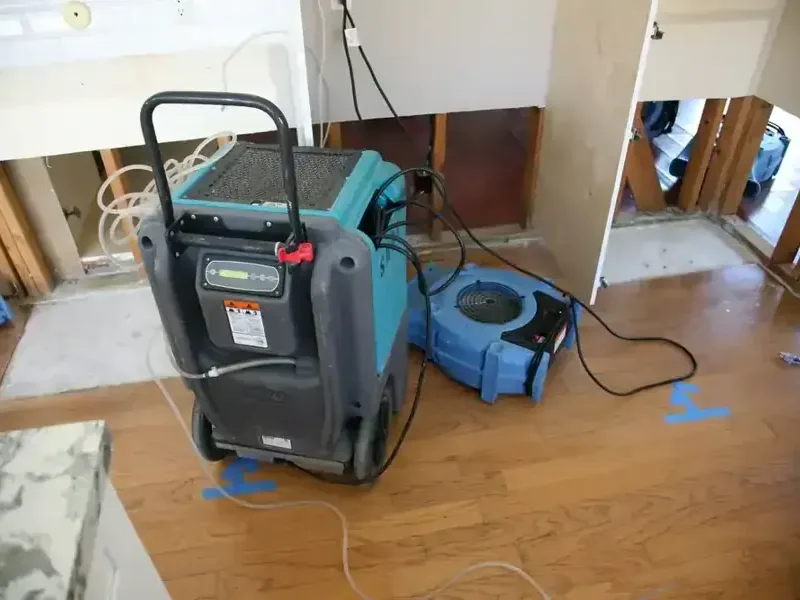
First steps for structural drying
- 1
Stop the source
Close the supply or appliance valve so no new water reaches the structure.
- 2
Extract first
Remove standing water before equipment is set, or drying will take much longer.
- 3
Leave the equipment on
Do not switch off air movers or dehumidifiers between visits, since they work around the clock.
- 4
Keep doors closed
Close interior doors in the wet area so the dehumidifiers work on a smaller space.
Trade standards on this job
- Dry goals are set for each material, not the room
- Wall cavities are dried through small openings first
- Daily logs show when the equipment can come out
What does structural drying cost in Sanford, NC?
Structural drying here typically costs $1,500 to $8,000+, depending on how many rooms are wet, the water class, whether hardwood or thick framing is involved and how many days the equipment runs.
One or two rooms, light class
$1,500 to $3,000- Air movers and LGR units
- Daily moisture logs
- A few days running
A whole floor or Class 3
$3,000 to $5,500- More equipment placed
- Wall cavities dried
- Containment barriers
Hardwood or Class 4
$5,500 to $8,000+- Floor drying mats set
- Desiccant dehumidifiers
- Longer monitoring period
Ranges are typical, not a quote: the water category, the square footage, the materials and how fast drying started move the number most. Try the water damage cost calculator for a closer planning range.
How structural drying is handled, start to finish
Measure first, remove the water, dry, then prove it dry with readings. The order does not change.
(888) 578-4720Start the readings- 1
Map the moisture
Meters and a thermal camera show which materials are wet.
- 2
Place the equipment
Air movers and LGR dehumidifiers are set by room, material and water class.
- 3
Check every day
Readings are logged and equipment is moved or added as the numbers change.
- 4
Confirm dry
Equipment comes out only after every material reaches its dry goal.
Structural drying is what turns a wet building back into a dry one. Extraction removes the water that can be lifted, and drying removes the moisture soaked into drywall, framing and floors, which is where problems start if it is left behind. The work follows measured goals, not appearances.
How the equipment works together
Air movers push dry air across wet surfaces so moisture leaves the material. LGR dehumidifiers then pull that moisture out of the air and drain it away. The two work as a pair, which is why placement follows the room and the material, not a fixed number.
- Class 1 and 2 losses, one or two rooms, dry with standard equipment.
- Class 3 losses, where water came from above, need more equipment and cavity drying.
- Class 4 losses, such as hardwood and dense materials, use mats and desiccant units.
- Containment keeps the dry air and dust where they belong.
Hardwood, walls and what is hidden
Hardwood and thick framing release moisture slowly, so they need extended drying with floor mats or desiccant units. Wall cavities are dried through small holes or removed baseboards, so more drywall can stay in place.
A wall that looks dry can still read wet in the cavity, which is why a meter and a thermal camera go back over the same spots each day.
Proof before the rebuild
Each day the drying team records readings and adjusts the equipment, and those logs show the adjuster that the structure reached its goal. Rebuild work after tear-out may need a building permit, and applications go through the CSS Portal, handled by the City of Sanford and Lee County Inspections Division.
Extraction comes first, as in water extraction, and after a creek flood the sequence follows storm and flood cleanup.
Structural drying across Sanford and nearby
Drying equipment is placed across the city, from downtown shops and homes near Depot Park to Jonesboro Heights, St. Andrews, Carolina Trace and the neighborhoods along Wicker Street, with the same daily readings at every address.
The same service nearby: structural drying and dehumidification in Holly Springs, Apex, Morrisville.
Structural Drying and Dehumidification: common questions
How long does structural drying take?
Most jobs run several days. Hardwood, thick framing and contaminated water take longer, and the readings, not the calendar, decide when it is done.
Why are dehumidifiers needed with air movers?
Air movers lift moisture into the air, and dehumidifiers remove it. Without them the humidity stays high and the materials stay wet.
Why are the machines so loud?
They move a large volume of air to dry wall cavities and floors. The noise is the sign that moisture is leaving the structure.
Can walls be dried without removing drywall?
Often. Small holes or removed baseboards let dry air reach the cavity, and drywall comes out only where readings stay high.
How is dry confirmed?
Meters read each material against its dry goal, and the final readings are logged for the adjuster.
Does the electricity bill go up?
Running equipment adds to the power bill, so ask the insurer whether that cost is covered.
Floors and walls still damp?
Materials that feel dry can still hold water. The drying team places the equipment, logs readings daily and removes it only when every material reaches its measured goal.