Water Extraction and Removal in Sanford, NC
Standing water soaks into pad, drywall and subfloor the longer it sits. Truck-mounted units and submersible pumps pull it out of the structure, and the wet materials then move on to a drying plan.
(888) 578-4720Standing water on the floor? Call the crew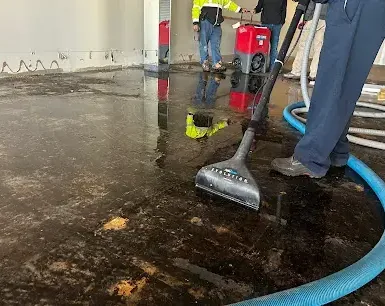
First steps for water extraction
- 1
Stop the source
Close the main valve or the appliance supply so no new water arrives.
- 2
Cut the power
Switch off breakers for wet rooms and stay out of standing water near outlets.
- 3
Lift what you can
Pull small furniture, rugs and boxes off the floor, and prop couch legs up on foil or blocks.
- 4
Photograph the water level
Capture the depth, the rooms affected and the damaged belongings before extraction begins.
Trade standards on this job
- Truck-mounted units and pumps start on the deepest water
- Every water category gets its own handling plan
- Wet pad is lifted out so it cannot keep soaking the floor
What does water extraction cost in Sanford, NC?
Water extraction here typically costs $800 to $5,500+, shaped by how many rooms or floors are wet, whether carpet and pad must be lifted, how deep the water stands and which water category it is.
A single room of clean water
$800 to $2,000- Wand and extractor work
- Wet areas mapped
- Water category confirmed
Multiple rooms or a full floor
$2,000 to $4,000- Carpet extracted in passes
- Pad cut out
- Ceiling below read
A full level or crawl space
$4,000 to $5,500+- Submersible pump work
- Gray or black water plan
- Drying hand-off
Ranges are typical, not a quote: the water category, the square footage, the materials and how fast drying started move the number most. Try the water damage cost calculator for a closer planning range.
How water extraction is handled, start to finish
Measure first, remove the water, dry, then prove it dry with readings. The order does not change.
(888) 578-4720Start lifting the water- 1
Stop and survey
The source is confirmed stopped, and meters map where the water traveled.
- 2
Pump and extract
Submersible pumps clear deep water and truck-mounted units lift the rest.
- 3
Remove the pad
Wet pad and loose debris come out so the subfloor can breathe.
- 4
Hand off to drying
Air movers and dehumidifiers take over, and readings direct the equipment.
Extraction is the fastest way to limit a water loss, because every gallon lifted off a floor is moisture the walls and subfloor never absorb. It is also where the first decisions are made: which water category this is, which materials can stay and where the water has already traveled. Dryers cannot make up for water that was left standing.
Downtown buildings and the June flood
The June 5, 2025 flash flooding put water into downtown buildings, closing some businesses for the day, and roughly a dozen streets were shut for a time. Cases like that start with pumps and extractors, because water standing on a floor has nowhere to go but into the structure.
Equipment for each floor
- Truck-mounted units give the strongest suction on carpet and large floors.
- Submersible pumps move deep water out of garages and crawl spaces.
- Extraction wands work hard floors, tile and stairs.
- Wet pad is lifted and cut out so it does not hold water against the subfloor.
Carpet is extracted in slow passes from the wettest corner outward. Whether the pad stays depends on how long it sat wet and how clean the water was, and the meter settles the question.
The crew also reads the walls, because water wicks upward behind baseboards and into drywall. Those readings decide where flood cuts and baseboard removal happen next.
Clean, gray or black water
Clean water from a supply pipe can often be extracted and dried in place. Gray water, the kind that drains from laundry and dish cleanup, usually means carpet and pad are removed. Black water, from sewage or flood water, adds containment and cleaning before anything is dried; see storm and flood cleanup and sewage backup cleanup.
After the water is gone
Extraction removes the water that can be lifted, not the moisture soaked into materials. Everything else is handed to structural drying, where readings decide how long the equipment runs.
Water extraction across Sanford and nearby
Extraction crews cover the whole city, from downtown buildings near Temple Theatre and the Historic Sanford Depot to Rosemount-McIver Park, Hawkins Avenue and the corridors along Carthage Street and US 1, with pumps sized to each address.
The same service nearby: water extraction and removal in Holly Springs, Apex, Morrisville.
Water Extraction and Removal: common questions
How soon does extraction need to start?
As soon as the source is stopped. Water moves into pad, drywall and subfloor quickly, and wet materials can start to grow mold within 24 to 48 hours.
Can a wet vac do the same job?
A shop vacuum handles a small spill, but it cannot pull water out of carpet pad or off a whole floor. Truck-mounted units and pumps move far more water.
Does carpet always have to come out?
Not always. Clean water caught early can often be extracted and dried in place, while gray or black water means the carpet and pad are removed.
What is the difference between extraction and drying?
Extraction removes water that can be lifted. Drying removes the moisture soaked into materials, using dehumidifiers and air movers.
Can extraction handle deep water?
Yes. Submersible pumps clear garages, crawl spaces and flooded rooms, and the wet structure is dried afterward.
Will insurance pay for water extraction?
Extraction after a sudden leak is commonly covered, while flood water often needs a separate policy. The policy decides, and the readings and photos support the claim.
Water standing on the floor?
Standing water keeps soaking into the pad, drywall and subfloor the longer it stays. The extraction crew lifts it out and hands the wet structure to the drying plan.