Crawl Space Water Removal in Sanford, NC
After a hard rain, water can collect under a raised floor and soak the joists and subfloor above it. A crew with submersible pumps clears the water, strips out the wet layers and dries the framing.
(888) 578-4720Standing water below? Call the pump crew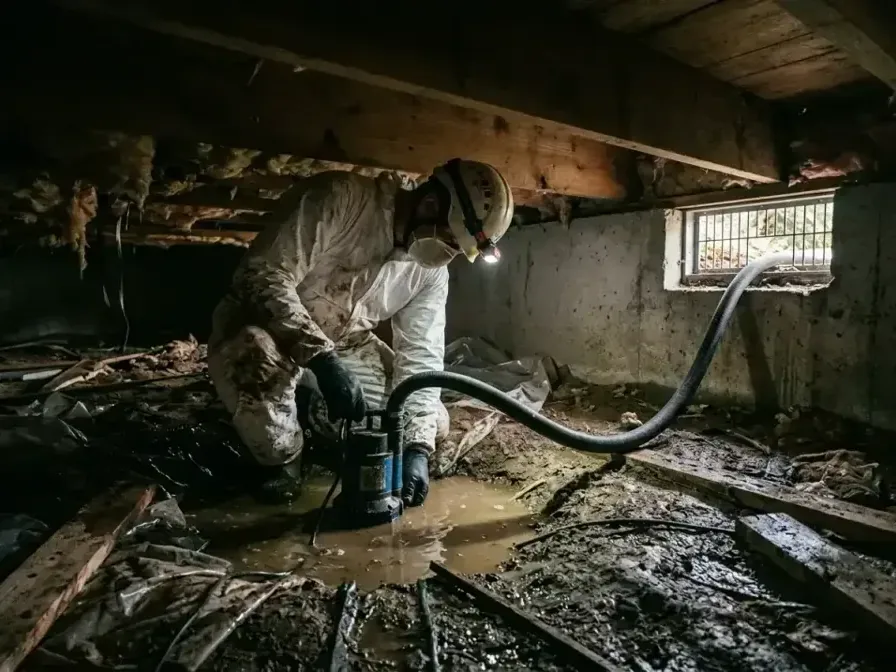
First steps for crawl space water removal
- 1
Keep power off
Never step into the water until the electricity to that space is confirmed off.
- 2
Look at the pump
If a sump pump is installed, confirm that it runs and that its breaker has not tripped.
- 3
Redirect runoff
Point downspouts away from the house if rain is still the source of the water.
- 4
Watch the floors above
Photograph soft boards, cupped planks and damp odors in the rooms overhead.
Trade standards on this job
- Pumps start at the lowest point under the house
- Wet batts and torn barrier come out before drying
- Wood readings are taken from the joists and subfloor each day
What does crawl space water removal cost in Sanford, NC?
Crawl space water removal here typically costs $1,200 to $6,500+, depending on how deep the water stands, whether the insulation and the ground cover have to be pulled and whether the water is clean or contaminated.
Pump out, then dry
$1,200 to $2,500- Water pumped off the ground
- Dehumidifier placed
- Wood checked daily
Insulation and ground cover out
$2,500 to $4,500- Soaked batts bagged
- Barrier removed
- Framing dried
Category 3 or a long soak
$4,500 to $6,500+- Storm or sewer water
- Cleaning and treatment
- Longer drying run
Ranges are typical, not a quote: the water category, the square footage, the materials and how fast drying started move the number most. Try the water damage cost calculator for a closer planning range.
How crawl space water removal is handled, start to finish
Measure first, remove the water, dry, then prove it dry with readings. The order does not change.
(888) 578-4720Start drying the joists- 1
Check the source
The team finds whether rain, a pipe or a drain put the water there.
- 2
Pump it out
Submersible pumps clear the water from the lowest point first.
- 3
Remove wet layers
Soaked batts and a damaged barrier are pulled out.
- 4
Dry the wood
Dehumidifiers and air movers run until joist readings reach target.
Water under a house is out of sight, so it often sits for a long time before anyone notices. Heavy rain is the most common cause, and a leaking pipe or a sewer backup can add to it. Either way, the framing above keeps absorbing moisture until the water is pumped out and the space is dried.
When the rain comes in
Flash flooding on June 5, 2025 brought up to 6 inches of rain to parts of Lee County, the kind of downpour that can send water under a raised floor. Water that stands for several days soaks deeper, so the first pumping visit sets the pace for everything after it.
- Standing water is pumped with submersible units, working from the lowest point.
- Soaked fiberglass batts are removed because they keep the subfloor wet.
- A torn or soaked vapor barrier is pulled and replaced after drying.
- Joists and the subfloor are read with a meter before and after drying.
Protecting the floors above
Water under a house rises as vapor, which is why hardwood above a wet crawl space can cup even when nothing leaked inside. Setting dehumidifiers and air movers under the floor dries the framing from beneath and protects the boards overhead.
Hardwood that has begun to cup can often flatten again, but only if the moisture below it is removed before the boards are sanded or refinished. The rooms overhead are read as well, and soft boards or a damp odor show where the moisture traveled.
When the water is not clean
Storm water and sewer water under a house are Category 3, and the cleanup changes. Contaminated insulation and barrier are removed, the framing is cleaned and an antimicrobial treatment is applied before drying begins. The sewage backup cleanup steps apply when the source is a backed-up drain, and storm and flood cleanup covers the wider rainwater loss.
The crew keeps power off in the space until every circuit is confirmed safe.
Crawl space water removal across Sanford and nearby
Crawl space pumping is handled across the city, from downtown blocks near Depot Park to Jonesboro Heights, St. Andrews and the neighborhoods along Carthage Street and Wicker Street, with the rooms above each crawl space checked too.
The same service nearby: crawl space water removal in Holly Springs, Apex, Morrisville.
Crawl Space Water Removal: common questions
Is standing water under a house an emergency?
It is urgent. The longer it sits, the more the joists and subfloor absorb, and humid air rises into the rooms above.
Why does water collect under the house?
Heavy rain, downspouts that empty beside the house and a leaking pipe are common causes, and flash flooding like June 5, 2025 can do it too.
Does wet crawl space insulation have to be replaced?
Batts that soaked through or sagged are pulled out, because they keep the subfloor damp and no longer insulate.
How long does a crawl space take to dry?
Typically several days to a week with dehumidifiers and air movers running. Contaminated water and long soaks take longer.
Is crawl space water covered by insurance?
Water from a burst pipe is often covered, while groundwater and storm seepage usually are not without a flood policy. Coverage depends on the policy.
Will the hardwood above be damaged?
It can cup if the subfloor stays wet. Fast drying of the framing from beneath is what protects the boards.
Water sitting under the floor?
Every day that water stays under the house soaks more of the framing above. The extraction crew pumps it out, removes the wet layers and dries the wood until readings are on target.