Commercial Water Damage in Sanford, NC
Water on a commercial floor can keep a business closed. The response team phases the extraction and drying so part of the space can reopen while the rest dries, with every reading logged for the claim.
(888) 578-4720Water in the building? Call now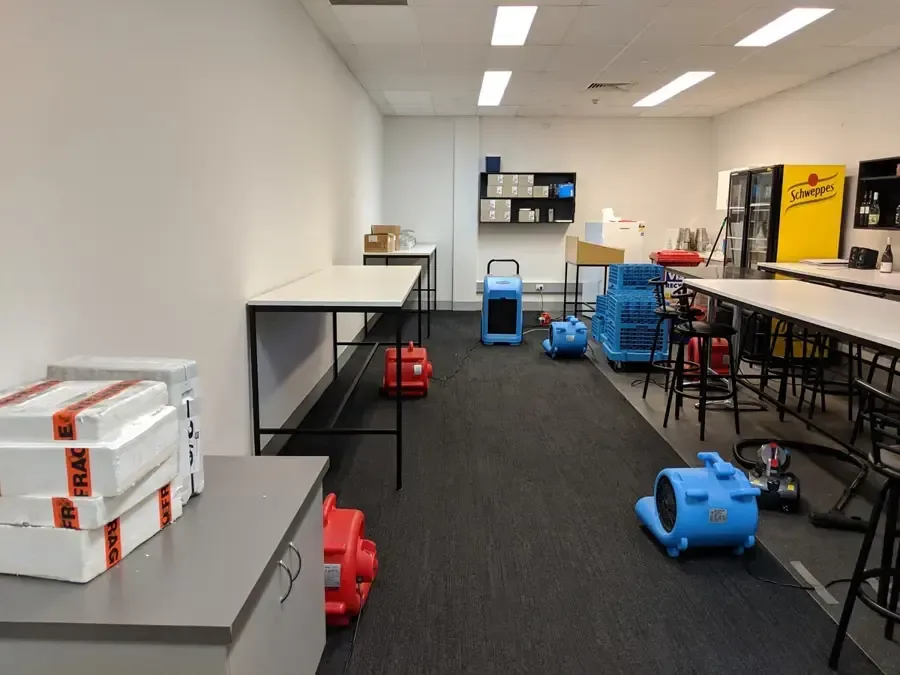
First steps for commercial water damage
- 1
Stop the water
Close the supply valve if it can be reached safely and call the building manager.
- 2
Protect the people
Clear staff and customers from wet floors and switch off power to wet circuits.
- 3
Move key items
Lift files, stock and electronics onto dry shelves or carts before extraction begins.
- 4
Call the owner
Notify the property manager and the insurer, and photograph each affected room.
Trade standards on this job
- Drying is phased so the space can reopen sooner
- Extraction and noisy work can run after hours
- One record covers the owner, tenant and insurer
What does commercial water damage cost in Sanford, NC?
Commercial water damage here typically costs $3,000 to $30,000+, depending on the floor area, the water category, how many suites are affected, whether ceilings and carpet tile need replacing and whether work must happen after hours.
Small suite or shop
$3,000 to $8,000- Water extracted
- Carpet tile and drywall sorted
- Daily readings logged
A large floor area
$8,000 to $18,000- Phased drying plan
- Containment walls
- Ceiling tiles replaced
Sprinkler or multi-suite loss
$18,000 to $30,000+- Truck-mounted extraction
- Desiccant drying
- After-hours work
Ranges are typical, not a quote: the water category, the square footage, the materials and how fast drying started move the number most. Try the water damage cost calculator for a closer planning range.
How commercial water damage is handled, start to finish
Measure first, remove the water, dry, then prove it dry with readings. The order does not change.
(888) 578-4720Keep the doors open- 1
Survey the loss
A meter and thermal camera map which rooms and ceilings are wet.
- 2
Extract and protect
Water is extracted, and containment walls separate wet and dry zones.
- 3
Dry in phases
Equipment moves as areas dry so doors can reopen sooner.
- 4
Log and release
Readings are recorded daily and the equipment is removed once targets are met.
In a business, every closed day costs money, so a commercial water loss is planned around reopening. The response team starts by mapping the wet area, then decides which rooms can be dried and returned to use first and which need containment.
What closed downtown in June 2025
The June 5, 2025 flooding along Little Buffalo Creek closed some downtown businesses for the day. Storm losses like that call for fast extraction and a clear plan for what reopens first, as in storm and flood cleanup.
- Carpet tile and ceiling tile are lifted or replaced rather than dried in place.
- Containment walls keep wet and dry zones separate.
- Extraction runs after hours when staff and customers are out.
- Desiccant units handle large open floors where air movers fall short.
Phasing the dry-out
The team dries the areas that matter most to operations first, such as front counters, aisles and exits, and moves equipment as readings drop. Doors and walkways are kept clear where possible, so staff can still reach what they need.
Daily logs record every reading and every change of equipment, which supports the claim and any business-interruption discussion with the insurer.
Coordinating with the property
Commercial losses often involve a landlord, a tenant and more than one policy. The drying team keeps a single record of what was wet, what was removed and what was dried, so each party sees the same facts. Standing water is cleared as in water extraction, and rebuild work may need a permit through the CSS Portal.
Commercial water damage across Sanford and nearby
Commercial work covers storefronts and offices across the city, from downtown streets near Temple Theatre and Depot Park to the corridors along Steele Street, Carthage Street and US 1, and Central Carolina Enterprise Park.
The same service nearby: commercial water damage in Holly Springs, Apex, Morrisville.
Commercial Water Damage: common questions
How is commercial drying different?
It is phased around operations. The team dries the most important areas first and keeps doors and walkways open where possible.
Do ceiling tiles and carpet tile have to be replaced?
Often. Stained or sagging ceiling tiles and wet carpet tile are usually replaced, while sealed floors can be dried and kept.
Who should be told about a commercial loss?
The property owner or manager, the tenant's insurer and the building's insurer, so each party can see the same record.
Does insurance cover lost business time?
Some commercial policies include business interruption cover, though the policy decides. The daily drying log helps show how long the space was out of use.
What if the water came from a sprinkler or a storm?
Sprinkler water is usually clean but large in volume, while storm water is contaminated. Each is handled under its own category rules.
Water in the shop or office?
A wet floor can keep a business closed longer than it needs to be. The response team extracts, contains and dries in phases so the doors reopen as soon as the readings allow.