Commercial Water Damage in Chapel Hill, NC
A burst pipe or sprinkler release in a shop, office or apartment building threatens inventory, equipment and tenants. The restoration team extracts the water, plans phased drying and keeps the rest of the building usable.
(888) 578-4720Call about a commercial loss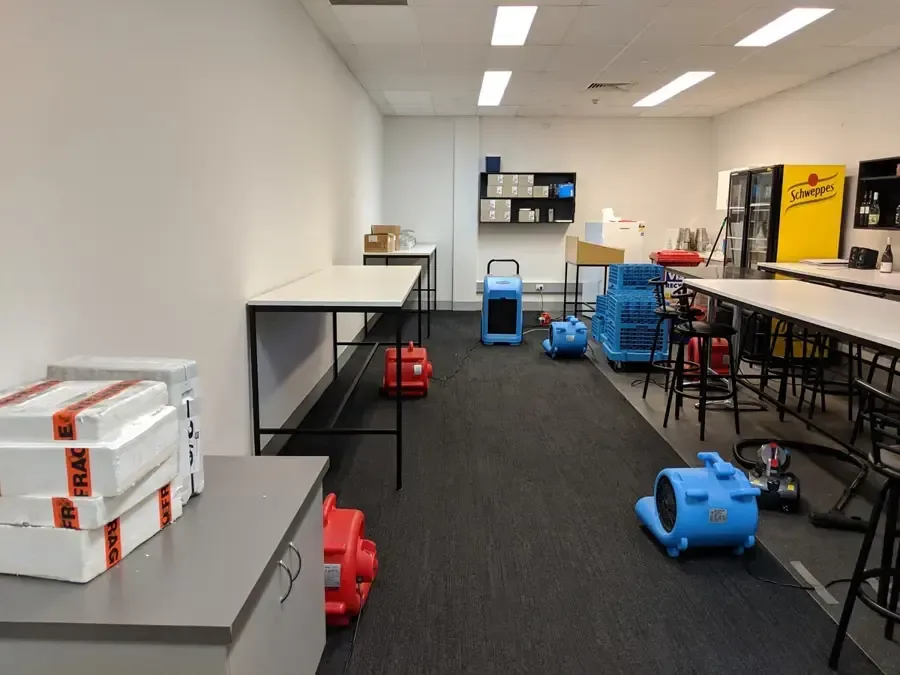
First steps for commercial water damage
- 1
Stop the water
Close the valve or sprinkler control, and have a building contact confirm that the source is off.
- 2
Protect people and stock
Move people off wet floors, then raise inventory, files and equipment off the ground.
- 3
Photograph by area
Capture each wet suite, ceiling and floor, with a note of when the loss began.
- 4
Call the commercial team
Share the floor area, the flooring and ceiling types and any hours when work is allowed.
Trade standards on this job
- Extraction and phased drying by suite
- Carpet tile and ceiling tile decisions
- Scope and readings documented for tenants and insurers
What does commercial water damage cost in Chapel Hill, NC?
Commercial water damage usually runs $3,000 to $30,000 or more. A small suite or shop is the low end, while a sprinkler release or a multi-suite loss with after-hours work reaches the top.
A small suite or shop
$3,000 to $8,000- Water extraction
- Carpet tile and drywall calls
- Readings each day
A large floor area
$8,000 to $18,000- Zone by zone drying
- Containment walls
- Ceiling tiles swapped
Sprinkler or multi-suite loss
$18,000 to $30,000+- Large truck extraction run
- Desiccant dehumidifiers
- Overnight scheduling
Ranges are typical, not a quote: the water category, the square footage, the materials and how fast drying started move the number most. Try the water damage cost calculator for a closer planning range.
How commercial water damage is handled, start to finish
Measure first, remove the water, dry, then prove it dry with readings. The order does not change.
(888) 578-4720See how phased drying works- 1
Scope the loss
Each suite is walked and mapped with a meter and thermal camera.
- 2
Extract and contain
Water is removed and containment walls separate wet areas from open ones.
- 3
Dry zone by zone
Equipment is staged by zone and moved as readings drop.
- 4
Hand over the records
Logs, photos and the scope by suite go to owners and insurers.
A commercial loss is measured in downtime as much as in gallons. Phased drying, containment walls and after-hours work let a business keep serving customers while the structure dries.
Shopping centers and apartment communities
Eastgate Crossing, University Place and apartment communities in town have flooded. Eastgate Crossing was built in 1958 on top of Booker Creek, and about $11 million in damage was reported there after Tropical Storm Chantal. Across Orange County, 96 businesses took on water, and floodgates and pumps at several were not enough.
- Wet carpet tile is lifted so the slab can dry
- Ceiling tiles that sagged are replaced after drying
- Containment walls keep moisture and dust in one zone
- Work can be scheduled around opening hours
Records and tenants
Landlords, tenants and insurers all work from one set of facts. The drying team writes up the scope by suite, logs readings by day and photographs each stage so responsibility and costs can be sorted fairly. Apartment buildings add another layer, because one leak can wet several units at once. The team maps each unit and each ceiling so a manager can notify tenants and track which areas are dry.
Scale and coordination
Large floors are dried in phases, with equipment sized to the volume of each area. Structural drying plans carry the numbers, while water extraction handles the first removal.
Commercial water damage across Chapel Hill and nearby
Commercial work covers shops, offices and apartment communities across Chapel Hill, including Eastgate Crossing, University Place, The Apartments at Midtown 501 and the businesses along Franklin Street and Fordham Boulevard, from small suites to larger floors.
The same service nearby: commercial water damage in Holly Springs, Morrisville, Apex.
Water damage restoration in Chapel Hill · every town covered
Commercial Water Damage: common questions
Does the shop have to close while it dries?
Frequently only in part. Containment walls and zone work keep the dry areas usable while the wet zones are being treated.
Who authorizes work in a leased space?
The owner, manager or tenant, depending on the lease. Emergency steps such as extraction usually start first, and the scope is sorted out alongside the documents.
Are sprinkler losses handled differently?
They can release large volumes across several suites, so extraction, containment and drying are planned for a wider area.
Do ceiling tiles need to be replaced?
Wet ceiling tiles sag and stain, and they are usually replaced after the area is dry. The grid and insulation above are checked for moisture.
What records help insurers?
Dated photos, a scope by suite, moisture logs and a list of materials removed help adjusters and property managers agree on the loss.
Commercial water loss in Chapel Hill?
Every day of downtime costs a business more. The restoration team extracts, contains and dries zone by zone while the rest of the building stays usable.