AC Condensate Leak Water Damage in Sanford, NC
When an air conditioner drain clogs, the pan overflows and water soaks the insulation and ceiling nearby. The drying team removes what is wet and dries the space once the system is shut off.
(888) 578-4720Ceiling dripping from the air conditioner? Call now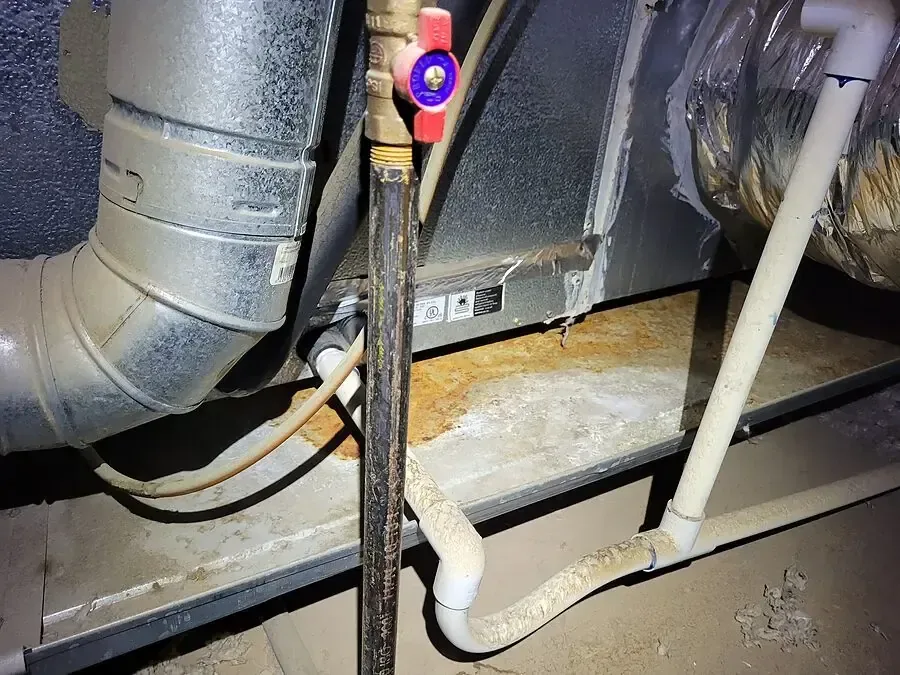
First steps for AC condensate leak water damage
- 1
Turn the system off
Shut off the air conditioner at the thermostat so it stops making more condensate.
- 2
Check the pan
Look at the drain pan for standing water and a clogged pipe.
- 3
Protect the floor
Set a bucket under a dripping ceiling and move furniture out of the way.
- 4
Photograph the stain
Record the ceiling, the unit and the pan before anything is cleaned up.
Trade standards on this job
- The air conditioner is shut off before any drying starts
- Wet insulation is bagged out of the attic or closet
- Surfaces that sat wet get an antimicrobial treatment
What does AC condensate leak water damage cost in Sanford, NC?
Condensate overflow cleanup here usually costs $600 to $4,000+, driven by the length of the overflow, the amount of wet insulation, whether the ceiling had to open and how far the water spread into walls and floors.
A small stain, found early
$600 to $1,500- Insulation inspected
- Ceiling dried where it hangs
- Meter readings daily
Soaked insulation, wet ceiling
$1,500 to $3,000- Insulation bagged out
- Ceiling cut open
- Attic dehumidifier set
Long overflow, walls and floors
$3,000 to $4,000+- Walls and flooring dried
- Antimicrobial treatment
- Longer drying run
Ranges are typical, not a quote: the water category, the square footage, the materials and how fast drying started move the number most. Try the water damage cost calculator for a closer planning range.
How AC condensate leak water damage is handled, start to finish
Measure first, remove the water, dry, then prove it dry with readings. The order does not change.
(888) 578-4720Start the insulation removal- 1
Stop the water
The air conditioner is shut off and the pan and drain are checked.
- 2
Remove the wet layers
Soaked insulation is bagged out and wet ceiling drywall is cut away.
- 3
Dry the space
An attic dehumidifier and air movers run until readings fall to target.
- 4
Treat and verify
Surfaces that sat wet are treated and the final readings are logged.
An air conditioner draws moisture from the air all day, and a drain carries it away. When that drain clogs or the pan rusts through, the water goes into the insulation, the ceiling and the framing beside the air handler. The response team starts by shutting the system off, because it keeps adding water until it is fixed.
Why the damage is slow and wide
A condensate overflow rarely floods. It seeps for days or weeks, so the water spreads across a wide area of insulation and ceiling, and the stain appears long after the pan began to overflow.
- Insulation around the air handler is soaked and compressed.
- Ceiling drywall below the unit stains and softens.
- Framing and subfloor in a closet or attic stay damp.
- Drain pans and nearby metal show rust where water sat.
Because the water is clean at first, many cases dry in place. The decision comes down to what the meter says about the ceiling and the insulation.
What the drying team does
The team bags out soaked insulation, reads the ceiling and framing with a meter and opens the drywall only where it is wet. An attic dehumidifier works with air movers, because attic air is hard to dry otherwise. Surfaces that sat wet are cleaned with an antimicrobial treatment once the material is dry. Equipment runs for several days, and readings on the ceiling and joists decide when it comes out.
An HVAC technician unclogs the drain or replaces the pan, and that repair is what keeps the water from returning.
Linked problems
A condensate leak in an attic often turns into a ceiling problem below, covered under ceiling leak water damage, and wet attic insulation is handled as in roof leak water damage.
AC condensate leak water damage across Sanford and nearby
Condensate overflow cases are handled across the city, from downtown buildings near Depot Park to Jonesboro Heights, St. Andrews and Carolina Trace and the neighborhoods along Carthage Street, with attics and closets checked wherever the air handler sits.
The same service nearby: ac condensate leak water damage in Holly Springs, Apex, Morrisville.
AC Condensate Leak Water Damage: common questions
Why does an air conditioner leak water?
Cooling pulls moisture from the air, and a clogged drain or cracked pan lets that water overflow instead of draining away.
Is the water from the AC dirty?
It starts out clean, though it can pick up dust and residue from the pan. Long overflows are treated as more than clean water.
Can the system run while the ceiling dries?
Not until the drain is fixed. Running it makes more water, so a technician clears the drain first and the drying team follows.
Does ceiling drywall always have to be cut?
Only when it reads wet or sags. Small stains can dry in place with readings taken until the meter agrees.
How long does attic drying take?
Usually several days, since attic air is hard to dry. A dehumidifier and air movers work together until the insulation and framing read dry.
Is an AC leak covered by insurance?
Sudden overflow is sometimes covered, but slow seepage and maintenance failures may not be. The policy decides, so keep photos and the repair record.
Condensate overflowing into the ceiling?
A clogged drain keeps feeding water into insulation and drywall for as long as the system runs. The drying team removes what is soaked and dries the space once the system is off.