Roof Leak Water Damage in Sanford, NC
Rain that gets past the roof soaks insulation first, then the ceiling and the framing under it. The drying team traces the wet path from the top down and dries what the water reached.
(888) 578-4720Ceiling stained after rain? Call the crew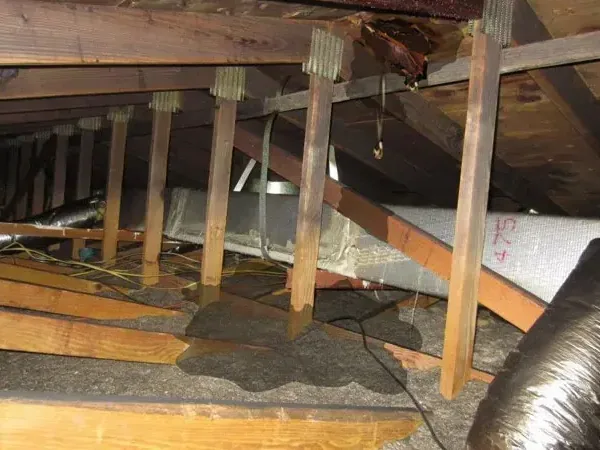
First steps for roof leak water damage
- 1
Catch the drips
Set buckets under active drips and move furniture and electronics away from the wet ceiling.
- 2
Relieve the bubble
If a ceiling bulges with trapped water, a small hole over a bucket lets it drain before it falls.
- 3
Keep off the roof
Wet shingles are slick, so leave the roof to the roofer and photograph the stains from inside.
- 4
Cover and call
Ask the roofer for a tarp and call the response team to start on the attic and ceiling.
Trade standards on this job
- The attic is inspected before any ceiling is cut open
- The roofer tarps the opening before the drying team starts
- Small leaks are dried in place when the readings allow it
What does roof leak water damage cost in Sanford, NC?
Roof leak cleanup here generally costs $1,000 to $7,500+, depending on how much insulation is wet, how many ceilings are affected, whether walls and floors took water and how long the roof stayed open.
Small leak, one ceiling
$1,000 to $2,500- Attic checked
- Ceiling dried in place
- Daily meter readings
Wet insulation and ceilings
$2,500 to $5,000- Insulation bagged out
- Ceiling sections opened
- Attic dehumidifier set
Storm opening, several rooms
$5,000 to $7,500+- Tarp coordinated
- Walls and floors dried
- Longer drying run
Ranges are typical, not a quote: the water category, the square footage, the materials and how fast drying started move the number most. Try the water damage cost calculator for a closer planning range.
How roof leak water damage is handled, start to finish
Measure first, remove the water, dry, then prove it dry with readings. The order does not change.
(888) 578-4720Plan the ceiling dry-out- 1
Inspect the attic
Meter and thermal readings trace the wet path from the roof opening down.
- 2
Cover the opening
The roofer tarps or patches the leak so new rain stays out.
- 3
Remove the wet layers
Soaked insulation is bagged out and sagging ceiling drywall is cut away.
- 4
Dry and verify
An attic dehumidifier and air movers run until readings match dry targets.
A roof leak is rarely where the stain appears. Water enters at a worn seal or a lifted shingle, runs along the decking and the rafters, soaks the insulation and only then marks the ceiling. The drying team follows that path from the attic down, because the stain is the last place the water arrives.
Storms that test the roof
Lee County has seen serious weather. A large tornado struck Sanford on April 16, 2011, with the St. Andrews neighborhood the hardest-hit residential area, and flash flooding on June 5, 2025 brought up to 6 inches of rain to parts of the county. Wind and rain like that lift flashing and loosen shingles.
- Wet insulation compresses and holds water against the ceiling drywall.
- Roof decking stays damp and can stain or soften.
- Rafters and ceiling joists absorb moisture from above.
- Drywall develops brown rings, then sags as the paper saturates.
Tarp first, dry second
The roofer closes the opening, usually with a tarp, before drying starts, because a dry-out under an open roof never ends. The drying team coordinates the timing, then removes bagged insulation, opens sagging ceiling sections and sets an attic dehumidifier to work alongside air movers below.
Small leaks often dry in place, with readings taken through the ceiling until the meter agrees.
Drying from the top down
Insulation is bagged out first, since it can hold several times its weight in water. Ceilings that read wet are opened a section at a time, and the joists dry with moving air. Once the attic is dry, the rooms below are checked wall by wall, and a sagging ceiling follows the steps under ceiling leak water damage.
When water also came in at doors or windows, the work moves to storm and flood cleanup.
Roof leak water damage across Sanford and nearby
Roof leak work covers homes and small buildings across the city, from the streets around downtown and Depot Park to St. Andrews, Carolina Trace and the neighborhoods along Steele Street, with each attic inspected before ceilings are touched.
The same service nearby: roof leak water damage in Holly Springs, Apex, Morrisville.
Roof Leak Water Damage: common questions
Can a roof leak be dried without opening the ceiling?
Often yes, when the leak is small and the insulation is lifted out. Readings through the ceiling show whether it is drying or still wet.
How soon should wet attic insulation come out?
Soaked insulation should be removed promptly, since it holds water against the ceiling and the framing and slows drying for days.
Who fixes the roof?
A roofer repairs or tarps the opening. The drying team handles the water already inside, and the two schedules are coordinated so the roof is closed first.
Does insurance pay for roof leak water damage?
Storm damage to the roof and interior is commonly covered, while wear-related leaks may not be. The policy decides, so photos and readings help the claim.
What are the signs of an attic leak?
Brown rings on the ceiling, a musty smell, sagging drywall and damp insulation after rain all point to water above.
How long does a roof leak take to dry out?
Most take several days with an attic dehumidifier and air movers. Large storm openings with wet walls take longer.
Water came in through the roof?
Wet insulation keeps water against the ceiling long after the rain stops. The drying team removes it, opens what stayed wet and dries the structure from the top down.