Ceiling Leak Water Damage in Sanford, NC
A stain or a bulge in the ceiling means water is collecting in the joists above. The restoration team traces the source, opens what is wet and dries the framing before the drywall fails.
(888) 578-4720Ceiling bulging with water? Call now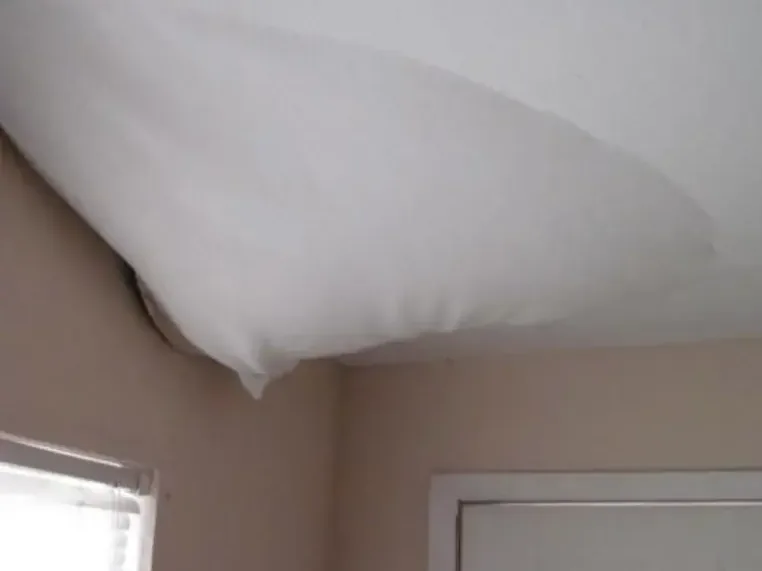
First steps for ceiling leak water damage
- 1
Drain the bulge
Make a small hole under a bulge and catch the water in a bucket.
- 2
Turn off the lights
Switch off ceiling fixtures and the breaker for that room if water is near wiring.
- 3
Clear the floor
Move furniture and rugs out from under the leak and cover what must stay.
- 4
Note the source
Check the room above for a running tap, tub or appliance and close the supply if one is found.
Trade standards on this job
- The room above is checked for the water source
- Sagging sections come down before they fall on their own
- Joist bays dry with moving air and a dehumidifier running
What does ceiling leak water damage cost in Sanford, NC?
Ceiling leak cleanup typically runs $800 to $5,000+, set by how long the water ran, how much drywall and insulation have to come out and whether the floor above or the walls below were wet.
Small stain, dried in place
$800 to $1,800- Source traced
- Ceiling left in place
- Daily readings
Opened ceiling, one room
$1,800 to $3,500- Sagging drywall cut out
- Joist bays dried
- Floor above checked
Several rooms or a long leak
$3,500 to $5,000+- Insulation removed
- Walls below affected
- Containment set
Ranges are typical, not a quote: the water category, the square footage, the materials and how fast drying started move the number most. Try the water damage cost calculator for a closer planning range.
How ceiling leak water damage is handled, start to finish
Measure first, remove the water, dry, then prove it dry with readings. The order does not change.
(888) 578-4720Start drying the joists- 1
Trace the source
A meter and a thermal camera follow the moisture up to the pipe, drain, pan or roof opening.
- 2
Release the water
A small opening drains trapped water, then sagging drywall comes down in sections.
- 3
Clear the wet layers
Soaked insulation is bagged out and the joist bays are left open to the air.
- 4
Dry and verify
Air movers and a dehumidifier run until the readings match dry targets.
A ceiling leak is a symptom. The water started somewhere above, in a supply pipe, a drain, an air conditioner pan or the roof, and it has been spreading through the joists before it showed. Finding that source comes first, because drying a ceiling under an active leak only repeats the damage.
Reading the stain
A small, dry brown ring is usually an old leak that has stopped. A damp bulge, a drip or drywall that feels soft is active, and it needs attention before the paper face gives out.
- A ring that grows after rain points to the roof.
- A stain below a bathroom points to a drain, tub or supply pipe.
- A stain near a vent or air handler points to condensation.
- A bulge that sloshes when pressed holds water that should be drained safely.
Opening the ceiling safely
Trapped water weighs a lot, so a bulging ceiling is released through a small hole over a bucket rather than left to collapse. The restoration team removes sagging drywall in sections, bags the wet insulation and lets the joist bays air out. Dry sections stay up, which keeps the repair smaller.
The floor above is checked too, because a leak from a bathroom or laundry has usually soaked the subfloor on its way down.
Drying and rebuilding
Air movers and a dehumidifier run until the framing reads dry, usually over several days. Once the readings agree, a drywall installer can patch and finish the ceiling. Rebuild work can need a permit, and applications go through the CSS Portal, handled by the City of Sanford and Lee County Inspections Division.
When the source turns out to be a pipe, see burst pipe water damage; a roof source is covered under roof leak water damage.
Ceiling leak water damage across Sanford and nearby
Ceiling leaks are handled across the city, from downtown buildings near Temple Theatre and Depot Park to East Sanford, Lee Avenue and Hawkins Avenue, with the room above checked at every address.
The same service nearby: ceiling leak water damage in Holly Springs, Apex, Morrisville.
Ceiling Leak Water Damage: common questions
Is a ceiling stain an emergency?
If it is wet or growing, yes. Water above the ceiling keeps spreading through the joists, and the drywall can fail without much warning.
Should a bulging ceiling be popped?
A small hole over a bucket lets trapped water drain in a controlled way. Left alone, the drywall can give way and drop the water all at once.
Can a stained ceiling just be painted?
Not while it is damp. Paint hides the stain but not the moisture, so the source and the readings come first.
How is the source found?
A meter, a thermal camera and a look at the room above show whether the water came from a pipe, a drain, the roof or an air conditioner.
Does the insulation above need replacing?
Insulation that soaked through is removed because it holds water against the drywall. Dry sections elsewhere can usually stay.
Is a ceiling leak covered by insurance?
Sudden leaks are commonly covered, while slow, long-term seepage may not be. The policy decides, and dated photos help.
Water is gathering above the ceiling?
A leak above spreads along the joists out of sight. The restoration team traces it, opens what is wet and dries the framing so the repair holds.