Washer and Appliance Leaks in Sanford, NC
A split hose or a clogged drain can send water across a laundry room or kitchen for a long while. The extraction crew dries the floor, the cabinets and any ceiling beneath.
(888) 578-4720Appliance flooding? Call for extraction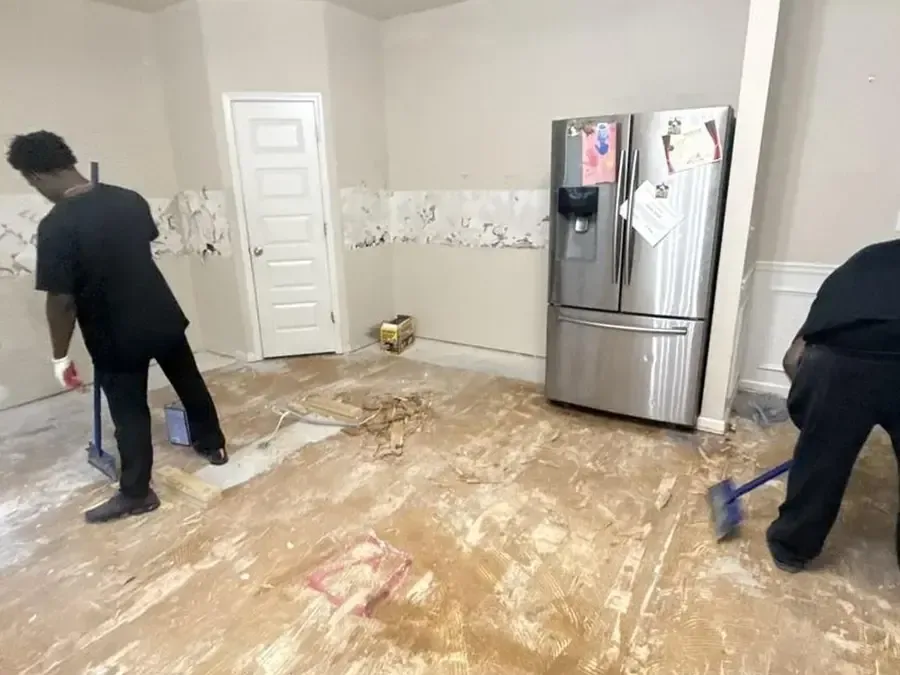
First steps for washer and appliance leak damage
- 1
Pull the plug
Unplug the appliance and close its water supply valve before reaching into wet areas.
- 2
Switch off power
Turn off the breaker for the room if outlets or the floor are wet.
- 3
Soak up the surface
Towel what can be reached and lift small items and rugs off the floor.
- 4
Photograph the source
Record the hose, seal or drain connection that failed and the extent of the wet floor.
Trade standards on this job
- Cabinet bases and toe kicks are opened to dry the cavity
- Subfloor readings decide if flooring can stay
- The ceiling below is read when the leak was upstairs
What does washer and appliance leak damage cost in Sanford, NC?
Appliance leak cleanup here usually costs $1,000 to $6,500+, driven by how long the leak ran, whether cabinets or a ceiling below were wet, and how much flooring has to come up.
One room, caught quickly
$1,000 to $2,500- Water extracted
- Floor dried in place
- Meter readings daily
Cabinets or a ceiling below
$2,500 to $4,500- Toe kicks taken off
- Ceiling drywall opened
- LGR dehumidifiers running
A long leak over two floors
$4,500 to $6,500+- Flooring removed
- Walls and ceilings dried
- Longer monitoring period
Ranges are typical, not a quote: the water category, the square footage, the materials and how fast drying started move the number most. Try the water damage cost calculator for a closer planning range.
How washer and appliance leak damage is handled, start to finish
Measure first, remove the water, dry, then prove it dry with readings. The order does not change.
(888) 578-4720Open the cabinet bases- 1
Find the source
The failed hose, seal or drain is traced and the floor around it metered.
- 2
Pull the water
Extraction lifts standing water, and wet pad or swollen flooring comes out.
- 3
Open hidden spots
Toe kicks, baseboards and ceiling sections open so moisture can escape.
- 4
Dry and confirm
Air movers and dehumidifiers run until the readings match dry targets.
Appliance leaks are quiet. A washer hose weeps behind the machine, a dishwasher seal fails overnight or a refrigerator ice maker drips for weeks, and the water finds its way under flooring and into cabinets. The extraction crew finds the true edge of the wet area before deciding what to open.
The usual suspects
Supply hoses and drain hoses cause most laundry and kitchen floods. The water can be clean at the start and gray by the time it has crossed a dirty floor or backed up from a drain.
- Washer hoses that burst or loosen at the faucet.
- Dishwasher door seals and drain connections.
- Refrigerator ice maker tubes that drip behind the unit.
- Overflow from a clogged washer drain pipe.
Drying under and behind
The floor looks dry long before the subfloor is. Meter readings along the baseboards and inside cabinet bases show where moisture is hiding, and toe kicks are popped off so air can reach the cavity behind them.
If the leak was upstairs, the ceiling below is read as well, since water collects in the joists and can stain drywall a day later.
A leaking water heater is a related case, handled under water heater leak cleanup.
What gets replaced
Laminate and engineered flooring that swell are usually replaced, while tile and sealed vinyl are often dried and kept. Cabinet bases that stay damp are opened or replaced depending on the reading.
Wet carpet pad is almost always discarded, because it holds water like a sponge and dries slowly. Hardwood is checked board by board before a decision is made, and the structural drying plan covers the subfloor under it.
Washer and appliance leak damage across Sanford and nearby
Appliance leaks are handled across the city, from homes around downtown to Jonesboro Heights, St. Andrews and the neighborhoods that run out along Wicker Street, with the ceiling below checked whenever the leak started upstairs.
The same service nearby: washer and appliance leaks in Holly Springs, Apex, Morrisville.
Washer and Appliance Leaks: common questions
How long can an appliance leak go unnoticed?
Slow drips can run for weeks behind a washer or refrigerator. Swollen flooring, a musty smell or a soft cabinet base are the usual signs.
Can laminate flooring be saved after a leak?
Sometimes, if it is caught early and the subfloor is dried fast. Boards that have swollen at the seams usually have to be replaced.
Is the water from a washer clean?
Supply water is clean, but drain water is gray and carries soap and dirt. Gray water changes what is kept and what is removed.
Does the ceiling below always need opening?
Only when it reads wet or sags. A meter and a thermal camera decide, not a guess.
Will insurance cover an appliance leak?
Sudden leaks are commonly covered for the water damage, while the appliance itself is not. The policy sets the details.
A hose or seal let go in the kitchen or laundry room?
Appliance water travels under flooring and into cabinets where nobody can see it. The extraction crew removes it and dries every wet layer until the meter agrees.